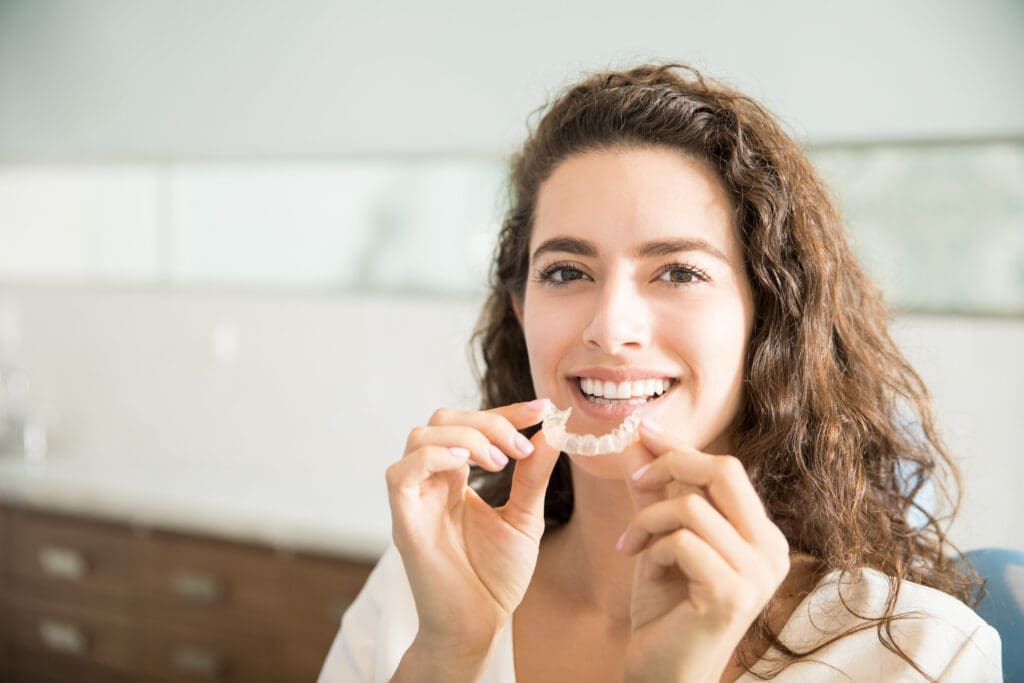
Short answer. Getting braces off usually does not hurt. You feel pressure and a squeeze as each bracket pops off, and the front teeth are the most sensitive; biting on a cotton roll during removal lowered the discomfort in a 2025 trial. At Limestone Hills the visit takes about an hour, including the scan for the retainer, and the retainer is picked up at the end of the day or on another day. Afterward the teeth feel smooth and strange, they can be tender for a day or two, and the gums may stay puffy for a week or two. Wear the retainer from the day you get it, because teeth begin to drift once nothing holds them.
By Rodrigo F. Viecilli, DDS, PhD, board-certified orthodontist at Limestone Hills Orthodontics in Austin, TX, who has treated more than 5,000 patients.
What happens when braces come off, step by step
- The wire comes out. The archwire is removed first, so each bracket can be taken off on its own.
- The brackets come off. The orthodontist squeezes the base of each bracket with debonding pliers, which breaks the bond to the enamel. You feel pressure and hear a small click as each one lets go. No anesthetic is needed.
- The glue comes off. Under a black light that makes the glue glow, the leftover adhesive is removed with a slow-speed handpiece and fine burs, and the enamel is polished smooth.
- The teeth are scanned. A digital scan records the final tooth positions for the retainers, with no impression material.
- The retainer is made. At Limestone Hills the model of the teeth is 3D printed in house and a clear Essix retainer is thermoformed on it. You pick it up at the end of the day or on another day, depending on the time available at the practice.
- You get the wear plan. Dr. Viecilli explains how long to wear the retainer each day and how to tell when to wear it more.
Braces normally come off when the teeth have finished moving, and Dr. Viecilli checks the result at the visit before removal. For a wedding, braces can also be taken off earlier, with retainers made at extra cost.
Does it hurt to get braces off?
For most people it feels like pressure, not pain. In a 2025 randomized trial of 36 patients, pain during bracket removal ranged from mild to mild-moderate, the front teeth were the most sensitive, and biting on a cotton roll while the brackets came off lowered the pain, most of all on the front teeth. A 2026 observational study of 140 patients found the same benefit from cotton rolls, and found that a more negative mood, older age and teeth that were already sore went with more pain.
The tools matter too. In a 2024 study of 100 patients, discomfort depended on the design of the bracket base and the removal instrument, and most patients preferred having the glue removed with a rotary instrument despite its sound and vibration.
What helps: bite on a cotton roll if offered, breathe slowly, and tell the orthodontist if one tooth feels tender so it can be supported. More on comfort during treatment is in do braces hurt.
How long the visit takes
| Removal day at Limestone Hills | Time |
|---|---|
| Brackets off | About 15 minutes |
| Glue cleanup under a black light, and polishing | About 20 minutes |
| Digital scan for the retainer | About 5 minutes |
| Total visit, including the scan | About 1 hour |
| Retainer thermoformed in house on a 3D-printed model | Picked up at the end of the day or on another day |
The retainer is made after the visit: the model is printed and the retainer is formed on it, so it is ready at the end of the day or on another day, depending on the time available at the practice.
Is the enamel damaged when the glue comes off?
Removing the glue always takes off some enamel, and how much depends on the tool. A 2014 systematic review found tungsten carbide burs the fastest and most effective option, though they remove a layer of enamel and roughen it, so careful multi-step polishing has to follow. Stones, diamond burs, steel burs and lasers are more destructive and should not be used. The goal is to remove all the adhesive and leave the enamel smooth. At Limestone Hills the cleanup is done under a black light, an ultraviolet lamp that makes the glue glow so it can be told apart from the enamel. In laboratory studies, cleanup under ultraviolet light left less glue behind and took less time; a 2026 review of 19 studies found that how much enamel is spared still depends on the operator. Leftover glue should never be scraped off at home; the cleanup, and how to tell glue from a white spot, are covered in how to get braces glue off teeth.
What your teeth feel like afterward
- Smooth and strange. After months of brackets, bare enamel feels slippery and the teeth can feel bigger. The feeling fades within days.
- A little tender. Teeth can be sensitive to biting for a day or two. Soft foods help.
- Puffy gums. Gums that were irritated around the brackets usually settle within a week or two with good brushing and flossing.
- White spots, if any, now show. Spots that formed under plaque during treatment are easier to see once the brackets are gone. Many fade partly over the following months; see white spots after braces.
A regular cleaning with your dentist in the weeks after removal is a good idea, since brackets make some areas hard to clean; see seeing the dentist during braces.
When the retainer starts
Teeth start to drift once nothing is holding them, and they keep drifting through life from aging, muscle pressure and growth in the 20s and 30s. That is why Limestone Hills makes the first Essix retainer in house right after the visit, for pickup at the end of the day or on another day, and why one set is included in the treatment fee for patients who started and finished with Dr. Viecilli. Patients who prefer a Vivera or Angel retainer can order one at the removal visit; those ship from the manufacturer in 2 to 3 weeks. A bonded wire retainer is used only for specific needs, such as an upper gap held closed against a thick gum attachment.
The usual pattern is full-time wear at first, then nights for good. A simple check tells you how it is going: if the retainer snaps in easily, the schedule is working; if it feels tight, wear it more until it is comfortable again. Retainer types are compared in fixed vs removable retainers, and the biology behind lifelong wear is in why wearing a retainer matters.
Getting braces off when you started treatment elsewhere
Patients who moved, or whose orthodontist closed, can have braces removed at Limestone Hills. The fee is $400 per arch or $700 for both, and it includes a 3D CBCT scan, a consultation, the removal and polish, and a written note of any orthodontic issues that remain. Retainers are quoted separately. Call ahead so the office can confirm the braces can come off in one visit. Details are on the braces removal in Austin page.
Braces removal questions, answered
Why do my teeth feel weird after braces come off?
Because the brackets have been part of how your teeth felt for months. Bare enamel feels smooth and slippery, the teeth can feel bigger, and they may be tender to bite on for a day or two. The strangeness fades within days.
Can I eat normally right after my braces come off?
Usually yes, the same day. If your teeth feel tender, stick to softer foods for a day or two. With a removable retainer, take it out to eat and brush before putting it back.
Will my teeth move after braces come off?
Without a retainer, yes. Teeth drift toward their old positions and keep shifting slowly throughout life. Wearing the retainer as instructed, full time at first and then at night, is what keeps the result.
Can braces be taken off early for a wedding?
Yes. Limestone Hills can take braces off for a wedding and make retainers to hold the teeth, at an extra cost. Tell the office early so the plan can account for the date.
Should I see my dentist after braces come off?
Yes. A cleaning and checkup in the weeks after removal lets the dentist reach areas the brackets covered and check for any white spots or cavities that formed during treatment.
Limestone Hills Orthodontics is on RM 2222 in Northwest Austin. The first visit is free for new patients who have not been in orthodontic treatment in the last 12 months. Book a free orthodontic consultation or call (512) 720-6399.
Sources. Drmch BA, Sultan K, Hajeer MY, Azzawi S, Burhan AS. Effect of cotton roll biting on pain perception during orthodontic bracket debonding using Weingart pliers: a randomized controlled trial. J Int Med Res. 2025;53(9):3000605251370333. doi:10.1177/03000605251370333. Conde-Disla E, González-Olmo MJ, Olmos-Valverde M, Ruiz-Guillén A, Romero Maroto M. Emotional state and pain experience during orthodontic appliance removal: evaluation of four debonding protocols. Dent J. 2026;14(6):386. doi:10.3390/dj14060386. Gibas-Stanek M, Fudalej P. Does the pain experienced during orthodontic treatment and bracket removal depend on the architecture of the bracket or debonding method? Eur J Orthod. 2025;47(1). doi:10.1093/ejo/cjae073. Janiszewska-Olszowska J, Szatkiewicz T, Tomkowski R, Tandecka K, Grocholewicz K. Effect of orthodontic debonding and adhesive removal on the enamel: current knowledge and future perspectives, a systematic review. Med Sci Monit. 2014;20:1991-2001. doi:10.12659/MSM.890912. Omidkhoda M, Bardideh E, Nowabadi A, Entezari M. Effect of fluorescent adhesives on visibility and tooth enamel surface properties after debonding: a systematic review and meta-analysis. Clin Exp Dent Res. 2026;12(3):e70385. doi:10.1002/cre2.70385. Lai C, Bush PJ, Warunek S, Covell DA, Al-Jewair T. An in vitro comparison of ultraviolet versus white light in the detection of adhesive remnants during orthodontic debonding. Angle Orthod. 2019;89(3):438-445. doi:10.2319/072018-526.1. Removal steps, times, retainer pickup, retainer options and fees from Limestone Hills Orthodontics, Austin, TX.