

When retainer wear stops, teeth begin shifting back toward their original positions, often within days to weeks. The change is subtle at first and becomes visible over months, and the retainer may stop fitting because the teeth no longer match its mold.
This drift is orthodontic relapse, and it happens because teeth never permanently stabilize. Retention is lifelong for that reason.
Across more than 5,000 treated cases at Limestone Hills Orthodontics in Austin, Dr. Rodrigo Viecilli sees the same pattern when retention slips. Teeth do not stay put on their own. They drift back toward where they started, and they begin doing it sooner than most patients expect.
Dr. Viecilli holds an ABO Diplomate and a PhD in orthodontic biomechanics, co-invented the SmartArch wire system, and has published more than 27 papers on how teeth move. That background matters here for one reason. Relapse is not bad luck or a defective result. It is the predictable biology of how the bone and fibers around a tooth behave after it is moved.
Understanding why teeth move back is what makes the case for wearing a retainer convincing, rather than a rule a patient is simply told to follow.
What Orthodontic Relapse Actually Is
Relapse is the movement of teeth away from their corrected positions after active treatment ends. It is not a separate condition. It is the same biological process that allowed braces or aligners to straighten the teeth in the first place, now working in the opposite direction.
During treatment, controlled force moves teeth through bone. When the appliances come off, the teeth are in their new positions but the structures that hold them are not yet settled. A retainer holds the teeth still while that settling happens, and continues to hold them long after.
Without that holding force, the teeth respond to the everyday pressures of the lips, cheeks, tongue, chewing, and the natural tendency of recently moved teeth to return toward where they were. The result is gradual drift, which is what patients notice when a front tooth rotates slightly or a small gap or overlap reappears.

The Relapse Timeline: Days, Weeks, Months, Years
There is no universal day-by-day schedule, because the speed depends on the individual case, how the teeth were moved, and how long ago treatment finished. The pattern, however, is consistent and worth describing in plain stages.
Within days to weeks. The supporting fibers around each tooth begin reorganizing almost immediately after appliances come off, and they retain a kind of memory of the old position for a long time.
Stopping retainer wear in this early window allows small settling movements to start within days. They are usually too subtle to see in the mirror but enough to make a retainer feel tight after only a few missed nights.
Within the first months. This is when movement is most noticeable. The teeth that were rotated or crowded the most before treatment tend to move first and fastest, because the tissues around them carry the strongest pull back. A patient who stops wearing a retainer often sees a visible change in a front tooth within this period.
Over months to years. Drift continues more slowly and compounds. Bone remodels around the new tooth positions over time, and small changes that were ignored early become an established pattern. By this stage the original retainer no longer fits, and the honest correction is often a short new round of treatment rather than a simple refit.
The takeaway is not a number. It is the direction of the trend. Relapse starts quietly and early, and the cost of ignoring it grows the longer it runs.
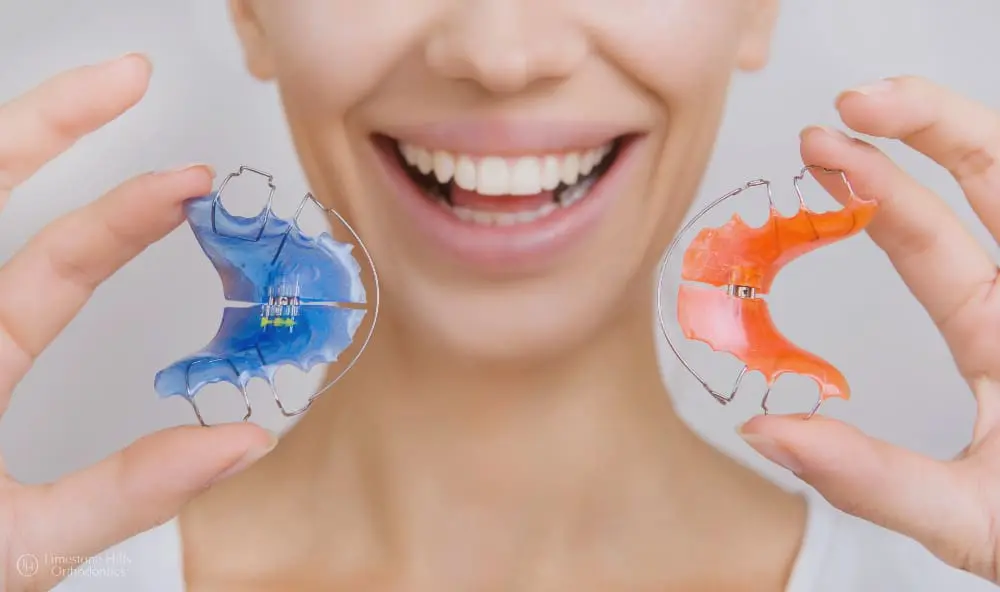
Why Teeth Move Back: The Biomechanics
This is the part competitors usually skip, and it is the part that makes retention make sense. Dr. Viecilli explains it to Austin patients in plain terms, because the biology is the real argument for wearing a retainer.
Each tooth is held in bone by a layer of soft tissue called the periodontal ligament, which is full of elastic and collagen fibers. When a tooth is moved, those fibers are stretched and reorganized into the new position. They do not finish adapting when the braces come off. They keep a recoil tendency, like a stretched band that wants to spring back, for a long period after treatment.
The bone around the tooth also changes. Moving a tooth means the body removes bone on one side and lays down new bone on the other. That new bone needs time to mature and harden around the corrected position. Until it does, the tooth sits in a foundation that is still soft enough to allow movement.
So in the early window after treatment, two forces work against the result at once. The fibers pull the tooth back toward where it came from, and the bone has not yet locked the new position in. A retainer counteracts both by physically holding the tooth still long enough for the fibers to relax and the bone to consolidate.
There is a third, slower factor that never fully stops. Teeth and the jaw continue to change subtly throughout life, a process orthodontists call settling or maturation. This is why retention does not end after a year or two.
The fibers and bone settle, but the lifelong tendency of teeth to keep moving does not, which is the biological reason a retainer is a long-term appliance and not a temporary one.
Fixed and Removable Retention
Retention comes in two main forms, and both work by the same principle of holding the teeth against the forces above. The choice depends on the case, not on one being a shortcut for the other.
A removable retainer is worn on a schedule the treating orthodontist sets, usually while sleeping once the early phase is past. Its strength is that the patient and the orthodontist can monitor the fit over time, and a snug or loose feel is an early signal that something is changing. Its weakness is that it only works when it is actually worn, which is where most relapse originates.
A fixed retainer is a thin wire bonded behind the front teeth. It is sometimes loosely called a permanent retainer, but that word is misleading and Dr. Viecilli avoids it. The wire is fixed or bonded, not permanent. It can debond, wear, or be removed, and it still needs periodic checks. Its advantage is that it holds the front teeth without depending on the patient remembering to wear anything.
Many patients are best served by a combination, a bonded wire on the lower front teeth plus a removable retainer on top, but the right setup is an individual clinical decision. What does not change is the underlying point. Whichever form is used, retention is the device that keeps the biology described above from undoing the result.
Lifetime Retention and the Fit Test
The single most important idea in this article is that retention is lifelong. Teeth do not reach a point where they are safe to leave unretained. The tendency to move slows, but it never reaches zero, which is why the modern standard is long-term retention rather than a fixed end date.
This article deliberately does not publish a one-size-fits-all hour-by-hour wear schedule, because the right schedule is individual. How long a patient was in treatment, how the teeth were moved, the bite, and the type of retainer all change it. The treating orthodontist sets the specific plan, and following that individualized instruction matters more than any generic number found online.
What every patient can use instead is the fit test. A retainer that still slips on easily and feels passive is doing its job and the teeth are stable. A retainer that has started to feel tight or takes effort to seat after a few missed nights is an early warning that the teeth have begun to move.
That snug feeling is the signal to return to consistent wear and, if it persists, to have it checked rather than to push through it.
The fit test turns the retainer itself into a monitoring tool. Used that way, it catches relapse in the early, easy-to-correct window instead of months later when the change is visible and harder to undo.
What a Retainer That No Longer Fits Means
If a retainer rocks, will not fully seat, or feels painfully tight, the teeth have already moved. The retainer is molded to one exact set of positions, so a poor fit is direct evidence that relapse is underway, not a sign that the retainer needs to be forced harder.
Forcing an ill-fitting retainer is the most common way patients make the situation worse. The plastic can crack under the strain, and a retainer is built to hold teeth rather than to push them, so forcing it can load teeth in unintended directions. The correct response is to stop, leave it out, and have it assessed. A detailed walk-through of that scenario is in What If Your Retainer Doesn’t Fit?
How long the retainer has been out usually decides the fix. A few missed nights is often a quick refit. A few weeks to months can mean a new scan and retainer for the current positions. A longer gap can mean a short course of treatment before a new retainer. Acting early keeps the answer on the simpler end of that range.
How to Keep Retention on Track
Keeping a result is far less work than rebuilding it. The practical habits are simple and they all come back to consistency rather than intensity.
Wear the retainer exactly as the treating orthodontist instructed, treat any new tightness as a signal rather than an annoyance, and keep the appliance in good condition so a warped or damaged retainer is not mistaken for moved teeth. Heat distorts clear retainers, so hot water, dishwashers, and hot car interiors on a warm Austin day all ruin them. Care specifics are covered in Retainer Care Tips.
Periodic retention checks matter as well. A brief visit confirms the teeth are holding and catches small drift before it becomes visible, which is the entire point of retention. Patients who treat the retainer as a long-term part of dental care, the way they treat regular dental visits, are the ones whose results still look the same years later.
A Candid Note on Retention
Here is the honest part. Even with good retainer wear, a very small amount of change over many years is normal. Teeth and the jaw continue to mature throughout life, and no retainer freezes them perfectly. The goal of retention is not a permanently identical photograph. It is keeping the result close to where treatment finished and preventing the meaningful relapse that comes from stopping wear.
That is also why retention is described as lifelong rather than as a task that ends. The biology that moves teeth never fully switches off, so the appliance that counters it never fully retires either. A patient who understands that is far less likely to drift away from wearing it, and far less likely to be surprised by a retainer that suddenly will not fit.
Austin and the Hill Country
Limestone Hills Orthodontics supports retention for patients across Austin and the surrounding Hill Country, including Lakeway, Cedar Park, Round Rock, and Bee Cave. The biology of relapse does not change by neighborhood. Teeth drift back the same way for a patient in Westlake as for one in Steiner Ranch.
What is individual is the retention plan itself. The right appliance and the right schedule come from the treating orthodontist who designed the case, because the speed and direction of potential relapse depend on how those specific teeth were moved. A quick check with Dr. Viecilli is what turns a general principle into a plan for one patient.
Common Questions About Retainer Wear and Relapse
What happens if you don’t wear your retainer?
Teeth begin moving back toward their original positions. The shift often starts within days to weeks, is subtle at first, and becomes visible over months. The retainer may stop fitting because the teeth no longer match its mold. This drift is orthodontic relapse, and once it is visible it usually does not reverse on its own without treatment.
How fast do teeth move after stopping retainer wear?
There is no fixed schedule, but the pattern is consistent. The supporting fibers around each tooth begin reorganizing within days, so minor settling can start quickly. Movement is most noticeable in the first months and continues more slowly for years. Acting early, while the change is small, is far easier than acting after the teeth visibly crowd or rotate.
Is some tooth movement normal even if I wear my retainer?
Yes. Teeth settle slightly throughout life as the jaw and bite mature, and a small amount of change can occur even with consistent retention. That is why orthodontists treat retention as lifelong rather than as a phase. Regular retainer wear does not freeze the teeth perfectly, but it holds the result close to where treatment finished.
Do I have to wear a retainer forever?
Effectively yes, in some form. Teeth never permanently lock into place, so the modern standard is long-term retention, typically nightly or as the treating orthodontist directs. The appliance can be a removable retainer worn while sleeping or a fixed wire bonded behind the teeth. The principle is the same: retention is ongoing because the tendency to move never fully stops.
My retainer doesn’t fit anymore. What does that mean?
It means the teeth have already moved. A retainer is molded to one exact set of positions, so when it rocks, will not seat, or feels painfully tight, the teeth no longer match it. Forcing it can crack the plastic or load teeth incorrectly. The honest next step is an exam to see how far the teeth drifted, which decides whether a refit or a short round of treatment is needed.
Sources. Standard orthodontic retention and relapse literature, including post-treatment stability, periodontal and elastic fiber recoil, bone remodeling around moved teeth, lifelong settling, and the modern consensus that retention is long-term.
All timelines are stated qualitatively rather than as exact figures. Specifics that could not be independently verified are stated qualitatively. Clinical observations from Limestone Hills Orthodontics, Austin, TX.