

Short answer. Byte was a direct-to-consumer mail-order aligner brand owned by Dentsply Sirona. The company voluntarily suspended worldwide sales of Byte aligners and impression kits in October 2024 following discussions with the FDA about patient-screening failures, recorded a $495 million impairment charge tied to the business, and announced in January 2025 that it would reposition Byte toward dentist-supervised treatment rather than reinstate the at-home product. Invisalign, by contrast, is sold only to licensed dentists and orthodontists and is delivered with in-person CBCT, chairside exam, ClinCheck planning, attachments, monitoring at every checkpoint, and clinician-controlled refinement scans. The clinical-supervision gap, not the price gap, is the load-bearing distinction. For Austin patients comparing Byte vs Invisalign today, the practical question is which orthodontist-supervised aligner fits the case.
Dr. Rodrigo Viecilli’s clinical observation at Limestone Hills Orthodontics: every orthodontist-distributed aligner case at the practice begins with a 3D CBCT scan that reveals root position, bone level, and skeletal relationships that a mail-order impression kit could not see. Cases proceed with chairside checkpoints every 6 to 12 weeks, where progress photos and direct exam catch tracking failures within a single tray of when they happen. Refinement scans are clinician-ordered, not patient-self-reported, which is why orthodontist-supervised refinement rates run in the expected 60 to 70 percent range rather than producing the irreversible-harm pattern the American Association of Orthodontists has documented in the mail-order aligner category.
What Happened to Byte: A Factual Timeline
Byte was founded in 2017 and acquired by Dentsply Sirona in January 2021 for approximately $1 billion. The product was marketed as an at-home clear aligner system with optional impression-kit fabrication and remote dentist review. Treatment cost roughly $1,900 to $2,400 depending on tier, well below the $3,000 to $7,000 range typical for orthodontist-distributed Invisalign.
The October 2024 suspension came after Dentsply Sirona disclosed it had been in discussions with the FDA about whether Byte’s patient-onboarding workflow adequately screened patients with contraindications. The company announced the suspension as a precautionary measure on October 24, 2024, then disclosed the following day that the FDA conversations were the proximate cause.
On November 7, 2024, Dentsply Sirona reported a $495 million impairment charge tied to the Byte business in its third-quarter financial results, lowered 2024 earnings guidance, and stated it was evaluating whether to continue or discontinue Byte operations. The stock fell roughly 28 percent on the disclosure.
In January 2025, Dentsply Sirona announced that it would reposition Byte toward a dentist-supervised model and would not reinstate the at-home Byte Aligner System or Impression Kit. The company stated it would continue to provide support for non-contraindicated patients already mid-treatment but would not accept new at-home cases.
A federal securities class-action lawsuit filed in late 2024 and allowed to proceed by the court in 2025 alleges that Dentsply Sirona made materially misleading statements during 2021 to 2024 about the level of dentist and orthodontist oversight Byte cases actually received, and that the company failed to report thousands of patient injury reports to the FDA in a timely manner. The litigation is ongoing as of this writing.
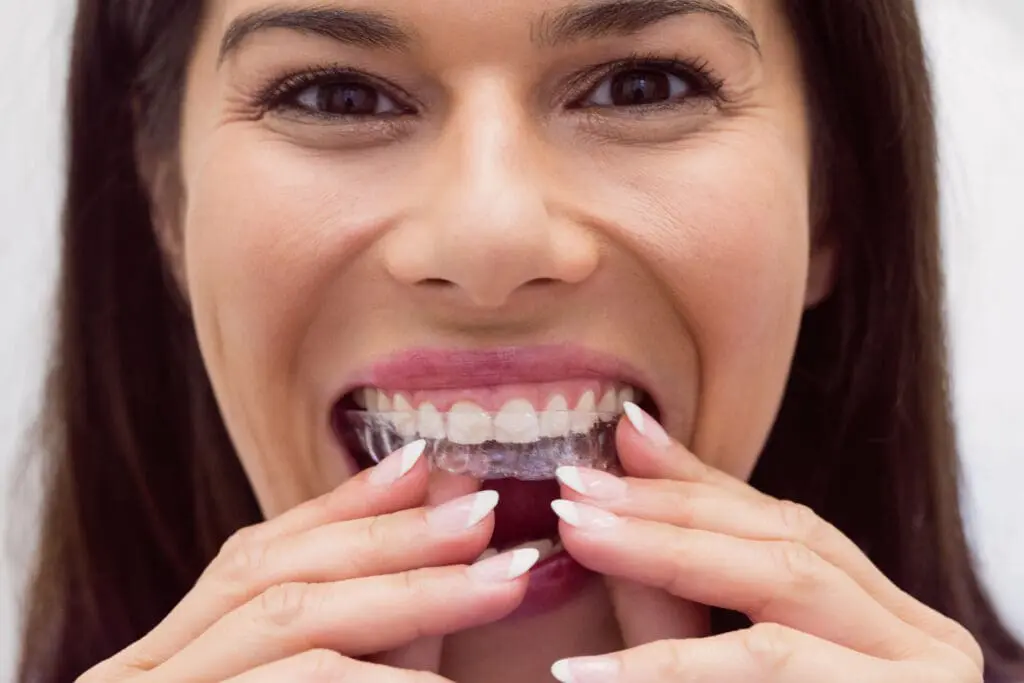
The Clinical-Supervision Gap That Defines the Difference
The headline distinction between at-home aligner kits and orthodontist-distributed aligners is not the plastic. The trays a Byte patient wore and the trays an Invisalign patient wears are similar thermoformed devices produced by similar manufacturing processes. The clinical product is the supervision layer wrapped around the trays.
Orthodontist-supervised treatment at Limestone Hills Orthodontics includes three supervision elements the discontinued at-home Byte workflow did not include. The first is in-person diagnostic imaging. Every new patient receives a 3D cone-beam CT scan that shows root position, bone level, skeletal relationships, sinus anatomy, airway dimensions, and impacted teeth before any treatment plan is approved. A mail-order impression kit captures the crowns of the teeth and nothing below the gumline.
The second is chairside monitoring at every checkpoint. Adult Invisalign and Angel patients return every 6 to 12 weeks for an in-person exam where Dr. Viecilli verifies that each tooth is tracking the planned movement, that attachments are intact, that the bite is closing as planned, and that no soft-tissue or root issues have developed. A photo-based remote check, the model used in mail-order aligner systems, cannot see what an in-person exam sees.
The third is clinician-controlled refinement. When a tooth falls off the planned track in an orthodontist-supervised case, the clinician orders a refinement scan and the lab fabricates new trays designed to finish the movement. The patient does not self-diagnose a refinement need from photographs of their own teeth, which is the structural limitation of remote-only systems.
Byte (Discontinued At-Home Product) vs Orthodontist-Distributed Invisalign: Side-by-Side
The table below compares the discontinued at-home Byte product with orthodontist-distributed Invisalign as offered at Limestone Hills Orthodontics. The Byte column reflects the product as it was sold through October 2024; Dentsply Sirona has stated the at-home version will not be reinstated.
| Factor | Byte (at-home, suspended Oct 2024) | Invisalign at Limestone Hills |
|---|---|---|
| Current operational status | At-home product not for sale. Dentsply Sirona repositioning toward dentist-supervised model per January 2025 announcement. | Actively offered by orthodontist-supervised practices including Limestone Hills. |
| Initial diagnostic imaging | At-home putty impression kit. No CBCT, no in-person exam. | 3D CBCT scan, intraoral scan, clinical exam by an ABO Diplomate. |
| Treatment-planning supervision | Remote review by a licensed dentist or orthodontist on the company panel. | ClinCheck plan reviewed and modified chairside by Dr. Viecilli before approval. |
| Attachments and elastics | Not used in the at-home product. Limited mechanical control of complex movements. | Composite attachments placed in-office on specific teeth per the plan. Elastic wear for bite correction when indicated. |
| Progress monitoring | Photo-based remote check-ins. | In-person exam every 6 to 12 weeks. Direct visualization of tracking, bite, soft tissue, and root behavior. |
| Refinement workflow | Patient-reported, with limited mechanical scope. | Clinician-ordered refinement scan when teeth fall off track. New trays included for up to 7 years from treatment start. |
| Treatment scope | Mild crowding and spacing only. Marketed as cosmetic correction. | Mild to severe alignment, bite correction (Class II and Class III), rotations, extraction-space closure when planned. |
| Clinical accountability | Product manufacturer warranty. Limited individual clinician relationship. | Direct orthodontist relationship. Texas-licensed clinician carries professional liability insurance. |
| Typical fee | Approximately $1,900 to $2,400 (at-home product, no longer sold). | Starting around $4,700 for adult Invisalign at Limestone Hills, all-inclusive. |
| Documented industry pattern | FDA discussions over patient screening. $495M impairment. SEC class-action allowed to proceed in 2025. | Published clinical literature, Align Technology FDA 510(k) clearances, AAO-supported clinical use. |
What Orthodontic and Dental Organizations Have Said About At-Home Aligners
The American Association of Orthodontists has published repeated consumer alerts about direct-to-consumer aligner companies since 2017. The core position is that orthodontic treatment moves biological material and that movement performed without an in-person clinical examination by a licensed dentist or orthodontist can cause irreversible harm including tooth loss, gum recession, changed bites, and root resorption.
A 2019 AAO member survey reported in association communications found that 77 percent of responding orthodontists had seen patients return to their office for retreatment after a direct-to-consumer aligner case that did not include an in-person examination at the start. The AAO has filed a citizen petition with the FDA and has supported state dental board investigations of mail-order aligner companies.
The American Dental Association adopted formal policy in October 2018 strongly discouraging direct-to-consumer dental laboratory services. The ADA reaffirmed the policy in 2023. The ADA position covers aligners as well as partial dentures, whitening trays, snoring appliances, veneers, and mouth guards sold direct to consumers without a dentist’s clinical role in diagnosis and treatment.
Dentsply Sirona’s October 2024 disclosure to investors stated that the Byte suspension followed FDA discussions about whether the company’s onboarding workflow had adequately screened patients with contraindications. The disclosure is the document that connects the professional-organization concerns to a regulator-engaged corporate action.
The SmileDirectClub Precedent
The Byte trajectory is not unique. SmileDirectClub, the largest direct-to-consumer aligner company, filed for Chapter 11 bankruptcy in September 2023 and ceased operations in December 2023, leaving tens of thousands of patients mid-treatment without a clinician to finish their case. The bankruptcy converted to Chapter 7 liquidation in January 2024.
In December 2022, the District of Columbia Attorney General filed an enforcement action against SmileDirectClub alleging that the company required consumers to sign nondisclosure agreements to receive refunds, used those agreements to suppress public reviews and complaints to regulators, and misled consumers about product safety. The 2023 settlement released approximately 17,000 consumers from those nondisclosure provisions and required the company to pay $500,000 to the District. In December 2024, the New York Attorney General announced a separate recovery of approximately $11.5 million for New York residents.
The Byte and SmileDirectClub pattern is the documented industry record for the at-home aligner category. The pattern is what the AAO and ADA position statements were anticipating when they were adopted between 2017 and 2019. Austin patients who saw at-home aligner advertising in the 2020 to 2024 window are looking at a category that has now contracted substantially because of regulatory and consumer-protection actions tied to the clinical-supervision gap.
Orthodontist-Supervised Aligner Options for Austin Adults
Adults in Austin, Cedar Park, Round Rock, Lakeway, Bee Cave, and Westlake who were considering Byte before the suspension and who are now looking for an orthodontist-supervised alternative have two main systems available at Limestone Hills Orthodontics. The choice between them is clinical and personal, not regulatory; both are orthodontist-distributed, both include the supervision layer, and both have published outcome data behind them.
Invisalign is the largest-volume clear aligner platform in the United States. The ClinCheck treatment-planning software, the extensive published clinical literature, and the broad case-suitability range make it the default option for many adult cases. Dr. Viecilli at Limestone Hills has treated more than 1,200 adult Invisalign cases. For patients who prefer the Invisalign brand specifically or whose case complexity benefits from the Invisalign clinical library, the Invisalign system fits.
Angel Aligners is an orthodontist-only system that Limestone Hills offers as the practice’s preferred clear-aligner option for many adult cases. The Angel Pro tier provides two aligner stiffnesses per stage for better posterior force control, which expands the range of complexity aligners can predictably treat. Transparent angelButtons are integrated into the aligner tray itself, eliminating the separately bonded buttons that the Invisalign workflow uses. The orthodontist-only distribution model produces a lower per-case lab cost that the practice passes through to the patient.
The free consultation at Limestone Hills includes a clinical exam, 3D CBCT scan, intraoral scan, and a written recommendation across Invisalign, Angel Aligners, and braces. Patients leave the first appointment with a clear sense of which system fits their case, the projected duration, the all-inclusive fee, and the supervision plan attached to each option.
For Austin and Hill Country Patients Comparing Aligner Options
Limestone Hills Orthodontics treats adult clear-aligner patients from across the Austin metro and the Hill Country. Patients arrive regularly from Lakeway, Cedar Park, Round Rock, Bee Cave, Westlake, Steiner Ranch, and the Northwest Hills neighborhoods. Within Austin proper, patients come from Tarrytown, Davenport Ranch, River Place, Four Points, Jester Estates, and Anderson Mill.
The supervision layer is the same regardless of neighborhood. Every patient receives the in-person CBCT, the chairside ClinCheck or Angel review, the attachment placement, the in-person checkpoints every 6 to 12 weeks, and the clinician-controlled refinement workflow. The Austin orthodontic-specialty market has several orthodontist-distributed aligner practices; the questions worth asking before choosing one are whether the practice performs CBCT imaging at the consultation, whether refinement scans are included in the base fee, and whether the practice will quote written all-inclusive pricing before any commitment.
For Austin patients already mid-treatment in a Byte case, the path forward depends on the case’s current state. Dentsply Sirona continues to support non-contraindicated Byte patients per its January 2025 announcement. Limestone Hills accepts second-opinion consultations for Austin-area patients who want an orthodontist’s clinical review of where their case stands, what was planned, and what would be required to finish the alignment under orthodontist supervision.
Common Questions About Byte, Invisalign, and Orthodontist-Supervised Aligners
Is Byte still in business in 2026?
Dentsply Sirona, the parent company that acquired Byte in 2021, voluntarily suspended worldwide sales of Byte aligners and impression kits in October 2024 after discussions with the FDA about patient-screening failures. The company recorded a $495 million impairment charge tied to the Byte business in late 2024 and announced in January 2025 that it would reposition Byte toward dentist-supervised treatment rather than reinstate the original at-home product. As of the most recent public filings, the original direct-to-consumer Byte aligner is not sold. Dentsply Sirona continues to support patients already mid-treatment who were not contraindicated.
Can mail-order aligners cause permanent damage?
The American Association of Orthodontists has issued repeated consumer alerts stating that orthodontic treatment without an in-person clinical examination can cause irreversible harm, including tooth loss, gum recession, bite changes, and root resorption. The American Dental Association adopted formal policy in 2018 strongly discouraging direct-to-consumer dental laboratory services for the same patient-safety reasons. A 2019 AAO member survey found 77 percent of responding orthodontists had treated patients who came to their office for retreatment after a direct-to-consumer aligner case that did not include an in-person examination at the start. The risk profile is the reason orthodontist-supervised aligners exist.
Why was Byte cheaper than Invisalign?
Byte’s price advantage came from removing the in-person clinician. The mail-order kit replaced an orthodontist’s CBCT scan, clinical exam, chairside monitoring at every checkpoint, and clinician-controlled refinements with a putty impression kit, photo-only progress checks, and remote review. The cost the patient avoided was the cost of the supervision. The SEC class-action complaint against Dentsply Sirona, allowed to proceed by a federal court in 2025, alleges the company represented Byte treatment as overseen by licensed dentists and orthodontists when in practice that oversight was inadequate. Cost and supervision are linked: removing one reduces the other.
What is the main difference between Byte and Invisalign?
Byte was sold direct to the consumer through a mail-order impression kit with no required in-person clinical exam. Invisalign is sold only to licensed dentists and orthodontists, who perform a chairside exam, take a CBCT or intraoral scan, develop the ClinCheck treatment plan, place attachments, monitor progress at every checkpoint, and order refinement scans when teeth fall off the planned track. The aligner trays themselves are similar plastic devices; the supervision layer is the clinical product that makes orthodontic treatment safe. The Byte parent company suspended sales in October 2024 specifically because the supervision layer was inadequate, per public statements made to the SEC.
What are the orthodontist-supervised alternatives in Austin?
Limestone Hills Orthodontics in Austin offers two orthodontist-distributed aligner systems. Invisalign is the largest-volume aligner platform with extensive published outcome data and broad case-suitability. Angel Aligners is an orthodontist-only system that includes Angel Pro dual-stiffness trays for better posterior force control and transparent angelButtons integrated into the tray for elastic attachment without separately bonded buttons. Both systems include the in-person CBCT, chairside monitoring, and clinician-controlled refinement that the discontinued at-home Byte product did not provide. Dr. Viecilli reviews both options against the case and the patient’s preferences at the free consultation.
Sources. Dentsply Sirona, “Dentsply Sirona Provides Update on Byte Aligner Products,” press release and Form 8-K, October 24, 2024, and “Dentsply Sirona Announces Repositioning of Byte within Aligner Portfolio,” press release, January 14, 2025 (investor.dentsplysirona.com).
American Association of Orthodontists, “Consumer Alert: Questions to Consider When Researching Direct-to-Consumer Orthodontic Companies,” 2019, and “American Association of Orthodontists Discusses Patient Health and Safety Information Regarding Direct-to-Consumer Orthodontics,” 2019 (aaoinfo.org).
American Dental Association, “Direct to Consumer Dental Services” policy adopted October 2018 and reaffirmed December 2023 (ada.org).
Office of the Attorney General for the District of Columbia, “AG Racine Announces Settlement With SmileDirectClub Requiring Company to Release Consumers Nationwide From Restrictive Nondisclosure Agreements,” 2023, and U.S. Bankruptcy Court for the Southern District of Texas, SmileDirectClub Chapter 11 case filings, 2023 to 2024.
FDA MAUDE adverse-event report database, individual reports filed against Byte aligners and impression kits, 2019 to 2024 (accessdata.fda.gov/scripts/cdrh/cfdocs/cfmaude).
Limestone Hills Orthodontics clinical observations across orthodontist-supervised Invisalign and Angel Aligners cases regarding the in-person CBCT workflow, chairside monitoring cadence, and clinician-controlled refinement protocol.