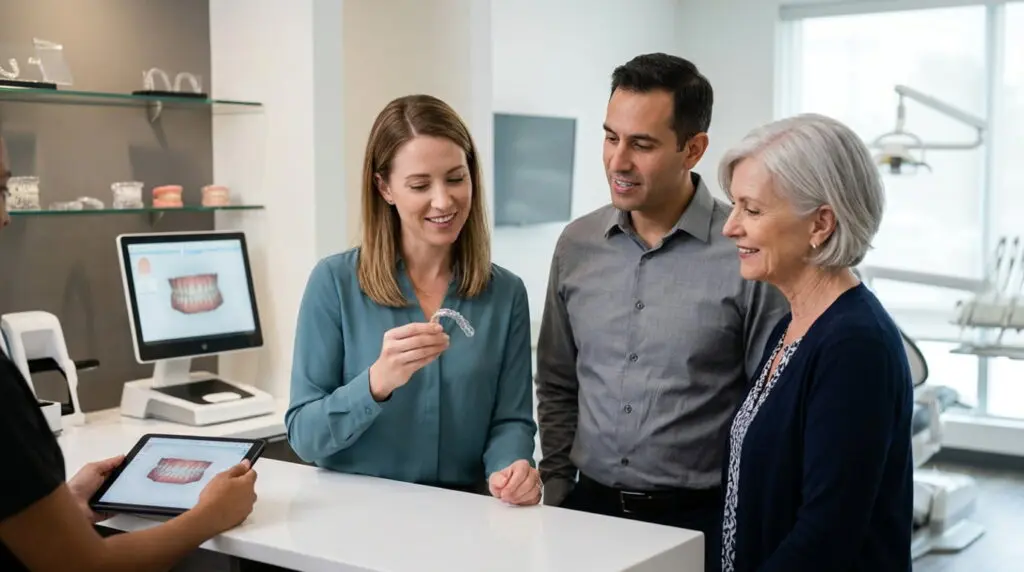
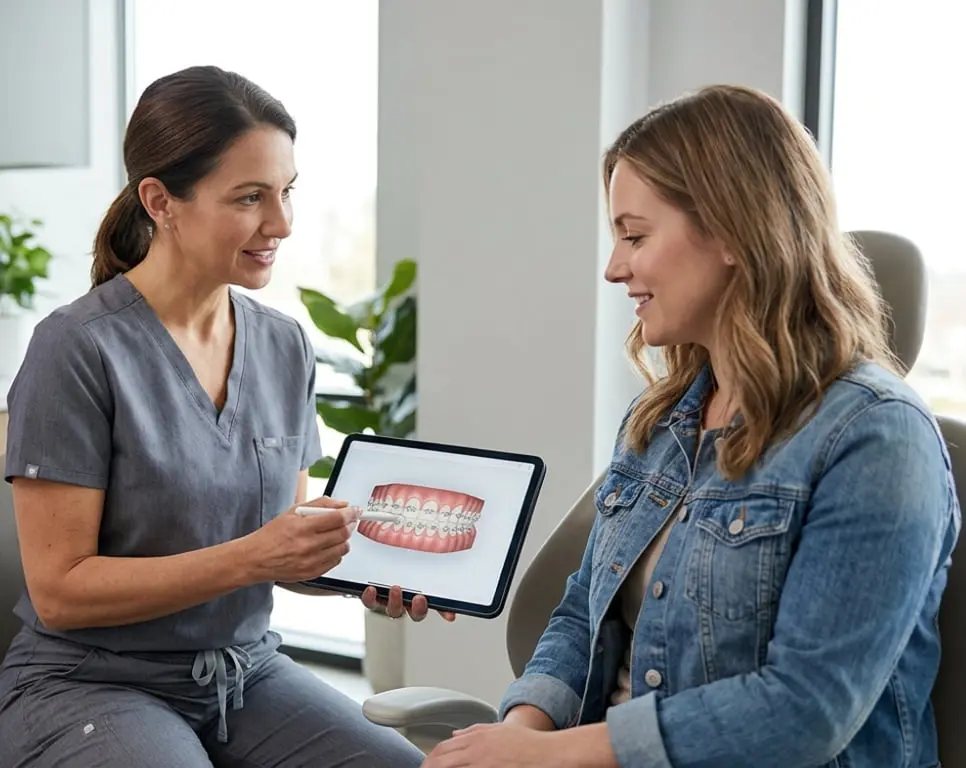
Braces and clear aligners work at every adult decade because healthy bone remodels around moving teeth throughout life. The decade itself is not the obstacle. What changes is the planning.
In the 30s the focus is often professional appearance and pregnancy timing, in the 40s periodontal and bone health, and in the 50s+ gum-disease screening and coordination with restorative or implant work. An exam sets the plan, not a birthday.
Adult teeth move predictably in the 30s, the 40s, and well past 50. Across 5,000+ treated cases at Limestone Hills in Austin, Dr. Rodrigo Viecilli, an ABO Diplomate with a PhD in orthodontic biomechanics and 27+ publications, plans adult cases around gum health, bone support, and any restorative work, not around the patient’s age.
That clinical framework is what most age-focused content misses. The common message is “you are never too old.” True, but incomplete. The useful question is not whether treatment works after 30, 40, or 50. It does. The useful question is what each decade adds to the treatment plan.
So this guide reads by decade. Not because the biology of tooth movement changes at each birthday, but because the surrounding dental picture tends to, and a good plan accounts for that picture before brackets or trays go on.
Age Is Not the Obstacle
The mechanism that moves teeth does not switch off with age. Bone around a tooth remodels in response to controlled orthodontic force throughout adult life. That is why a healthy adult in the 30s, the 40s, or the 50s can have teeth moved into a planned position with the same biological process a teenager uses.
What differs is the context, not the mechanism. An adult arrives with a longer dental history: existing restorations, possible gum recession, bone that may have changed shape where teeth were lost, and sometimes worn or cracked teeth. None of that prevents treatment. All of it shapes the plan.
Dr. Viecilli treats the decade as a prompt, not a verdict. A patient’s age tells the orthodontist which questions to ask first, not whether to say yes. The starting point for every adult case at Limestone Hills is the same: assess gum and bone health, check how existing dental work interacts with planned movement, then design around what the exam shows.
This is also the honest part. The decade is rarely what stands between an adult and a straight, functional bite. Periodontal health, bone support, and any restorative coordination are what shape the plan, and some adults need periodontal treatment sequenced first before tooth movement begins. That is sequencing, not disqualification.

The 30s: Professional Appearance and Pregnancy Timing
Patients in their 30s usually arrive with healthy periodontal tissue and stable bone, which keeps the clinical plan straightforward. The conversation in this decade tends to center on two practical themes rather than on clinical barriers.
The first is appearance in a professional setting. Many patients in their 30s want a discreet option because they spend the day in client-facing or leadership roles. Clear aligners and tooth-colored ceramic brackets both address that, and Dr. Viecilli matches the appliance to the difficulty of the planned movements rather than to the request for discretion alone.
The second is pregnancy planning. Orthodontic appliances do not interfere with pregnancy, but pregnancy can affect oral health, because hormonal changes raise the risk of gum inflammation. The practical step is timing routine cleanings and gum monitoring around a planned pregnancy and keeping periodontal hygiene tight during it.
Dr. Viecilli’s guidance for patients planning a pregnancy is to flag it at the consultation so the monitoring schedule and any elective imaging are planned sensibly. Treatment itself is not the concern. Gum care during a higher-risk period is the part worth coordinating, and it is straightforward when raised early.
The 40s: Periodontal Health and Bone Density
The 40s are where the periodontal assessment starts carrying more weight in the plan. Gum recession and early bone loss become more common with cumulative wear and tear, and orthodontic force has to be planned with the available bone support in mind.
This does not mean braces are off the table in the 40s. It means the orthodontist looks harder at the foundation first. Where periodontal support is reduced, tooth movement is planned with lighter, controlled forces and closer monitoring so the bone is not stressed beyond what it can remodel safely.
Dr. Viecilli’s biomechanics background is directly relevant here. Force magnitude and direction matter most when bone support is compromised, and a plan that respects the reduced support can still correct alignment, sometimes while improving how cleanable the teeth are. Well-aligned teeth are easier to keep plaque-free, which supports periodontal health rather than working against it.
Patients in their 40s with any history of gum treatment should expect coordination with a periodontist. If active gum disease is present, it is controlled first. Once inflammation is managed and support is stable, the orthodontic phase begins. The sequence protects the result and the teeth carrying it.
The 50s and Beyond: Gum-Disease Screening and Restorative Coordination
By the 50s and later, two factors usually lead the plan: a careful gum-disease screening and coordination with restorative or implant work. Many patients in this group have crowns, bridges, implants, or teeth that have been replaced, and each of those interacts with tooth movement differently.
The screening comes first. Periodontal disease is the most common reason a plan is sequenced rather than started immediately, and it is more prevalent in older adults. Dr. Viecilli’s standard for this group is a thorough periodontal evaluation before any appliance, with treatment of active disease sequenced ahead of tooth movement.
Restorative coordination is the second factor, and implants are the clearest example. A natural tooth moves through bone under orthodontic force; an implant is fused to bone and does not move. That difference changes the plan. Where possible, orthodontic positioning is completed before an implant is placed, so the implant goes into its final, correct position.
Crowns, bridges, and worn teeth add their own constraints, because the bite has to finish in harmony with existing dental work or with restorations planned afterward. Dr. Viecilli plans this sequence with the patient’s restorative dentist so the orthodontic result and the final restorations fit together rather than competing.
None of this makes treatment in the 50s+ a lesser option. It makes the planning more collaborative. The teeth still move. The orthodontist is simply solving for a more complex set of inputs, and that is routine work for a specialist who plans the sequence with the rest of the dental team.
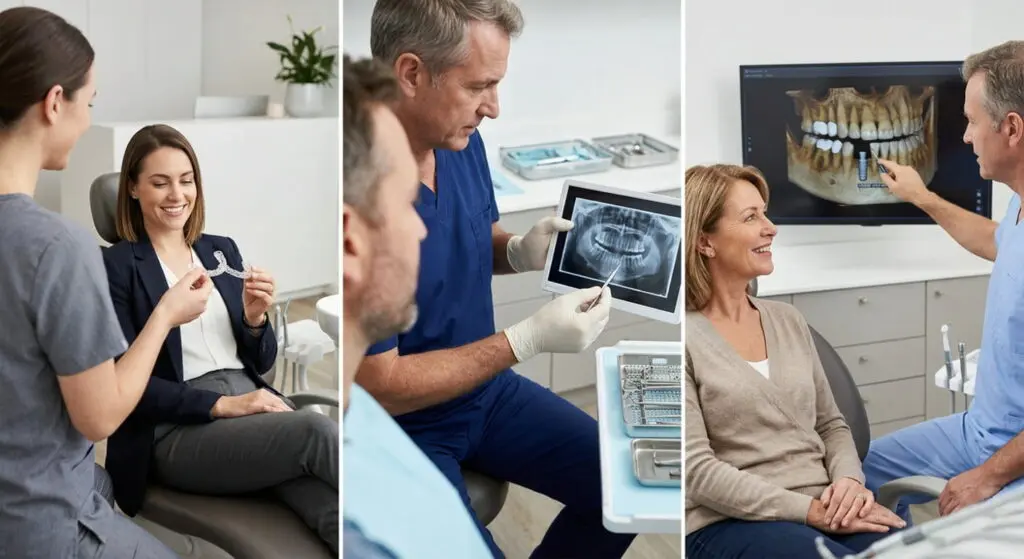
What Stays the Same Across Every Decade
For all the by-decade nuance, the core does not change. Controlled force moves teeth through bone the same way at 35, 45, and 58. The appliances do the same job. The diagnostic process is the same. A specialist still plans the movements, supervises them, and finishes the bite to a functional result.
Treatment time for adults can run slightly longer than for an adolescent, because adult bone remodels at a steadier pace and there is no growth to help. The difference is modest and case-specific, not a reason to skip treatment. Dr. Viecilli sets a realistic timeline at the consultation based on the planned movements, not on the patient’s decade.
The table below summarizes how the planning emphasis shifts by decade while the underlying treatment stays consistent.
By-Decade Considerations at a Glance
| Decade | Leading Planning Factors | What the Exam Checks First |
|---|---|---|
| 30s | Professional appearance and pregnancy timing; periodontal tissue usually healthy and stable | Appliance discretion matched to case difficulty; gum-monitoring schedule around a planned pregnancy |
| 40s | Periodontal health and bone density carry more weight; recession and early bone loss more common | Bone support and gum status; force plan adjusted to available support; periodontist coordination if indicated |
| 50s+ | Gum-disease screening and restorative or implant coordination lead the plan | Thorough periodontal evaluation; how crowns, bridges, implants, and worn teeth interact with planned movement |
| Every decade | Same mechanism: controlled force, bone remodeling, specialist-supervised finish | Diagnostic records, planned movements, and a realistic timeline set at consultation |
The table summarizes emphasis. It does not rank the decades, because every adult case is judged on its own records rather than on age.
Appliance Options for Adults at Any Decade
Adults are rarely limited by appliance choice. Metal braces, tooth-colored ceramic braces, and clear aligners all treat adult cases, and the selection follows the difficulty of the planned movements and what the patient values, not the patient’s age.
When clear aligners fit the case, Limestone Hills offers both Angel Aligners and Invisalign. Angel is the practice’s preferred orthodontist-only system, and Invisalign remains available for patients who specifically want that brand. Both are premium systems, and Dr. Viecilli explains the trade-off plainly rather than steering every patient to one.
The decade does influence one thing here indirectly. Where periodontal support is reduced, the force plan matters more than the appliance label, and a specialist-designed plan in any of these appliances can respect that constraint. The appliance is a tool. The plan behind it is what protects the result.
Austin and the Hill Country
Limestone Hills treats adult patients in every decade from across Austin and the surrounding Hill Country, including Lakeway, Cedar Park, Round Rock, and Bee Cave. The treatment options do not change by neighborhood, and neither does the standard for adult planning.
What changes by patient is the plan, because an adult in their 30s with mild crowding and an adult in their 50s coordinating treatment with an implant are different clinical problems with the same underlying biology.
For Austin-area adults weighing treatment, the practical step is an exam that checks gum and bone health first, then builds the recommendation around it. That consultation, which routes to the practice’s adult-treatment page, turns the by-decade picture into a specific plan for the individual patient.
Common Questions About Braces in Your 30s, 40s, and 50s
Can you get braces in your 30s, 40s, or 50s?
Yes. Orthodontic tooth movement works at every adult decade because healthy bone remodels around moving teeth throughout life. The decade itself is not the limiting factor. What changes is the planning. Dr. Viecilli evaluates gum and bone health and any restorative work first, then designs the plan around those findings rather than around a patient’s age.
Is treatment slower for adults than for teenagers?
Adult treatment can run slightly longer than an adolescent case because adult bone remodels at a steadier pace and growth is complete. The difference is measured, not dramatic, and it varies by case. Dr. Viecilli sets a realistic timeline at the consultation based on the specific movements planned rather than on a patient’s decade alone.
Do gum and bone problems stop adult braces?
Active gum disease is sequenced before tooth movement, not treated as a permanent barrier. Once periodontal inflammation is controlled and bone support is stable, orthodontic treatment can usually proceed. Dr. Viecilli coordinates with the patient’s periodontist or general dentist so the foundation is ready before braces or aligners begin.
Does adult orthodontics need coordination with other dental work?
Often, yes, especially from the 40s onward. Crowns, bridges, implants, and worn teeth all interact with tooth movement. Implants do not move, so they are placed after orthodontic positioning when possible. Dr. Viecilli plans the sequence with the restorative dentist so the final bite and the restorations fit together.
Is age a cosmetic-only reason to get braces as an adult?
No. Adults often pursue treatment for alignment that affects cleaning, bite function, wear, and periodontal maintenance, not appearance alone. Crowded or poorly aligned teeth are harder to keep clean at every age. Dr. Viecilli frames adult treatment around long-term oral health first, with appearance as one outcome among several.
Sources. Standard literature on adult orthodontic treatment planning, periodontal readiness, and orthodontic-restorative coordination, stated qualitatively. Specifics that could not be independently verified are stated qualitatively rather than as exact figures. Clinical observations from Limestone Hills Orthodontics, Austin, TX.