
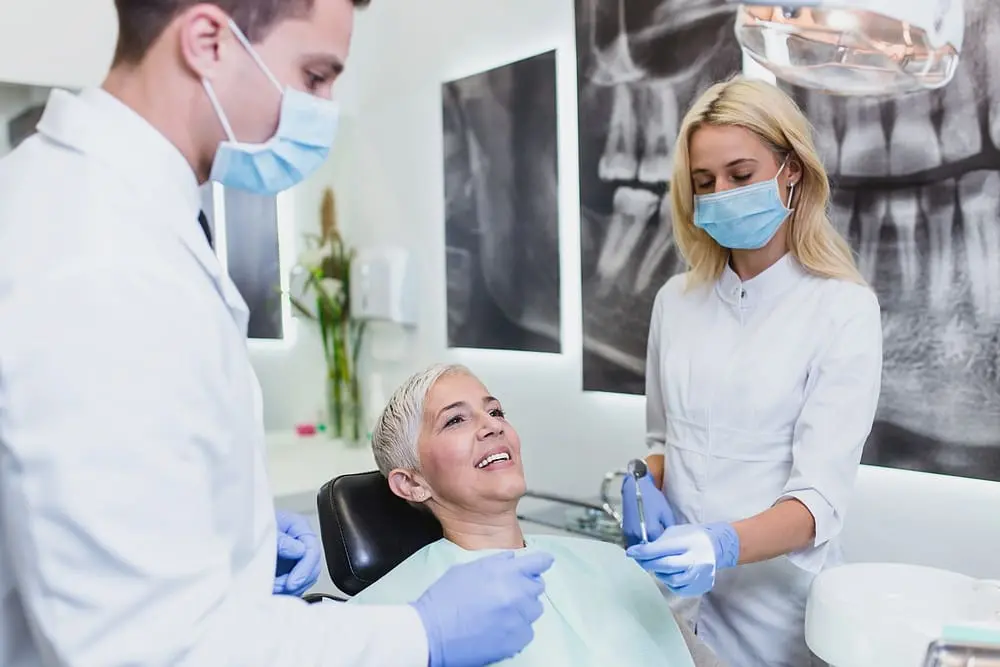
Orthodontic treatment after 50 is often health-driven, not cosmetic. Aligned teeth spread bite force more evenly and reduce abnormal wear, can make hygiene and periodontal maintenance easier, and can prepare the bite for restorative or implant work. The gating factor is stable periodontal and bone health, not age, and care is usually coordinated with other providers.
The question after 50 is rarely about appearance. In Dr. Rodrigo Viecilli’s clinical framework at Limestone Hills, orthodontics in this age group is a health intervention: it protects the teeth from uneven wear, makes the mouth easier to keep clean, and sets up the bite for restorative care.
Across 5,000+ treated cases in Austin, including a steady share of older adults, the pattern Dr. Viecilli sees is consistent. The patients who benefit most are the ones whose periodontal foundation is stable or has been stabilized first. Age is not the limiting variable. Tissue and bone health is.
That is why an after-50 plan at Limestone Hills begins with periodontal clearance and a multidisciplinary review, not with a tray or a bracket. Dr. Viecilli, an ABO Diplomate with a PhD in orthodontic biomechanics, sequences the foundation work before any tooth moves.
Why the After-50 Question Is a Health Question
By the time a patient reaches 50, the dentition has carried decades of function. Teeth drift, contacts open, and the bite that worked at 25 has often changed. The reason to treat at this stage is usually what the misalignment is doing to oral health, not how it looks.
Dr. Viecilli frames the conversation that way from the first visit. The cosmetic result is real, but it is a byproduct. The clinical targets are wear, hygiene access, joint load, and preparation for any restorative work the patient will need over the next decade.
That framing changes what the consultation evaluates. The records review focuses on how the teeth meet, where force is concentrated, what the gums and bone look like, and which teeth are at risk. The plan follows from that picture rather than from a complaint about a single crooked tooth.
The Health Case: Wear, Hygiene, and Restorative Preparation
Three health drivers do most of the work in an after-50 case. Each is clinical, each is measurable, and none depends on appearance.
Even contact reduces abnormal wear. When teeth meet unevenly, a few teeth absorb force the whole arch should share. Over years that concentrated load flattens cusps, chips enamel, and can crack restorations. Distributing contact more evenly slows that pattern and protects the teeth that were carrying the overload.
The benefit compounds with time. A bite that spreads force well at 52 is still protecting the same teeth at 62, which matters in a dentition that has to last for decades more of function.
Aligned teeth are easier to keep clean. Crowded and overlapped teeth trap plaque in spaces a brush and floss cannot reach well. After 50 that matters more, because periodontal risk rises with age and the consequences of missed plaque are higher. Straighter teeth open those contacts and make daily hygiene and professional periodontal maintenance more effective.
This is not a cosmetic argument dressed up as a health one. Easier mechanical cleaning is a direct, well-established benefit of reducing crowding, and it is one of the clearest reasons to align teeth in an older patient with a history of gum issues.
Orthodontics can prepare a site for restorative work. Many patients over 50 face a crown, bridge, or implant. When a tooth has drifted into a gap or tilted toward a missing neighbor, there may not be room or the right angle for a sound restoration. Orthodontics can upright the tooth and open precise space so the restoring dentist or surgeon can place the work in a stable position.
This is some of the highest-value orthodontics in the age group, because it changes whether a restoration succeeds, not just how a tooth looks. Dr. Viecilli plans this kind of case directly with the restoring provider so the movement matches the restorative goal.
TMJ Symptoms: What Orthodontics Can and Cannot Claim
Patients over 50 often ask whether straightening the bite will help jaw pain or clicking. The honest answer is measured. When an uneven bite contributes to jaw-muscle strain, improving how the teeth meet may reduce some TMJ-related symptoms in selected cases.
That is the limit of the claim. Orthodontics is not a cure for a temporomandibular joint disorder, and the evidence on bite correction and TMJ symptoms varies. Many factors drive jaw pain, including muscle habits, stress, joint structure, and prior injury, and the bite is only one of them.
Dr. Viecilli’s approach is to evaluate the joint and the occlusion together rather than promise a result. If the bite appears to be a contributing factor, any improvement is framed as part of overall care, not as a guaranteed outcome. When the joint is the dominant problem, he coordinates with the appropriate providers rather than treating orthodontics as the answer.
For an older patient this candor matters. Overpromising TMJ relief sets up disappointment and can mask a problem that needs a different specialty. The responsible position is that bite alignment may help some patients with some TMJ-related symptoms, evaluated case by case.
The Prerequisites: Periodontal Clearance and Bone Health
This is the part of after-50 orthodontics that does not get enough attention, and it is where Dr. Viecilli is most deliberate. Before any tooth moves, the foundation has to be sound.
Periodontal clearance comes first. Active gum disease has to be diagnosed, treated, and controlled before orthodontic force is applied. Moving teeth through inflamed, infected tissue can accelerate the loss of the bone and attachment that hold those teeth in place. The sequence is not optional. Periodontal stability is a precondition, not a parallel task.
In practice this means a periodontal evaluation, treatment of any active disease, and a confirmation that the tissue is stable before brackets or aligners begin. For a patient with a periodontal history, that confirmation is the gate the whole plan waits on.
Bone support is assessed, not assumed. Teeth move through bone, so the amount and quality of bone support sets what movements are safe and how they are staged. After decades of function and any past disease, support varies tooth by tooth. The plan is built around what the bone can tolerate, with lighter forces and a careful sequence where support is reduced.
Some medications affect the picture. Certain drugs that influence bone metabolism, including some prescribed for bone density, can affect how teeth respond to orthodontic force and are reviewed as part of planning. Dr. Viecilli takes a full medical and medication history and coordinates with the patient’s physician when a medication is relevant to tooth movement.
None of this is a reason to avoid treatment after 50. It is the reason treatment after 50 is planned more carefully than treatment at 20. The biology still allows tooth movement; the planning simply has to respect the foundation it is working on.
The Multidisciplinary Approach
After-50 cases are rarely a solo orthodontic problem. The strongest plans are built with a periodontist and a restorative dentist in the room, at least conceptually, from the start.
A typical sequence looks like this. The periodontist stabilizes the gums and bone. Dr. Viecilli then moves the teeth into a position that improves contact, hygiene access, and the restorative setup. The restoring dentist or surgeon completes any crowns, bridges, or implants into the position orthodontics created. Each step assumes the others.
Coordinating that sequence is the work that protects the outcome. If orthodontics moves a tooth without knowing the restorative target, the result may not fit the crown that follows. If a restoration is placed before the tooth is uprighted, the angle may be wrong. The order and the communication between providers are what make the result hold.
Limestone Hills handles this through its coordinated-care relationships. The practice works with periodontal and restorative partners so an after-50 plan is sequenced as one project rather than three disconnected ones. Patients and referring providers can see how that coordination works on the Health Partners page.
What Differs After 50 Versus a Younger Adult
Mechanically, healthy teeth move the same way at 55 as at 35. The differences are in the foundation, the goals, and the planning, not in whether tooth movement works.
The foundation needs more scrutiny. A 30-year-old rarely needs periodontal clearance before treatment; a 55-year-old often does. Bone support is more variable, and the medical and medication history carries more weight. The pre-treatment workup is simply more thorough.
The goals shift toward health and restorative coordination. A younger adult often treats for crowding or appearance. After 50 the driver is more often wear protection, hygiene access, or preparation for a crown or implant, which changes how the plan is designed and what success looks like.
Force and pacing are calibrated to the tissue. Where periodontal support is reduced, lighter forces and a more careful sequence reduce risk. This is not slower because of age. It is matched to the support the teeth actually have, which is a clinical decision Dr. Viecilli makes from the diagnostic records.
The takeaway for an Austin patient over 50 is straightforward. Treatment is realistic and often health-protective, but it is a planned, coordinated process, and the planning is exactly what makes it safe at this stage.
The Candid Part: The Gate Is Health, Not Age
Here is the honest framing Dr. Viecilli gives older patients. Age is not what decides whether someone can have orthodontic treatment. The gating factors are periodontal stability, adequate bone support, certain medications, and any restorative coordination the case requires.
For some patients that means periodontal treatment has to be sequenced first, and a few weeks or months of foundation work precedes any tooth movement. For others it means the case has to be planned alongside a restorative dentist before a single bracket is placed. And for some, the honest answer at the first visit is that the foundation is not ready yet, and orthodontics waits until it is.
Not every older adult is a candidate the day they ask. That is not a statement about age. It is a statement about whether the gums, bone, and overall plan can support treatment safely. Dr. Viecilli would rather say that plainly than start a case the foundation cannot carry.
The encouraging side of the same truth is that the barrier, when there is one, is usually fixable. Periodontal disease can be treated. Restorative sequencing can be planned. Once the foundation is addressed, a patient who was not a candidate at the first visit often becomes one. The path runs through health, and Austin patients can start it through the adult orthodontic consultation.
Austin and the Hill Country
Limestone Hills treats adult patients from across Austin and the surrounding Hill Country, including Lakeway, Cedar Park, Round Rock, Bee Cave, and Westlake. For patients over 50, the practice coordinates care with periodontal and restorative providers so the bite work, the gum work, and any restorations are sequenced as one plan.
The consistent message for older Austin-area patients is that the gating factor is health, not age. A consultation evaluates the periodontal foundation, the bone support, the bite, and any restorative needs, then sets a realistic plan and sequence. How the coordination is organized is described on the Health Partners page.
Common Questions About Orthodontics After 50
Is orthodontic treatment worth it after 50?
Often yes, when the goal is health rather than appearance. Aligned teeth distribute bite force more evenly, which reduces abnormal wear, and they can make brushing, flossing, and periodontal maintenance easier. Orthodontics can also upright a tilted tooth before a crown or implant. The deciding factor is stable periodontal and bone health, assessed before any tooth movement begins, not the patient’s age.
Does orthodontic treatment after 50 help with TMJ problems?
It may help in selected cases. When an uneven bite contributes to jaw-muscle strain, improving how the teeth meet can reduce some TMJ-related symptoms for some patients. Evidence varies and orthodontics is not a cure for a TMJ disorder. At Limestone Hills, Dr. Viecilli evaluates the joint and the bite together and frames any TMJ benefit as part of overall care, never as a guaranteed outcome.
Do gums and bone have to be healthy before braces after 50?
Yes. Active gum disease and unstable bone support must be treated and controlled before teeth are moved, because moving teeth through inflamed tissue can worsen attachment loss. Dr. Viecilli requires periodontal clearance first and often sequences periodontal treatment ahead of orthodontics. Once the foundation is stable, tooth movement at any adult age can proceed safely under supervision.
How does orthodontics help before a dental implant or crown?
Years of drift can tip teeth into a space or crowd an edentulous site. Orthodontics can upright the neighboring teeth and open the right amount of room so a restorative dentist or surgeon can place a crown, bridge, or implant in a sound position. At Limestone Hills this is planned with the restoring provider so the orthodontic result matches the restorative plan.
Is age 50 or older a barrier to orthodontic treatment?
Age by itself is not the barrier. Healthy teeth move at any adult age. The real gating factors are periodontal stability, adequate bone support, certain medications that affect bone, and any restorative coordination the case needs. Some patients need periodontal treatment sequenced first, and not every older adult is a candidate until that foundation is addressed. Dr. Viecilli assesses each of these before recommending treatment.
Sources. Standard literature on adult orthodontic treatment after 50, periodontal-orthodontic coordination, orthodontic preparation for restorative and implant care, and bite-wear considerations, stated qualitatively. TMJ-related benefit stated qualitatively as may-help in selected cases, not a cure. Clinical observations from Limestone Hills Orthodontics, Austin, TX.