
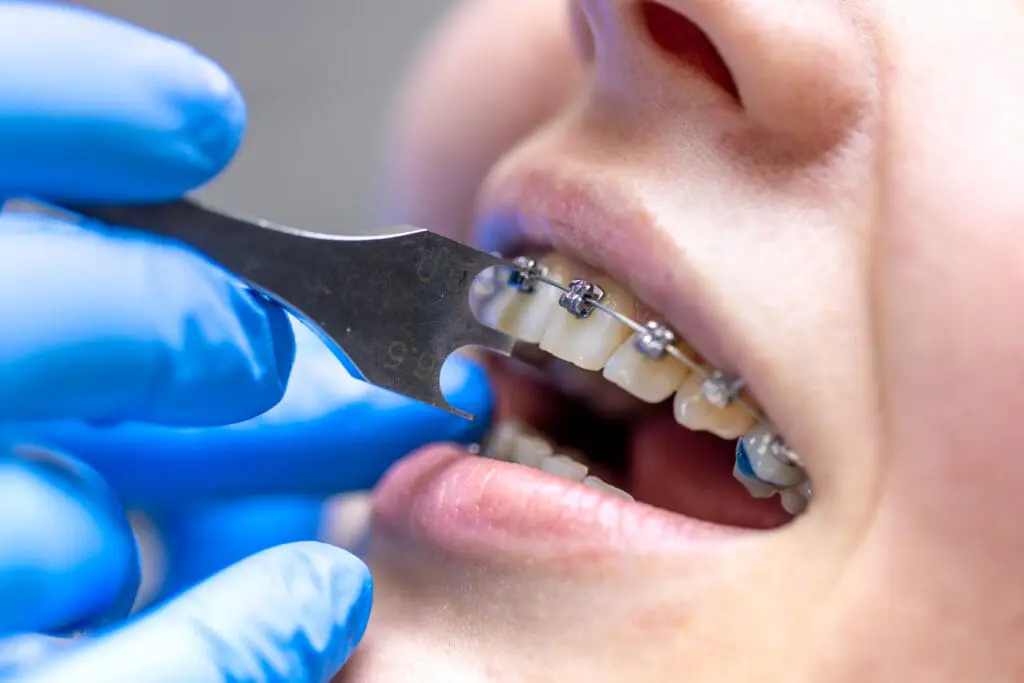
For adults who want discreet treatment, lingual braces vs Invisalign reach a similar esthetic result by opposite routes. Lingual braces hide fully behind the teeth and never come out, but ask for a two to four week speech adjustment.
Invisalign stays clear and removable with no speech issue, but the result rides on 22-hour daily wear. Limestone Hills Orthodontics in Austin offers Invisalign and the orthodontist-only Angel system, not lingual braces.
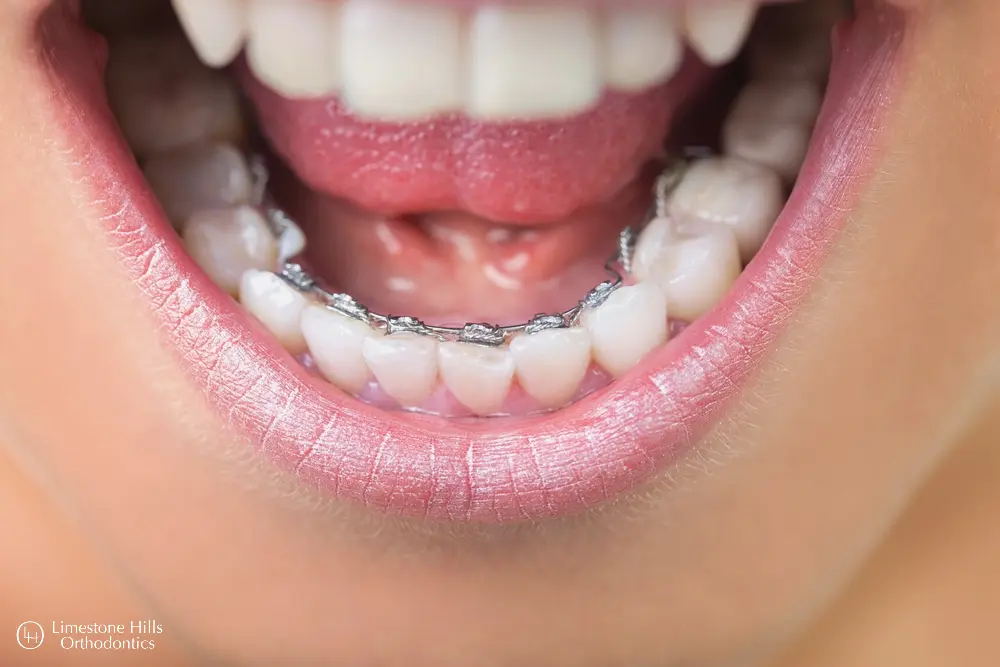
Lingual braces sit on the inside, against the tongue, and stay there for the whole treatment. Invisalign sits over the front of the teeth and comes out for meals, brushing, and photos. That single structural difference drives every trade-off in this comparison.
Lingual carries a steeper early speech-and-comfort curve but zero compliance burden once it is bonded. Invisalign carries no speech curve, but its outcome depends entirely on wear-time discipline.
In Dr. Viecilli’s clinical assessment, removable clear aligners deliver the same discreet outcome for the adult patient mix Limestone Hills treats in Austin, with a workflow the practice prefers, which is why the practice discontinued lingual.
Clear aligners at Limestone Hills run through Invisalign and the orthodontist-only Angel system the practice leans toward; Invisalign remains the choice for patients who specifically prefer that brand.
How Lingual Braces and Invisalign Work
Lingual braces use the same brackets-and-wire mechanics as regular braces, with one change: the brackets bond to the tongue side of the teeth instead of the cheek side.
Each bracket is customized to the back surface of an individual tooth, which is irregular and varies far more than the flat front surface. Adjustments happen at periodic appointments, and the appliance works continuously between visits.
Invisalign uses a sequence of clear plastic trays. Each tray shifts the teeth a small amount, and the patient steps to the next tray every one to two weeks. The trays come out for eating, drinking anything but water, and brushing. Tooth movement only happens during the hours the trays are actually in the mouth, so the wear schedule is the engine of the result.
Lingual Braces vs Invisalign: Side-by-Side
The table below sets the two options against each other on the dimensions adults ask about most. Read it as a starting frame, not a verdict; the right answer depends on the bite and on how a given patient lives day to day.
| Dimension | Lingual braces | Invisalign |
|---|---|---|
| Visibility | Fully hidden behind the teeth | Clear trays, hard to notice up close |
| Speech adaptation | Temporary lisp and tongue soreness, usually 2 to 4 weeks | Minimal, brief for most patients |
| Food restrictions | Bracket-aware, same as regular braces | None; trays removed to eat |
| Treatment time | Comparable to regular braces; works continuously | Often 12 to 18 months when wear is consistent |
| Cleaning | Harder; brushing and flossing around hidden brackets | Easier; brush normally with trays out |
| Candidacy | Handles a wide range of cases, including complex movements | Strong for mild to moderate cases; complex cases need careful planning |
| Cost profile | Typically the highest-cost option; custom brackets, longer chairs | Generally lands below lingual |
The Speech Adaptation Curve
This is the dimension that separates the two options most clearly, and the one the live comparison content tends to understate. Lingual brackets sit exactly where the tongue tip lands for s, z, t, d, and l sounds. The tongue has to learn a new posture around the hardware, and during that learning window many patients hear a slight lisp and feel tongue soreness.
The curve is front-loaded. The first two weeks carry the most awareness, then a steady slide toward normal speech over roughly two to four weeks. Patients who talk a lot during the day, or who read aloud for several minutes daily, tend to adapt faster. The change is temporary; it reflects the tongue adjusting, not a defect in the appliance.
Invisalign avoids this almost entirely. The trays cover the front of the teeth and leave the tongue tip free, so speech effects are mild and short for most patients. For an adult whose job depends on clear speech from week one, that contrast matters more than any other line in the comparison table.
There is a practical asymmetry worth naming. The lingual speech curve is a fixed, one-time cost paid in the opening weeks, after which speech returns and the appliance keeps working untouched.
The Invisalign speech advantage is permanent, but it sits beside a permanent wear obligation. Different patients value these profiles differently, and that judgment, rather than a ranking, is what a consultation is for.
Food and Cleaning: Two Different Daily Routines
Lingual braces follow the same food playbook as regular braces. Hard, sticky, and very crunchy foods can pop a bracket or bend a wire, so the patient adapts how they eat for the whole treatment. Cleaning takes more effort because the brackets sit on the hidden surface; brushing and flossing around them is less intuitive and slower.
Invisalign flips both. The trays come out for every meal, so there are no food restrictions at all. Cleaning is the normal brush-and-floss routine with the trays removed. The catch is structural: every minute the trays are out for eating or drinking counts against the 22-hour target, so the freedom comes paired with a clock.
Treatment Time and Compliance
Lingual braces work continuously. They move teeth while the patient sleeps, eats, and goes about the day, with no decision to make. Treatment length tracks regular braces and depends on the complexity of the case, not on patient habits.
Invisalign treatment often runs 12 to 18 months when wear is consistent, comparable to braces for many cases. The phrase that carries the weight is when wear is consistent. Predictable tooth movement depends on hitting the 20 to 22 hour target, and clinical follow-up of aligner patients shows that full adherence to the wear schedule is far from universal.
Invisalign rewards a disciplined routine and stalls without one. Lingual braces ask for the speech adaptation up front, then carry the patient with no compliance burden at all.
Who Each Option Suits
Lingual braces handle a broad range of cases, including some complex movements, because they use full fixed mechanics. They suit an adult whose top priority is total invisibility, who would rather absorb a few weeks of speech adjustment than manage a removable appliance, and who accepts the higher cost and more involved cleaning.
Invisalign suits an adult who wants discretion without a fixed appliance, who can hold a consistent 22-hour routine, and who values the freedom to remove trays for meals and events.
Modern clear aligner planning, paired with attachments and an orthodontist’s supervision, extends what aligners treat well past the mild cases many people still associate with them. The right call is case specific and comes out of a clinical exam, not a checklist.
A few patient situations tilt the answer quickly. A musician who plays a wind instrument often finds removable trays easier to manage around practice and performance. An adult with a history of inconsistent retainer wear may be honest that a 22-hour aligner routine is unrealistic, which is useful information rather than a failing.
Someone whose only firm requirement is that no one ever sees an appliance is describing the one thing lingual does that aligners cannot fully match. None of these settles a case on its own; each is a signal the orthodontist weighs against the bite itself.
Cost at a General Level
Lingual braces are usually the most expensive option in adult orthodontics. The price reflects real factors: each bracket is customized to an individual tooth, bonding and adjustment appointments take longer in the chair, and only a small share of orthodontists are trained to place them.
Invisalign generally lands below lingual on cost, though the exact figure depends on case complexity and the treatment plan.
Detailed cost mechanics, financing, and how clear aligners compare with braces on price live in dedicated Limestone Hills resources.
The relevant point here is the relationship: lingual sits at the top of the cost range for esthetic treatment, and that gap is one of several reasons the practice prefers aligners for its patient mix. Every adult consultation in Austin includes a written estimate before treatment begins.
Why Limestone Hills Offers Clear Aligners Instead of Lingual
Limestone Hills does not currently offer lingual braces, and the practice is upfront about why. In Dr. Viecilli’s clinical assessment, for the practice’s adult patient population, Invisalign and the orthodontist-only Angel system reach the same discreet goal with a workflow the practice prefers across case planning, chair time, and patient experience.
That is a clinical-judgment decision tied to the practice’s patient mix, not a statement that lingual braces are a poor appliance; in skilled hands lingual works well for the right patient.
Here is the candid part. A patient who wants lingual braces specifically, and nothing else, is a patient Limestone Hills would refer to a provider who offers them. The practice would rather say that plainly than steer someone toward an option that does not match what they came in for.
For the many adults whose real goal is discreet treatment rather than lingual as a category, Invisalign and Angel cover that goal directly. Angel is the orthodontist-only system the practice leans toward, with its dual-stiffness Angel Pro workflow for finer force control; Invisalign remains the choice for patients who specifically prefer the Invisalign brand.
Discreet Adult Treatment in Austin and the Hill Country
Limestone Hills Orthodontics treats adults from across Austin and the surrounding Hill Country, including Lakeway, Cedar Park, Round Rock, Bee Cave, Westlake, and Steiner Ranch. Discreet treatment is a frequent reason adults in these communities book a consultation, often professionals who want orthodontic correction without a visible appliance during client-facing work.
Every esthetic-treatment consultation follows the same path. Dr. Viecilli examines the bite, reviews the goals, and explains whether Invisalign or Angel is the better match for the case, with the trade-offs stated plainly.
If a patient is set on lingual braces specifically, the practice says so directly and points them toward a provider who offers them. The consultation is free for adults in Austin, and the recommendation comes from the clinical exam, not a sales script.
Common Questions About Lingual Braces and Invisalign
Are lingual braces or Invisalign better for discreet adult treatment?
Both stay discreet, but the trade-offs run in opposite directions. Lingual braces sit behind the teeth and are fully hidden, with no compliance burden once placed, but most patients adapt to a temporary lisp and tongue soreness over two to four weeks. Invisalign trays are clear and removable with no speech issue, but results depend on wearing them 20 to 22 hours a day. For its adult patient mix, Limestone Hills in Austin offers Invisalign and the orthodontist-only Angel system rather than lingual.
Does Limestone Hills Orthodontics offer lingual braces?
No. Limestone Hills does not currently offer lingual braces. In Dr. Viecilli’s clinical assessment, removable clear aligners reach the same discreet result for the practice’s adult patient population with a workflow the practice prefers, so the practice concentrates its esthetic options on Invisalign and Angel. A patient set specifically on lingual braces would be referred to a provider who offers them, and the consultation is upfront about that.
Do lingual braces affect speech more than Invisalign?
Yes, in the early weeks. Because the brackets sit against the tongue, many lingual patients notice a slight lisp on s and l sounds plus tongue soreness for the first two to four weeks while the tongue learns a new resting posture. Reading aloud each day shortens that window. Invisalign trays sit over the front of the teeth and away from the tongue tip, so speech effects are minimal and brief for most patients.
Can you eat normally with lingual braces and Invisalign?
The food rules differ sharply. Lingual braces follow the same bracket-aware restrictions as regular braces: hard, sticky, and very crunchy foods can damage brackets or wires. Invisalign trays come out for every meal, so there are no food restrictions, though the trays go back in after brushing and the daily wear clock keeps running.
Why do lingual braces cost more than Invisalign?
Lingual braces are usually the most expensive orthodontic option because each bracket is customized to the back of an individual tooth, the bonding and adjustment appointments take longer at the chair, and few orthodontists are trained to place them. Invisalign generally lands below lingual on cost. At Limestone Hills, every adult consultation in Austin includes a written estimate so the fee is clear before treatment starts.
Sources. American Association of Orthodontists, clear aligner wear-time guidance and adult treatment information. Peer-reviewed clinical research on clear aligner wear protocol and compliance with the daily wear schedule (controlled and retrospective studies indexed in the National Library of Medicine).
Manufacturer clinical information on lingual braces customization and on clear aligner systems, including orthodontist-only distribution and dual-stiffness aligner workflows. Published orthodontic literature and practice guidance on lingual-braces speech adaptation and tongue accommodation over a two to four week window. Clinical observations from Limestone Hills Orthodontics, Austin, TX.