
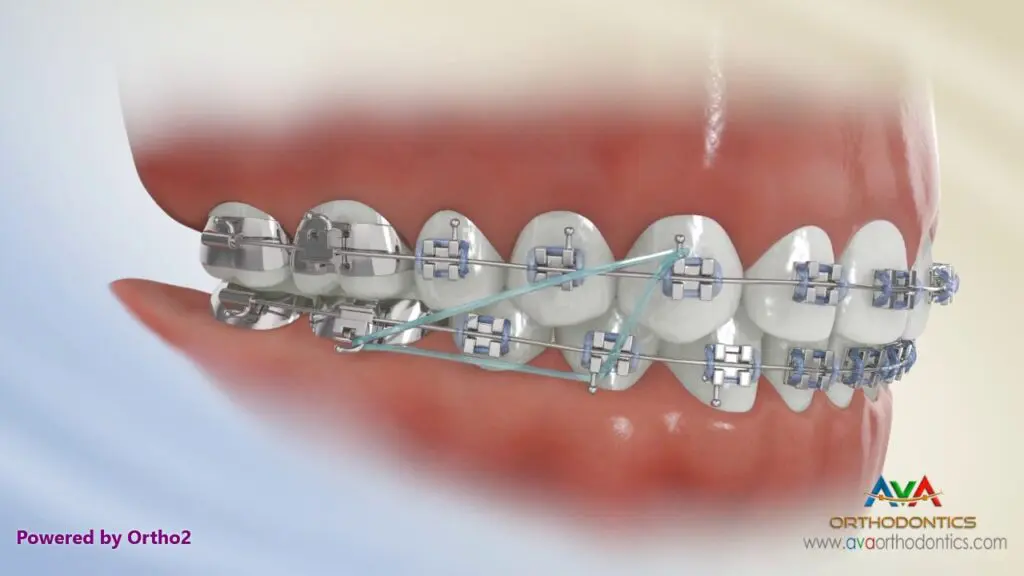
Soreness from rubber bands on braces is the bite-correcting force working, and it eases fastest with a planned routine: an over-the-counter analgesic such as acetaminophen or ibuprofen timed before the soreness peaks, cold water and soft foods for the first two to three days, a warm salt-water rinse, and wax over any hook that rubs. The soreness peaks early, then fades as the bite adapts.
At Limestone Hills Orthodontics in Austin, the orthodontist explains this curve before the first elastic is prescribed, so a sore teen and a worried parent know what is normal and what is a reason to call.
Dr. Viecilli explains the part most patients miss: rubber band soreness is not the same as bracket or wire soreness. The wire moves individual teeth. Elastics pull the whole bite into a new relationship, so they load the jaw muscles and the ligament around the teeth at once. That is why it feels deeper and broader, and why it peaks in the first two to three days of a new prescription.
The counterintuitive point Dr. Viecilli makes to every family: consistent full-time wear produces less total soreness than stopping and starting. The bite moves most while it adapts. Wear the bands continuously and it adapts once. Stop and restart, and every restart re-triggers the same early peak.
So the relief routine is only half the answer. The other half is that the patients who hurt the least over a full course of treatment are the ones who never gave the bite a chance to drift back.
Why Rubber Band Soreness Is Different From Brace Soreness
The first thing that reassures a parent is understanding that elastic soreness is its own thing, not a worse version of the ache the teen already knew from getting braces or a wire change. Brackets and the archwire move individual teeth within each jaw, which produces a pressure-on-the-teeth feeling most patients can already describe after their first few adjustments.
Rubber bands do a different job. They connect the upper and lower teeth and pull the two jaws into a corrected bite. Because the force works across the bite rather than on one tooth at a time, it engages the jaw muscles and the periodontal ligament, the thin innervated cushion between each tooth root and the bone, around several teeth at once.
That broader, deeper load is why a patient who handled wire changes easily can be caught off guard by the first few days of elastics. It is the expected sign that the bite itself has started to move, the one part of treatment the wire cannot accomplish on its own, not a sign that something was placed wrong.
The Peak-and-Fade Timeline
The most useful thing a parent can know is the shape of the soreness, because it is predictable. It is not a constant level that drags on; it is a rise then a settle.
When elastics start, or when the orthodontist changes which teeth they connect, the soreness climbs over the first day, tends to be most noticeable around the second or third day, then eases steadily across roughly the following week as the bite adapts. The honest picture, drawn from the practice caseload, looks like this.
| When | Typical soreness | What is happening |
|---|---|---|
| First few hours | Mild tightness, a new awareness of the bite | The elastic force begins loading the jaw and the ligament |
| Day 1 | Soreness building, noticeable on chewing | The bite starts moving toward the new position |
| Days 2 to 3 | Peak; a dull, broad ache across the bite | Bite movement and ligament response are at their highest |
| Days 4 to 7 | Easing steadily, normal eating returns | The bite is adapting to the new force |
| A new configuration | A shorter version of the same peak restarts | The bite is asked to move in a slightly new direction |
Two things matter in that table for a parent watching a teen. First, the worst is usually over within three days, which makes a tough week easier to plan around.
Second, the last row is the one families forget: the orthodontist changes elastic configurations as treatment progresses, and each change restarts a shorter version of the early peak. A teen who was comfortable for weeks and suddenly reports soreness again has not gone backward.
Soreness that follows this shape, rising then settling, is the normal adaptation curve. Soreness that keeps climbing past the first several days, stays sharp instead of dull, or localizes onto one tooth is the version that warrants a call rather than waiting it out.
The Trap: Why Skipping Bands Makes Soreness Worse
This is the part of the conversation Dr. Viecilli has in plain terms, because the instinct is so natural and so costly. A teen whose bite is sore from new elastics often does the obvious thing: takes the bands out, or quietly stops wearing them. The first day off feels better. The trap is what happens next.
The soreness comes from the bite moving, and the bite moves most while it is adapting to a new force and least once it has settled. Worn continuously, the bite makes that adjustment one time, with one peak that then fades, which is the entire reason consistent wearers describe one rough stretch and then comfort.
Stop wearing the bands for a day or two and the bite drifts partway back, so when the elastics go back in it has to make that same early move again. A part-time wearer can end up living in a repeating loop of first-day soreness, never reaching the calm that comes after adaptation.
So the candid disclosure the practice does not soften: some patients quietly stop wearing elastics specifically because of the soreness. It feels better for a day. It resets the peak every restart, and because the bite never holds its progress, it also extends treatment by months.
Dr. Viecilli names that trap directly rather than only handing a family a list of remedies, because understanding why consistency hurts less is what actually changes the behavior.
The goal in a sore week is not to give the bite a break; it is to get through one adaptation, once, so the teen reaches the comfortable side and stays there. For the full picture of what skipping bands does to the treatment itself, the companion guide on what happens if you do not wear your elastics covers the time cost and the honest compromise.
The Comfort Routine for the First Few Days
Once a family understands that the aim is to get comfortably through one adaptation, the routine is straightforward. None of these steps change how fast the bite moves; they make the two to three day peak something a teen can live with without taking the bands out.
- Plan the analgesic, do not chase it. An over-the-counter pain reliever such as acetaminophen or ibuprofen, at the dose on the label, works best taken shortly before a new elastic configuration starts or before bed on the first night, when soreness tends to be most noticeable. Taking it ahead of the peak is more effective than waiting until the ache is already bad.
- Use cold for the first two to three days. Cold water, ice chips, or a chilled soft food such as yogurt or a smoothie eases a sore bite while the soreness is at its highest.
- Keep a soft-food window. Pasta, eggs, soup, mashed potatoes, and similar foods for the first two to three days reduce how hard the jaw muscles have to work while they are adapting. Normal eating returns as the soreness eases.
- Rinse with warm salt water. A teaspoon of salt in warm water, swished and spat a couple of times a day, soothes general tissue soreness around the teeth. It is comfort, not a cure, and that is the point during the peak.
- Cover any hook that rubs. Elastics attach to small hooks on the brackets. If a hook irritates a cheek or lip, a pea-sized piece of orthodontic wax pressed over it removes the rub. This is separate from the bite soreness and worth handling so it does not get blamed on the elastics.
- Keep the bands in. The single most effective comfort measure over the whole course of treatment is not on this list as a product. It is wearing the elastics continuously, so the bite adapts once, instead of restarting the peak by taking breaks.
One distinction is worth drawing for a parent: steps one through four address the bite soreness from the elastic force, while step five addresses hook irritation, a separate mechanical rub. Knowing which is which makes it clear which measure to reach for.
For the mechanics of which elastic goes where, how to place one with a mirror, and what to do when a band snaps, the technique is covered in the guide on orthodontic rubber bands.
For general braces soreness not specific to elastics, the wire-and-bracket protocol lives in how to stop braces pain, and whether braces hurt sets expectations for the whole treatment. This page is about the elastic-specific ache and the routine that gets a teen through it.
Normal Soreness Versus a Reason to Call
The practice walks through this before the first elastic is prescribed so a family is not left guessing at 9 p.m. on the second night. The line is fairly clear once the pattern is known.
Normal elastic soreness is dull and broad rather than sharp and pointed. It follows the peak-and-fade shape, rising over a day or two and easing across the following week, responds to an over-the-counter analgesic at the labeled dose, and is felt across the bite rather than on one specific tooth. A teen with this pattern is adapting on schedule and the routine above is the whole answer.
A call to the orthodontist is the right move when the soreness is sharp rather than dull, when it focuses onto a single tooth instead of the general bite, when it keeps increasing past the first several days instead of settling, or when an over-the-counter analgesic at the labeled dose does not touch it.
Swelling, a tooth loose beyond mild movement, or pain that disrupts sleep past the first night also warrant a call rather than pushing through. Dr. Viecilli would much rather check an elastic configuration early than have a sore teen quietly stop wearing the bands, because that only resets the soreness and adds months to treatment.
Austin and the Hill Country
Limestone Hills Orthodontics treats teens from across Austin and the surrounding Hill Country, including families from Lakeway, Cedar Park, Westlake, Bee Cave, and Steiner Ranch.
The elastic soreness curve looks the same in every one of those communities, and so does the schedule that makes the consistent-wear trap easy to fall into: practices, club sports, longer drives in from the outlying neighborhoods, and a teen managing bands during a busy week without a parent watching.
A family driving in from Cedar Park or Lakeway should know in advance that days two and three are the hardest and that taking the bands out to escape them only restarts the clock.
Parents starting treatment can use the free consultation to understand where elastics fit in the plan, how long the bite phase is expected to take, and what the first sore week will realistically feel like for their teen before a single band is prescribed.
Common Questions About Rubber Band Soreness
Why do rubber bands hurt more than the braces themselves?
Rubber bands load a different system than the wire does. The wire moves individual teeth within each jaw, which produces a familiar tooth-pressure soreness. Elastics pull the upper and lower jaws into a new bite relationship, so they engage the jaw muscles and the periodontal ligament around several teeth at once as the bite shifts. That broader, deeper load is why many patients describe elastic soreness as more noticeable than bracket or wire soreness, especially in the first two to three days of a new prescription. It is not a sign anything is wrong. It is the bite-correcting force doing the part of treatment the wire cannot do, and it eases as the bite adapts to the new position.
How long does the soreness from new rubber bands last?
For most patients the soreness peaks within the first two to three days of starting elastics or after a configuration change, then fades steadily over roughly the following week as the bite adapts. The pattern is a rise then a settle, not a constant level. A new prescription or a change in which teeth the bands connect restarts that short peak, because the bite is being asked to move in a slightly new direction. Soreness that keeps climbing past the first several days, or that stays sharp rather than dull, is worth a call to the orthodontist rather than waiting it out, because that is not the normal adaptation curve.
Does wearing rubber bands consistently make the soreness better or worse?
Consistent full-time wear produces less total soreness than stopping and starting, which is the opposite of what most patients expect. The soreness comes from the bite moving, and the bite moves most while it is adapting to a new force. Wear the bands continuously and the bite settles into the new position once, with one peak that then fades. Stop wearing them for a day or two and the bite drifts partway back, so every restart re-triggers the same early peak. Part-time wearers often live in a repeating cycle of first-day soreness, while full-time wearers feel one round of it and then adapt. Skipping bands to escape the ache reliably produces more ache over the course of treatment, not less.
What is the best way to relieve rubber band soreness at home?
An over-the-counter analgesic such as acetaminophen or ibuprofen, taken at the dose on the label, works best when the timing is planned around the soreness rather than chased after it. A common approach is a dose shortly before a new elastic configuration starts or before bed on the first night, when soreness tends to be most noticeable. Cold helps: cold water, ice chips, or a chilled soft food eases a sore bite. A soft-food window for the first two to three days reduces how hard the jaw muscles work while they are adapting. A warm salt-water rinse soothes general tissue soreness, and orthodontic wax covers any hook that is rubbing a cheek or lip. None of these change how fast the bite moves; they make the adaptation period comfortable.
When should soreness from rubber bands be a reason to call the orthodontist?
Routine elastic soreness is dull, peaks in the first two to three days, eases with an over-the-counter analgesic, and fades over the following week. A call is warranted when soreness is sharp rather than dull, when it focuses on one tooth instead of a general bite ache, when it keeps increasing past the first several days instead of settling, or when it does not respond to an over-the-counter analgesic at the labeled dose. Swelling, a tooth that feels loose beyond mild mobility, or pain that disrupts sleep past the first night also warrant a call. At Limestone Hills the orthodontist would rather check an elastic configuration early than have a patient quietly stop wearing the bands, which only resets the soreness and extends treatment.
Sources. American Association of Orthodontists, Orthodontic Elastics: Are They For You? (elastics apply force the braces alone cannot, connecting the upper and lower teeth to correct the bite; patient responsibility for prescribed wear).
Orthodontic Elastics: A Narrative Review of Biomechanics, Biological Responses, and Evidence-Based Clinical Guidelines for Everyday Practice, PMC (force on the periodontal ligament during tooth and bite movement; full-time wear of approximately 20 to 22 hours per day produces the most predictable correction; intermittent use associated with treatment delay).
Pain related to orthodontic force application, peer-reviewed literature summarized by the American Association of Orthodontists (orthodontic discomfort typically peaks within the first 2 to 3 days and resolves over roughly the following week; over-the-counter analgesics manage it effectively). Clinical observations from Limestone Hills Orthodontics, Austin, TX.