
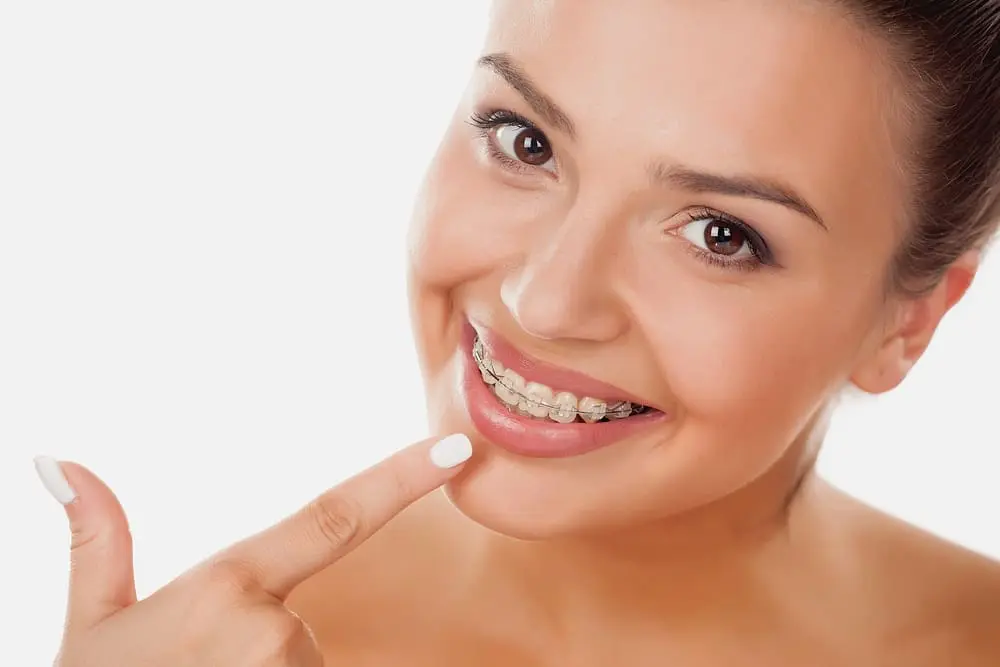
For adults, clear ceramic braces are fixed and need no compliance but stay visible at close range. Clear aligners like Invisalign are near-invisible and removable for meals and meetings, but only work with disciplined daily wear.
Neither is universally more discreet. The complexity of the case and the adult’s daily routine decide which one fits. Limestone Hills in Austin offers both, including the orthodontist-only Angel system and Invisalign.
Clear braces and clear aligners reach a similar discreet result by opposite routes. Across 5,000+ treated cases at Limestone Hills in Austin, what separates them for adults in Dr. Rodrigo Viecilli’s clinical assessment is visibility up close, lifestyle fit, maintenance, and case difficulty, never whether one option works and the other does not.
Dr. Viecilli is an ABO Diplomate with a PhD in orthodontic biomechanics and a co-inventor of the SmartArch wire system, with 27+ publications behind that work. That background shapes a simple framing for adult patients: match the appliance to the case and the routine, not to a marketing claim.
So the comparison at Limestone Hills is a question of fit, not a contest. The fixed option removes the compliance variable; the removable option removes the close-range visibility. Which trade is right depends on the individual.
What Each Option Actually Is
Clear braces are fixed appliances. Tooth-colored or translucent brackets are bonded to the front of the teeth and connected by a thin, often near-clear wire. They are far less visible than stainless steel braces, but they do not come off until treatment ends.
Limestone Hills uses self-ligating ceramic brackets that hold the wire without a clear elastic tie, which removes the tie-staining wear point.
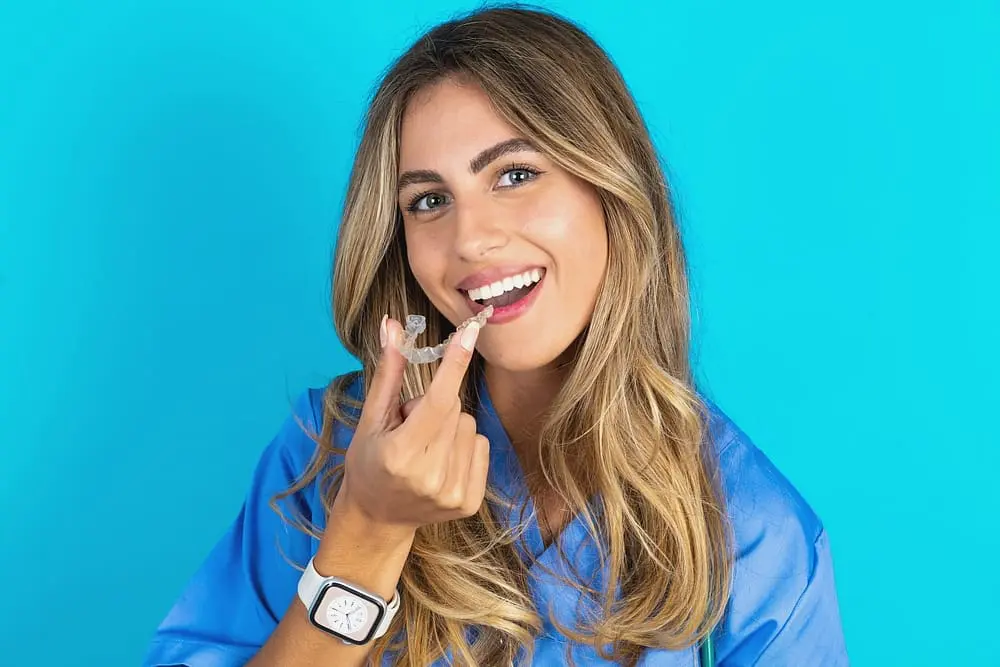
Invisalign is a removable system. It moves teeth with a staged series of clear plastic trays that the patient takes out to eat, drink anything other than water, and clean. From a few feet away the trays are hard to detect, which is the appeal for adults in client-facing roles.
The core distinction for an adult is structural. One option is always on the teeth and always working. The other is near-invisible but only works during the hours it is actually in the mouth. Every difference below traces back to that single split.
Visibility at Conversational Distance
Visibility is the question most adults open with, and the honest answer has two parts. At normal conversational distance, a clear aligner is the more discreet of the two. The tray is thin, transparent, and follows the contour of the teeth, so a colleague across a meeting table usually does not notice it.
Clear braces are a major improvement over metal, but they are still appliances bonded to the front of the teeth. A patient looking in a mirror or someone close in conversation will see them. They read as subtle, not invisible.
For a working adult in Austin who presents to clients, speaks publicly, or is on camera often, that close-range difference is real and worth weighing. It is not, however, the only factor, because near-invisible trays only stay near-invisible when they are worn and not sitting in a desk drawer.
Eating, Drinking, and Social Events
Adult life runs on meals and events: client lunches, conference dinners, coffee between meetings, a glass of wine at a work function. The two options handle that calendar in opposite ways.
Clear braces stay on through everything. There is nothing to remove before a dinner and nothing to track afterward. The trade-off is a food list: hard, sticky, and very crunchy items are restricted because they can damage a bracket or wire, and dark drinks like coffee, tea, and red wine need care so the case stays clean over many months.
Aligners flip that completely. The trays come out for every meal and every colored drink, so there are no food restrictions at all. The cost is a routine. The tray has to come out discreetly before eating, the teeth and tray go back together after brushing, and the wear clock keeps running.
For an adult with a heavy social and travel schedule, the removable option is freeing at the table but demands discipline between courses. The fixed option asks for a food list but never asks the patient to remember anything mid-event. Dr. Viecilli frames this as a lifestyle question, not a clinical one, because both reach the result when used correctly.
Maintenance on a Professional Schedule
Maintenance is where a busy work calendar shows its weight. Clear braces require no daily decision once they are placed. There is no tray to misplace and no wear quota to hit. The work moves to the sink: cleaning around brackets and wires takes more time and care, and if the setup used a clear tie, dark drinks could discolor it. Limestone Hills avoids that tie risk with self-ligating ceramic.
Aligners shift the burden to habit. A disciplined adult removes the tray for meals, brushes before reinsertion, keeps the trays in a case rather than a napkin, tracks wear hours, and changes trays on schedule. None of that is hard in isolation. The challenge is consistency across travel, deadlines, and irregular days.
An adult who knows the routine will slip on a packed week should weight the fixed option, where consistency is built into the appliance. An adult who is reliably structured can carry the aligner routine without losing time. Dr. Viecilli asks about the real schedule, not the ideal one, before recommending either.
Treatment Complexity for Adult Cases
Adult cases differ from teen cases in a way that matters here. Adults more often present with relapse from earlier treatment, the effects of long-standing tooth wear, missing teeth, or bite problems that have settled over decades. Those cases can demand more controlled, more continuous mechanics.
Fixed clear braces give the orthodontist constant control of every tooth without depending on how many hours a tray was worn that week. For a demanding adult correction, that uninterrupted control is a clinical advantage, and it is a frequent reason Dr. Viecilli leans toward fixed appliances on complex adult work.
Clear aligners still handle a wide range of adult cases well, especially through an orthodontist-only system with strong force control. The limit is not the brand; it is the difficulty of the planned movements relative to a removable appliance worn part of the day. Simpler adult cases do well in either.
This is a diagnostic call, not a preference. Dr. Viecilli, an ABO Diplomate with a PhD in orthodontic biomechanics, reviews 3D imaging and the planned movements before deciding whether a case is better served by the continuous control of fixed braces or the lifestyle fit of aligners.
Where Angel Aligners Fit in the Aligner Choice
When the aligner route is the right one, the brand is a second decision. Limestone Hills offers both Angel Aligners and Invisalign. For most aligner cases the practice leans toward Angel as the preferred system, while Invisalign stays available for adults who specifically want that brand.
Angel is positioned as an orthodontist-only system, supplied to orthodontists rather than to general dental offices or direct to consumers, so the system stays in specialist hands. Its advanced Angel Pro tier pairs a softer and a stiffer tray per stage for more graded force, which helps on the posterior control and larger corrections common in complex adult cases.
Angel also builds the elastic attachment point into the tray as a transparent integrated button rather than bonding a separate attachment to the tooth, and its leaner orthodontist-only distribution carries less channel overhead, part of which Limestone Hills can often pass to Austin patients.
None of that frames Invisalign as a weak product. Invisalign carries the longest operational record and the largest clear-aligner case database in the category, and that record has real clinical value. An adult who specifically wants Invisalign gets it at Limestone Hills, and Dr. Viecilli explains the trade-off plainly before treatment starts.
What Each Option Costs
Cost is not a quality signal between these two. Clear ceramic braces and premium clear aligners are both refined options, and for most adult cases they land in a similar range at Limestone Hills.
The figure for a given adult depends on the difficulty of the case and how many arches are treated, not on whether the appliance is fixed or removable. Within the aligner choice, Angel’s leaner orthodontist-only channel tends to carry less overhead than a broadly marketed consumer brand, and Limestone Hills can often pass part of that difference along.
The honest answer to which option costs less for a specific adult comes from a consultation, not a blog table. Every adult consultation in Austin includes a written estimate, so the fee for clear braces and for either aligner system is clear before anything starts. Dr. Viecilli treats cost as one input among several, never as the deciding factor.
Clear Braces vs Invisalign for Adults at a Glance
| Dimension | Clear (Ceramic) Braces | Invisalign (Clear Aligners) |
|---|---|---|
| Visibility up close | Subtle but visible at conversational distance; bonded to the front of the teeth | Near-invisible from a few feet away; hard to detect in meetings |
| Eating and drinking | Stay on through meals; hard, sticky, crunchy foods restricted; dark drinks need care | Removed for every meal and colored drink; no food restrictions |
| Maintenance burden | No daily decision; more time cleaning around brackets and wires | Routine of removal, brushing, tray care, and wear tracking |
| Compliance | None required; always working once placed | Result depends on 20 to 22 hours of daily wear |
| Case-complexity fit | Continuous control; strong for demanding or relapse adult cases | Broad range handled well; very demanding mechanics can favor fixed |
| Cost driver | Premium fixed appliance; figure set by case difficulty and arches | Premium removable system; Angel’s leaner channel can lower overhead |
The table summarizes structure for adults. It does not rank the options, because the right choice depends on the individual case and on the patient’s daily routine and discipline.
A Decision Framework for Adults
Dr. Viecilli does not assign an option by reflex. He starts from the diagnostic records and the difficulty of the planned movements, then layers in the adult’s real schedule and visibility priority. A few patterns recur in the practice.
An adult with a complex or relapse case, or one who knows a busy travel calendar will undercut a wear quota, is often better served by fixed clear braces. The appliance carries the consistency so the patient does not have to, and the close-range visibility is the accepted trade.
An adult with a manageable case, a structured routine, and a strong need to be discreet in client-facing or on-camera work is often a strong aligner candidate. When the aligner route is right, the practice leans toward Angel for the reasons above, with Invisalign available on request.
The candid part is this. Neither option is the discreet winner for everyone. Clear braces never come off, so there is no compliance risk, but they are always visible up close. Aligners are near-invisible, but only when worn. The case and the adult’s own discipline decide, and Dr. Viecilli says so plainly at the consultation rather than steering every adult to one answer.
Austin and the Hill Country
Limestone Hills treats discreet adult cases from across Austin and the surrounding Hill Country, including Lakeway, Cedar Park, Round Rock, Bee Cave, Westlake, and Steiner Ranch. The options on offer do not change by neighborhood. The comparison between clear braces and clear aligners is universal; the fit is individual.
For Austin adults weighing discreet treatment, the practical advantage of an orthodontist-led practice is consistency. Whether the plan ends in clear braces, Angel, or Invisalign, the same ABO Diplomate designs and supervises it, and the trade-off is explained the same way every time.
A consultation through adult braces or clear aligners turns this comparison into a specific plan for the patient in front of the doctor.
Common Questions About Clear Braces vs Invisalign for Adults
Are clear braces or Invisalign more discreet for adults?
Neither wins universally. Clear ceramic braces are fixed and need no compliance, but they sit on the front of the teeth and are visible at conversational distance. Clear aligners like Invisalign are near-invisible from a few feet away, but they only deliver the result if the adult actually wears them 20 to 22 hours a day. The case difficulty and the patient’s daily discipline decide which is the better discreet choice.
Can adults eat and drink normally with each option?
The rules run in opposite directions. Clear braces stay on through every meal, so hard, sticky, and very crunchy foods are restricted and dark drinks need care to protect the case. Clear aligners come out for every meal and drink, so there are no food restrictions, but the trays must go back in after brushing and the daily wear clock keeps running between meetings and events.
Which is easier to maintain on a busy professional schedule?
Clear braces require no daily decision once placed, but cleaning around brackets and wires takes more time at the sink and dark drinks risk staining a clear tie if that setup is used. Aligners shift the work to discipline: removing for meals, brushing before reinsertion, tracking wear hours, and not misplacing the tray during a workday. Dr. Viecilli weighs that routine honestly at the consultation.
Does case complexity favor one option for adults?
Often, yes. Adult cases frequently involve relapse, prior treatment, or more demanding movements, and fixed clear braces give the orthodontist continuous control of those movements without depending on patient wear. Aligners handle a wide range of adult cases well, especially with an orthodontist-only system, but very demanding mechanics can favor fixed appliances. Dr. Viecilli decides from the diagnostic records.
Do clear braces or Invisalign cost more for adults in Austin?
Both are premium options and the difference depends on the case and how many arches are treated, not on the appliance type alone. Clear braces and clear aligners land in a similar range for most adult cases at Limestone Hills, with the exact figure set by complexity. Every adult consultation in Austin includes a written estimate so the fee is clear before treatment starts.
Sources. Manufacturer product information (Invisalign/Align Technology; Angel Aligner) and standard literature comparing ceramic fixed appliances with removable clear aligners for adult patients, stated qualitatively. Specifics that could not be independently verified are stated qualitatively rather than as exact figures. Clinical observations from Limestone Hills Orthodontics, Austin, TX.