
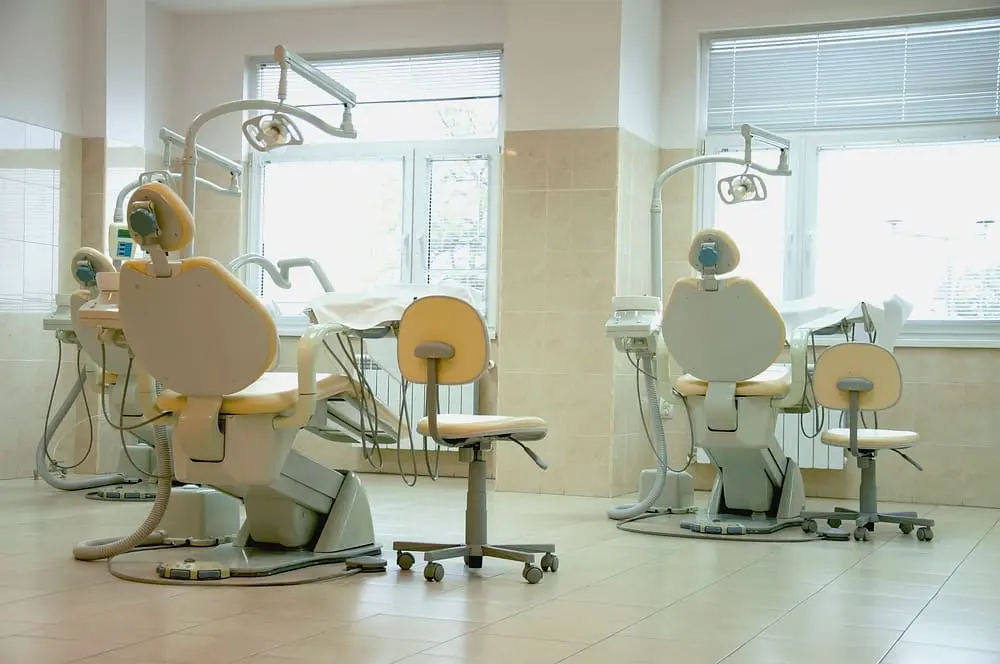
Advanced orthodontic technology improves care in four concrete ways: 3D CBCT imaging shows roots, bone, and airway in three dimensions; digital intraoral scanning replaces putty impressions with an accurate, comfortable record; in-office 3D printing produces models and appliances on a faster turnaround; and advanced archwire systems apply force more efficiently.
The technology supports the orthodontist’s clinical judgment; it does not replace it.
Technology in an orthodontic office is only as useful as the clinician reading it. At Limestone Hills in Austin, that clinician is Dr. Rodrigo Viecilli, an ABO Diplomate with a PhD in orthodontic biomechanics, author of 27+ peer-reviewed publications, and co-inventor of the SmartArch superelastic archwire.
Across 5,000+ treated cases at the Austin practice, the same pattern holds. A 3D scan can reveal an impacted canine or a thin segment of bone, but it is the diagnostic decision that follows that changes the outcome. The tools sharpen the picture; the orthodontist sets the plan.
That distinction is the frame for everything below. Each technology is explained by what it lets the orthodontist see or do, not as a feature on a list.
Why Imaging Quality Changes the Diagnosis
Orthodontic treatment moves teeth through bone. The accuracy of any plan depends on how clearly the orthodontist can see the roots, the surrounding bone, the position of unerupted teeth, and the relationship of the jaws. Better imaging is not a luxury layer on top of care. It is the input the diagnosis is built from.
A flat film answers some questions and hides others. It cannot reliably show how thick the bone is on the outside of a root, where an impacted tooth actually sits relative to its neighbors, or how the airway is shaped. Those are the questions that decide whether a movement is safe and how it should be staged.
The technology sections that follow each map to a specific diagnostic question. The point of the stack is not that it is modern. The point is that each tool removes a blind spot the orthodontist would otherwise have to guess around.
3D CBCT Imaging: Seeing Roots, Bone, and Airway
Cone-beam computed tomography, or CBCT, produces a three-dimensional volumetric model of the patient’s anatomy from a single low-dose scan. Where a traditional panoramic film is a flat projection, a CBCT volume can be rotated, sliced, and measured in every plane.
For an orthodontist, that capability answers questions a 2D film cannot. The scan shows the full length and angulation of every root, the thickness of the bone surrounding each root, and the exact position of impacted or unerupted teeth relative to their neighbors and to nerves.
Three diagnostic problems benefit most directly. Impacted canines can be located precisely before any decision to expose and guide them, which reduces surprises during treatment. Root proximity and bone thickness can be assessed before planning movements that risk pushing a root toward a thin cortical plate.
The third is the airway. A CBCT volume captures the shape of the upper airway, which matters for patients screened for airway-related concerns. An orthodontist who can see a constricted airway in three dimensions can factor that into the treatment discussion and coordinate a referral when appropriate.
The honest framing is that CBCT does not diagnose anything by itself. It produces a detailed picture. The orthodontist reads that picture against the patient’s history and clinical exam. At Limestone Hills, Dr. Viecilli reviews the volume personally rather than relying on an automated summary, because the clinical interpretation is where the value sits.
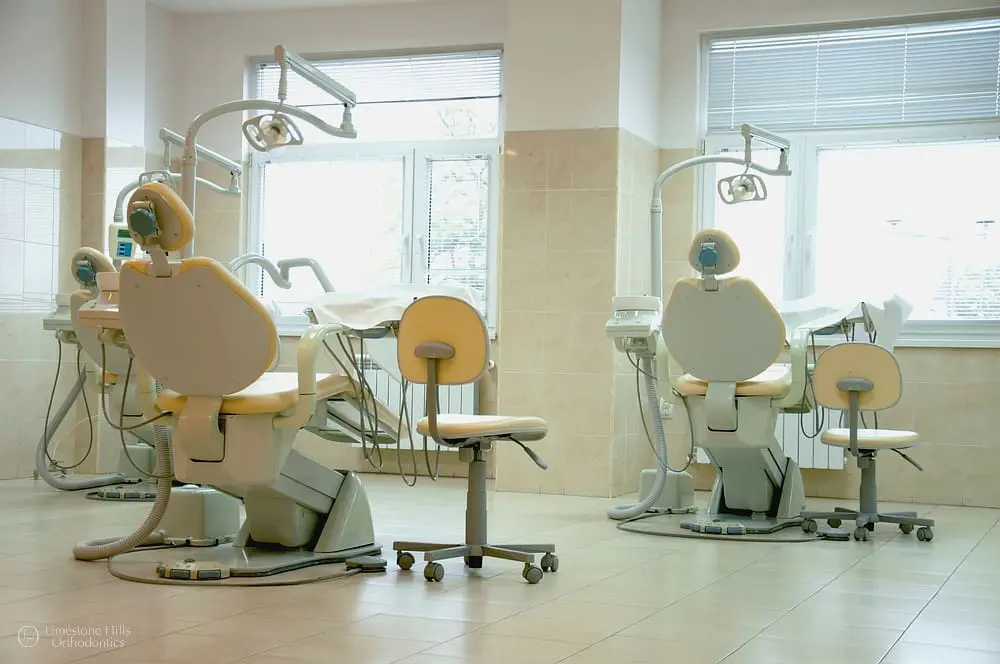
Digital Intraoral Scanning: Accuracy Without Impression Trays
A digital intraoral scanner is a small handheld wand that captures thousands of images of the teeth and gums and assembles them into a precise 3D model in real time. It replaces the tray of impression putty that many patients remember from older orthodontic and dental visits.
The patient-facing benefit is immediate. There is no tray pressing against the palate, no setting time, and far less of the gag reflex that traditional impressions trigger for many people. For a child, a patient with a strong gag response, or anyone anxious about dental work, that difference is meaningful.
The clinical benefit is the part that affects the outcome. A digital scan produces a consistent, distortion-free record. A putty impression can pull, tear, or trap a bubble, and a flawed impression carries a flawed model into the planning stage. A clean digital model gives the orthodontist a reliable starting point.
The scan also integrates with the rest of the workflow. The same digital model used for diagnosis can drive aligner planning, feed appliance design, and serve as a baseline to compare progress against later in treatment. One accurate record, used in several places, beats several separate physical impressions taken at different visits.
The candid note applies here too. A scanner produces an accurate model; it does not decide which teeth move or in what sequence. The scan is the measurement. The orthodontist still designs the treatment from it.
In-Office 3D Printing: Models and Appliances on a Shorter Timeline
In-office 3D printing turns a digital model into a physical object on site. From the same scan data, the practice can produce study models, working models for appliance fabrication, and certain orthodontic appliances without waiting on a separate laboratory cycle for every step.
The most direct patient benefit is turnaround. When part of the fabrication happens in the practice rather than being shipped out and back, the interval between a scan and a finished item can shorten. Fewer external cycles can mean fewer visits spent waiting for an appliance that was delayed in transit.
Accuracy compounds the benefit. A printed model is built from the same digital file the orthodontist already reviewed, so it carries the precision of the scan rather than the variability of a poured stone model. The chain from scan to model to appliance stays digital for longer, which reduces the points where error can enter.
There is a limit worth stating plainly. In-office printing is a fabrication capability, not a clinical one. It produces what the treatment plan calls for; it does not create the plan. Some complex appliances still involve specialized laboratory work, and the orthodontist decides what is appropriate to produce in-house and what is not.
The SmartArch Archwire System: A Genuine Austin Distinction
Archwires are the engine of fixed-appliance treatment. The wire stores energy and releases it as a controlled force that moves teeth toward their planned positions. The design of that wire shapes how efficiently and how comfortably a case progresses.
SmartArch is a superelastic orthodontic archwire that Dr. Viecilli co-invented. The patent lineage runs from the Viecilli and Burstone work through Smarter Alloys and then to Ormco.
It is not a product proprietary to one practice as a store-shelf item, and it is not described that way here. It is referenced because its co-inventor practices orthodontics in Austin, which is a real local distinction rather than marketing.
Limestone Hills received SmartArch in limited quantity. The relevant point for a patient is not the supply detail but the engineering intent behind the wire.
SmartArch was designed to deliver more efficient, more biologically appropriate force across a treatment, and the published clinical claims for the system describe up to 40% faster treatment and up to 50% greater tooth movement in the contexts studied.
Those figures are stated as qualified, study-context claims, not as guarantees for every case. Treatment time depends on the diagnosis, the complexity of the movements, and patient cooperation far more than on any single component. The wire is one well-engineered input, and the orthodontist still sets the plan it operates inside.
The deeper value at Limestone Hills is not the wire as a stocked item. It is that the diagnosis and biomechanical planning are done by someone who works at the level of archwire mechanics rather than only selecting from a catalog. A fuller account of the system is on the practice SmartArch wire system page.
How the Stack Works Together
The individual tools matter less than how they connect. A modern orthodontic workflow is a chain: the CBCT volume answers the deep anatomical questions, the digital scan captures the tooth surfaces accurately, the orthodontist merges both into one treatment plan, and in-office printing produces what that plan needs.
Each link reduces a source of error in the next. An accurate scan produces an accurate printed model. A clear CBCT volume produces a safer movement plan. The compounding effect is the real argument for an integrated stack, not the novelty of any one device.
The connecting element is the clinician. A workflow with excellent tools and a weak diagnosis produces a precise version of the wrong plan. The technology raises the ceiling on what a skilled orthodontist can do; it does not lift a plan above the judgment behind it.
The full toolset is described on the practice technology page, and the way it supports a specific treatment is shown across the clear aligners options.
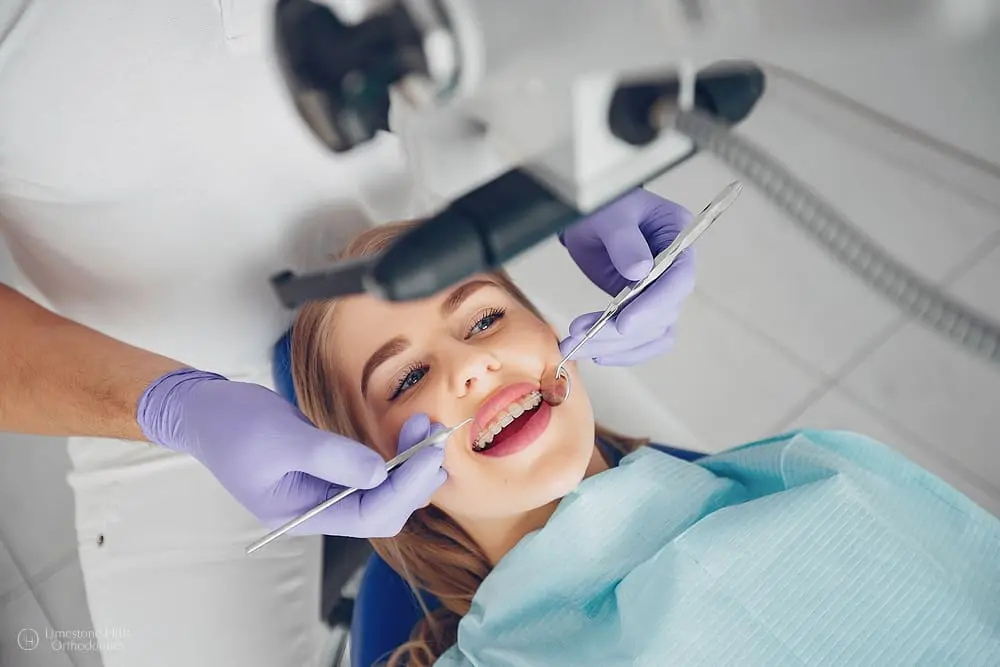
Technology Supports Judgment, It Does Not Replace It
This is the candid section, and it is the most important one. Every device above is an instrument. A CBCT machine produces a volume. A scanner produces a model. A printer produces an object. None of them decides where a tooth should go, how fast it should travel, or whether a case needs a referral. Those are diagnostic and clinical decisions.
An orthodontic practice can own an impressive stack and still produce ordinary results if the diagnosis is weak. The reverse is also true: a strong diagnosis improves a case even with modest equipment. The technology is a multiplier on clinical skill, not a substitute for it. A patient choosing a practice should ask who reads the data, not only what equipment sits in the room.
At Limestone Hills the answer is consistent. Dr. Viecilli, an ABO Diplomate with a PhD in orthodontic biomechanics, personally reviews the CBCT volume, the digital scan, and the treatment plan for every case. The credentials behind that interpretation are covered on the Dr. Rodrigo Viecilli page, and why credentials matter at all is the subject of the orthodontist credentials guide.
Austin and the Hill Country
Limestone Hills provides technology-supported orthodontic care to patients across Austin and the surrounding Hill Country, including Lakeway, Cedar Park, Round Rock, Bee Cave, Westlake, and Steiner Ranch. The CBCT scanner, the intraoral scanner, and the 3D printer are the same tools many quality practices use; they are not unique to one office.
The differentiator is not the hardware. It is the clinician interpreting it. A digital scan taken in Austin and a digital scan taken anywhere else are equally accurate as records.
What changes the outcome is the diagnosis and biomechanical plan built from that record, and at Limestone Hills that work is done by an ABO Diplomate who co-invented the SmartArch archwire system with Dr. Charles Burstone rather than only selecting from one.
For families nearby comparing practices, the practical takeaway is to weigh the technology and the clinician together. Guidance on doing exactly that is in the choosing the best orthodontist near you guide, and a consultation turns the comparison into a specific plan for the patient in the chair.
Common Questions About Orthodontic Technology
What technology does a modern orthodontist use?
A current orthodontic practice typically combines 3D cone-beam CT imaging for roots, bone, and airway, a digital intraoral scanner that replaces putty impressions, in-office 3D printing for models and appliances, and advanced archwire systems. At Limestone Hills these tools feed one treatment plan that Dr. Viecilli, an ABO Diplomate, builds and supervises.
What is the difference between a 3D CBCT scan and a regular dental X-ray?
A regular dental X-ray is a flat two-dimensional image. A 3D cone-beam CT builds a volumetric model that shows tooth roots, bone thickness, impacted teeth, and the airway in three dimensions. That detail lets an orthodontist plan root movement and assess airway concerns that a flat film cannot show, which improves both diagnosis and treatment safety.
Does a digital scanner hurt or cause gagging like impression trays?
No. A digital intraoral scanner is a small handheld wand that photographs the teeth to build a 3D model. There is no tray of impression putty and no setting time, so the gag reflex and discomfort that many patients associate with traditional impressions are largely removed. The scan also produces a more consistent record for planning.
What is SmartArch and why does Limestone Hills mention it?
SmartArch is a superelastic orthodontic archwire that Dr. Viecilli co-invented, with a patent lineage running through Smarter Alloys to Ormco. The practice received SmartArch in limited quantity rather than stocking it broadly. It is referenced because the co-inventor practices in Austin, which is a genuine local distinction, not a routine product on every shelf.
Does technology replace the orthodontist’s judgment?
No. A scanner, a CBCT machine, and a 3D printer collect and produce data; they do not decide where teeth should move or how force should be staged. The diagnosis and the treatment plan come from the orthodontist. At Limestone Hills, Dr. Viecilli, an ABO Diplomate with a PhD in orthodontic biomechanics, interprets every data set personally.
Sources. Standard descriptions of cone-beam CT, intraoral scanning, and in-office 3D printing in orthodontics, stated qualitatively.
SmartArch superelastic archwire described per its publicly stated patent lineage (Viecilli and Burstone work via Smarter Alloys and Ormco), with up-to-40%-faster and up-to-50%-greater-tooth-movement figures presented as qualified study-context claims rather than guarantees.
Manufacturer and device specifics that could not be independently verified are stated qualitatively rather than as exact figures. Clinical observations from Limestone Hills Orthodontics, Austin, TX.