
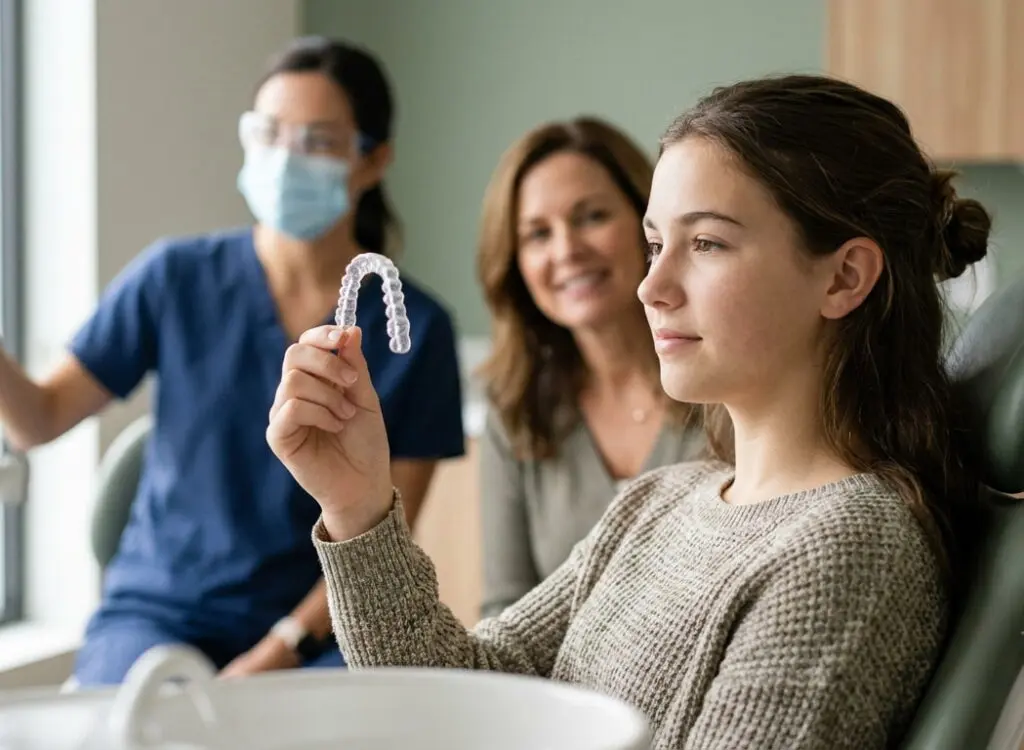
Invisalign for teens can work well for many teens whose teeth and bite suit it, with teen-specific features like compliance wear indicators, eruption tabs, and free replacement aligners.
It only succeeds with consistent wear of roughly 20 to 22 hours a day. For a teen who will not comply, or who has a complex skeletal case, braces are the more predictable choice, and an orthodontist should make that call honestly before treatment starts.
Whether a teenager is a good clear-aligner candidate is a judgment about the bite and about behavior, not a marketing question. Across 5,000+ treated cases at Limestone Hills in Austin, Dr. Rodrigo Viecilli weighs both before recommending Invisalign for a teen.
Dr. Viecilli is an ABO Diplomate with a PhD in orthodontic biomechanics and 27+ publications on tooth-movement mechanics. That background is why this article focuses on a clear suitability framework, what the case needs and what the teen will actually do, rather than on which option photographs better.
The framework is simple to state. Clear aligners only move teeth while they are in the mouth. If the case is right and the teen will wear the trays, Invisalign is a strong option. If either side of that is shaky, braces are the safer plan.
How Invisalign Teen Differs From the Adult Version
Invisalign Teen runs on the same tooth-movement mechanics as adult Invisalign. The trays are still a staged series of clear, removable aligners that apply light continuous force. What changes is a set of features built for a mouth that is still growing and a patient who is still building habits.
Three features matter most to parents, and each one answers a specific worry. The sections below treat them one at a time, because a parent comparing options for a teenager in Lakeway or Cedar Park is usually weighing exactly these points.
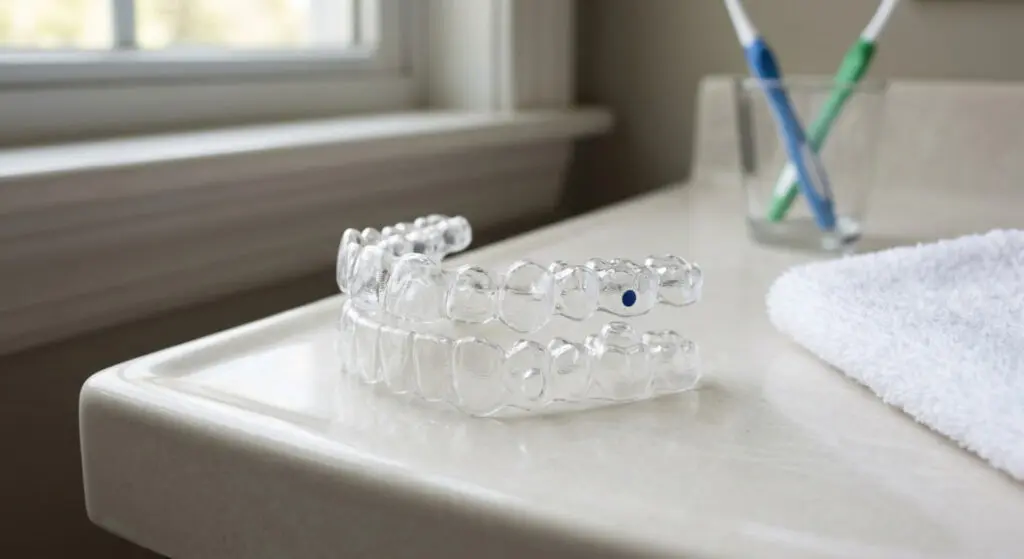
Compliance Indicators: A Visible Read on Wear
Invisalign Teen trays include built-in compliance indicators. These are small colored markers on the aligner that gradually fade with adequate wear. When a teen wears the tray as instructed, the indicator lightens on schedule. When the trays sit in a backpack, the color stays dark.
The indicator is not a precise hour counter, and it should not be read as one. It gives the orthodontist and the parent a rough, visible signal of whether the trays were worn close to the way they were prescribed. That signal is useful because it turns a vague “have you been wearing them” into something the clinician can actually see at a check appointment.
Dr. Viecilli’s clinical use of the indicator is straightforward. It is an early-warning tool. If the markers say a teen is under-wearing the trays at the first or second visit, the conversation happens early, before the case has drifted weeks off plan.
Eruption Tabs: Room for Teeth Still Coming In
A teenager’s mouth is often still in transition. Second molars and other teeth may not be fully erupted when treatment starts. Invisalign Teen addresses this with eruption tabs, small features in the aligner that leave space for a tooth that is still emerging.
Without that allowance, a tray could press on an erupting tooth in an unhelpful way or fit poorly as the tooth comes in. The eruption tab keeps a defined area open so the developing tooth has room to arrive while the rest of the arch is being treated.
This is one of the clearest reasons the teen system exists as its own product rather than just adult Invisalign in a smaller size. Adult arches are usually fully erupted; a 13-year-old’s may not be, and the appliance has to account for that.
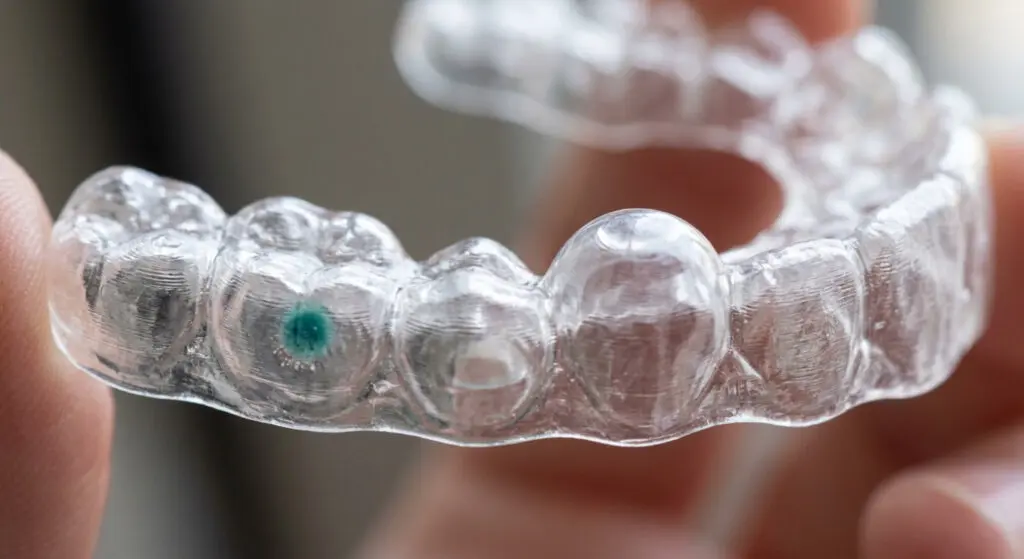
Replacement Aligners: Built for the Reality That Teens Lose Things
Teens misplace trays. They wrap them in a napkin at lunch, leave them on a tray at school, or lose them on a trip. Invisalign Teen builds for this by including a set number of free replacement aligners, so a single lost tray does not become a billing event.
The replacement policy removes one common parent fear, but it does not remove the more important one. The real cost of a lost aligner is not the plastic. It is the lost wear time while a replacement is arranged, because the teeth are not moving on plan during that gap.
Limestone Hills asks families to report a lost tray quickly rather than waiting for the next appointment. A fast report keeps the case from stalling between stages, which protects the timeline far more than the free replacement protects the wallet.
The Compliance Reality: 20 to 22 Hours, Every Day
This is the part that decides whether Invisalign works for a teenager. Aligners only move teeth while they are in the mouth. The standard instruction is to wear the trays roughly 20 to 22 hours a day, removing them only to eat, to drink anything other than water, and to brush.
That math is unforgiving. A teen who takes the trays out for a long lunch, an after-school snack, a sports practice, and forgets to put them back until bed is well short of the target. The teeth respond to total daily force time, so missed hours are not made up by a tight tray later. They are simply lost.
When wear time falls short, the aligners stop tracking the planned movement. The trays no longer seat fully, the next tray fits worse, and the case either slows down or needs added refinement aligners at the end. None of that is a flaw in the product. It is the direct consequence of an appliance the patient can take out.
Dr. Viecilli is direct with families about this during the consultation. The question is not whether Invisalign can move a particular teen’s teeth. For a suitable case it can. The question is whether that specific teenager will keep the trays in, because the appliance cannot work around a patient who does not wear it.
What Parents Ask About Cost
Cost is a fair early question for any family. Clear-aligner treatment for a teen is a premium orthodontic service, and the figure depends on case complexity and how many arches are treated. A mild case and a complex one are different clinical problems with different fees.
A blog table cannot give a real number, and an honest practice will not pretend otherwise. What a parent can expect from Limestone Hills is a specific quote at the consultation, with the financing options laid out plainly so the monthly picture is clear rather than buried.
One point is worth stating directly. The free replacement aligners in the teen package do limit the surprise cost of a lost tray, but they do not change the base treatment fee. Cost should be discussed as one input, alongside the bite and the compliance read, never as the only factor in choosing a teen’s treatment.
When Braces Are the Better Choice for a Teenager
Invisalign is not the right answer for every teen, and a clinician who says it is should be questioned. There are two clear situations where braces are the more predictable plan, and an orthodontist should say so plainly.
The first is doubtful compliance. Braces work 24 hours a day because the teen cannot take them out. For a teenager who is unlikely to keep removable trays in for 20 to 22 hours a day, fixed braces remove the single biggest risk to the result. That is not a downgrade. It is matching the appliance to the patient.
The second is case complexity. Some skeletal corrections and certain difficult tooth movements are harder for a tray to deliver predictably. When the diagnosis points to that kind of case, braces give the orthodontist more direct control. Aligners can still handle a wide range of teen cases well; the point is that they are not equal to fixed appliances for every problem.
Dr. Viecilli makes this call from the diagnostic records and an honest conversation with the family, not from a brand preference. The goal is the result that finishes well, on time, for that specific teenager.
Angel Aligners and Invisalign at Limestone Hills
When clear aligners are the right plan for a teen, Limestone Hills offers two premium systems, Angel Aligners and Invisalign. Both straighten teeth with a staged series of clear trays and reach comparable clinical results for a suitable case. The choice between them is about engineering and brand preference, not about one system working and the other not.
Angel is the practice’s preferred orthodontist-only system for four reasons. It is distributed only through orthodontists rather than general dental offices or direct to consumers. Its Angel Pro tier pairs a softer and a stiffer tray per stage for more graded force, which helps with posterior control on demanding movements.
The elastic attachment, the angelButton, is built into the tray itself from a transparent material rather than bonded to the tooth, so it comes off at every meal and avoids the chewing forces a bonded button must withstand. And the leaner orthodontist-only channel carries lower overhead, part of which Limestone Hills can often pass to Austin families.
Invisalign Teen remains fully available for families who specifically want that brand. Invisalign has the longest operational record and the largest clear-aligner case database in the category, and that familiarity is a legitimate factor for a teenager wearing trays for a year or more.
Dr. Viecilli explains the trade-off in plain terms during the consultation rather than steering every family to one system.
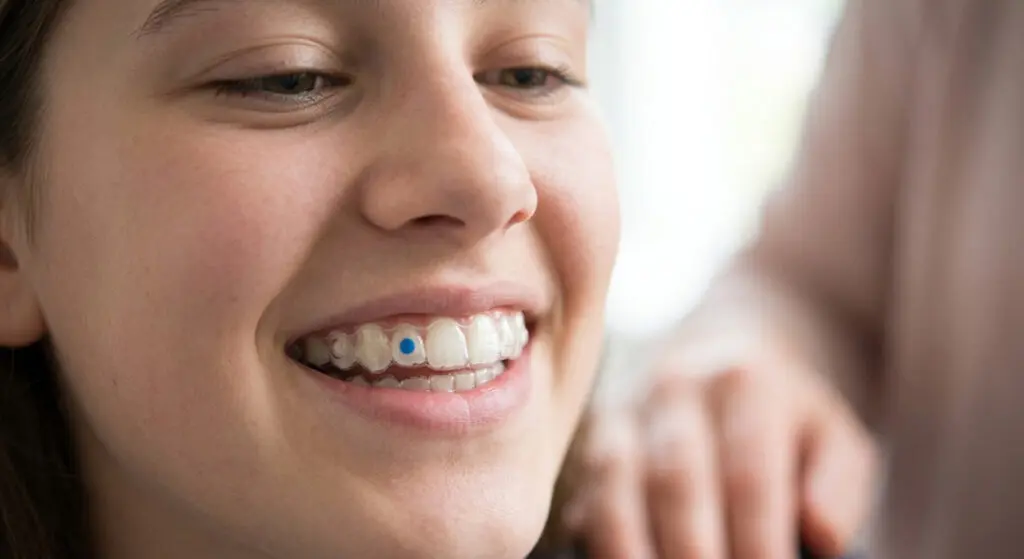
How Limestone Hills Judges Teen Suitability
The practice’s approach to a teen aligner case follows the same framework every time. First, the diagnostic records: the bite, the difficulty of the planned movements, and whether teeth are still erupting. That answers whether the case is a good clear-aligner candidate at all.
Second, an honest read on compliance. Dr. Viecilli talks with the teen and the parent about routines, school, sports, and how realistic 20 to 22 hours of daily wear is for that specific household. The compliance indicators help confirm this in the early weeks, but the conversation starts at the consultation.
Third, the recommendation. If the case suits a tray and the wear-time picture is realistic, Invisalign Teen or Angel is a strong plan, and the family chooses the system with the trade-off explained. If either side is doubtful, the honest recommendation is braces, and the reasoning is laid out so the family understands why.
The Candid Part
Here is the honest line every parent should hear before choosing clear aligners for a teen. The trays only work if the teenager actually wears them roughly 22 hours a day. The technology is excellent, but it is completely dependent on a habit the patient has to keep, day after day, for the length of treatment.
For a motivated teen with a suitable case, that is a manageable ask and Invisalign is a strong choice. For a teen who will not keep the trays in, no feature on the aligner fixes that, and braces are the better, more predictable plan. A practice that tells a family this plainly is doing the job correctly, even when it is not the answer the family hoped for.
Austin and the Hill Country
Limestone Hills assesses teen aligner suitability for families across Austin and the surrounding Hill Country, including Lakeway, Cedar Park, Round Rock, and Bee Cave. The systems on offer do not change by neighborhood, and the suitability question does not have a default answer.
Whether Invisalign Teen, Angel, or braces is right depends on that particular teenager’s bite and on a realistic read of wear-time discipline. A free consultation is the step that turns this comparison into a specific plan and a specific number for the teen in the chair. The Invisalign page and the children and teens page explain how a case is evaluated and what to expect next.
Common Questions About Invisalign for Teens
Is Invisalign good for teens?
Invisalign can work well for many teens whose teeth and bite suit it, and the teen version adds wear indicators, eruption tabs for still-erupting teeth, and a set of free replacement aligners. The single condition is consistent wear, roughly 20 to 22 hours a day. For a teen who will not keep the trays in, or who has a complex skeletal case, braces are the more predictable choice.
How is Invisalign Teen different from regular Invisalign?
Invisalign Teen is built for growing mouths and developing habits. It uses compliance indicators that fade with adequate wear so a parent or orthodontist can see roughly how consistently the trays were worn, eruption tabs that leave room for molars and other teeth still coming in, and a defined number of free replacement aligners because teens lose things. The underlying tooth-movement mechanics are the same as adult Invisalign.
What happens if my teen loses an aligner?
Losing a tray is common, which is why Invisalign Teen includes a set number of free replacement aligners. The practical issue is the gap in treatment while a replacement is sorted out, since a missing tray means lost wear time and can stall progress. Limestone Hills asks families to report a lost tray quickly so the case stays on track rather than drifting between stages.
How many hours a day does a teen have to wear Invisalign?
Aligners are worn roughly 20 to 22 hours a day and removed only to eat, drink anything other than water, and brush. Wear time is the single largest factor the patient controls. A teen who wears trays only at home and at night will not track to plan, and the case can fall behind or need added refinement time.
When are braces better than Invisalign for a teenager?
Braces are the more predictable choice in two situations. First, when compliance is doubtful, because braces work 24 hours a day without the teen having to remember anything. Second, when the case involves complex skeletal correction or movements that are harder for a tray to deliver. Dr. Viecilli makes that call during the consultation based on the records and an honest discussion with the family.
Sources. Manufacturer product information for Invisalign Teen, including compliance indicators that fade with adequate wear, eruption tabs that allow room for teeth still erupting, and a defined set of free replacement aligners, plus standard clear-aligner wear-time guidance of roughly 20 to 22 hours per day, stated qualitatively.
Manufacturer product information for Angel Aligner and Angel Aligner Pro, including the orthodontist-only distribution model, the dual-stiffness per-stage protocol, and the integrated transparent angelButton attachment.
Specifics that could not be independently verified, including exact replacement-aligner counts and precise wear-time thresholds, are stated qualitatively rather than as exact figures. Clinical observations from Limestone Hills Orthodontics, Austin, TX.