
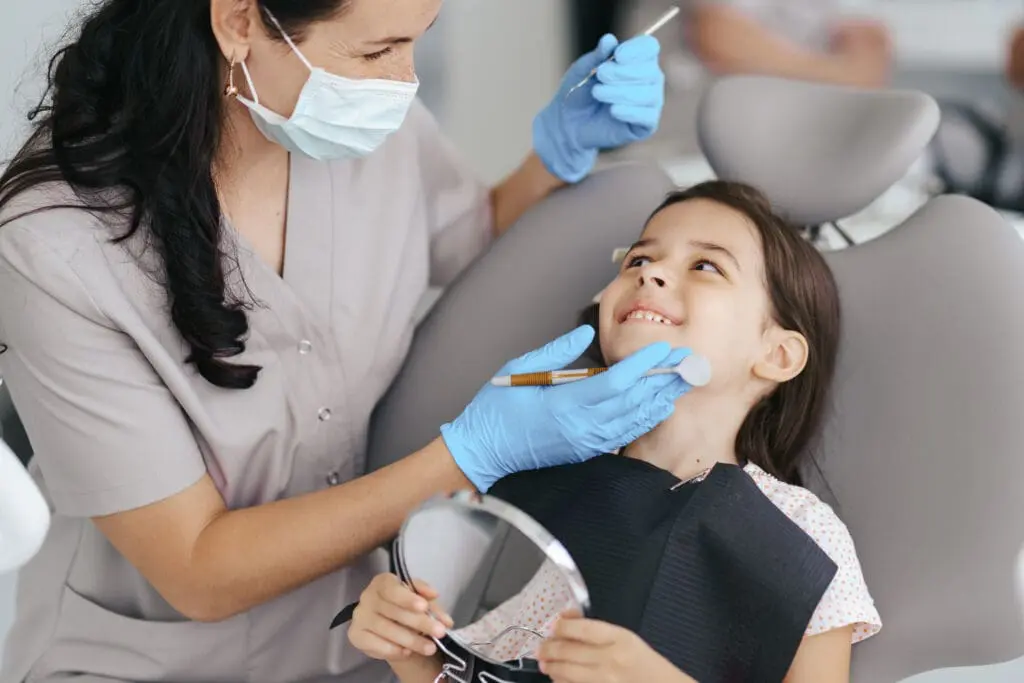
First orthodontist visit for kids, recommended around age 7, is a short screening rather than a treatment appointment. It includes an exam, photos, often a panoramic X-ray, and a growth and eruption assessment. Most visits end with a plan to monitor growth, not braces that day, and the screening is commonly complimentary. It is about timing, not starting treatment.
At Limestone Hills in Austin, the age-7 screening is deliberately calm. Dr. Rodrigo Viecilli, an ABO Diplomate with a PhD in orthodontic biomechanics, has guided more than 5,000 treated cases, and most age-7 visits in the practice do not lead to braces that day.
The screening exists to answer one question: is anything happening with this child’s growth that benefits from acting early, or is the right move to watch and wait? For the large majority of children, the answer is to monitor.
That framing is the point of this guide. A first visit is a checkpoint about timing, and a parent should leave it with a clear answer, not a sales pitch.
Why Age 7
The American Association of Orthodontists recommends that every child have a first orthodontic check no later than age 7. The age is not arbitrary. By around 7, a child has a mix of baby and permanent teeth and enough jaw growth visible for an orthodontist to read how things are developing.
Seeing an orthodontist at 7 is very different from getting braces at 7. The early check lets a specialist spot a developing problem while the jaw is still growing, when a small, well-timed step can sometimes prevent a larger one later. In most cases nothing needs doing yet.
For an Austin parent the practical takeaway is simple. An age-7 screening is a low-stakes, often complimentary checkpoint. It is far more likely to end in reassurance than in treatment, and it gives the orthodontist a baseline to compare against as the child grows.
What Happens, Step by Step
Knowing the sequence ahead of time removes most of the worry, for the parent and the child. A first screening at Limestone Hills follows a predictable path, and none of it involves drills, needles, or anything a 7-year-old finds frightening.
- Check-in and a friendly hello. The visit starts with a relaxed introduction so the child is comfortable before anyone looks in their mouth. A parent stays with the child throughout.
- A clinical exam. The orthodontist looks at how the upper and lower teeth meet, how the jaws line up, and whether teeth are erupting in a healthy pattern. This is a visual and hands-on check, nothing painful.
- Photos. Simple photographs of the face and teeth document the starting point. They let the orthodontist track changes over time and explain findings to the parent on a screen.
- Often a panoramic X-ray. A single wide X-ray, taken with the child standing still for a few seconds, shows the teeth still under the gum and the overall jaw structure. It is quick and low-dose, and it reveals things an exam alone cannot.
- A growth and eruption assessment. The orthodontist combines the exam, photos, and X-ray to judge how the bite and jaws are developing and whether the timing is right to do anything.
- A plain-language discussion. The visit ends with the orthodontist explaining what they saw, what it means, and what the next step is. For most children that next step is simply to recheck growth periodically.
The entire visit is short. A parent should expect to leave understanding their child’s situation in plain terms, with a specific recommendation rather than vague concern.
Monitor Versus Treat: What the Outcome Usually Is
This is the part that calms most parents, so it is worth stating plainly. The most common outcome of an age-7 screening is monitoring, not treatment. The orthodontist watches the child grow and steps in only if and when a specific issue makes early action worthwhile.
Monitoring typically means a short recheck every six to twelve months, often at no charge, to see how growth is progressing. Many children pass through this watch period and never need early treatment at all, moving instead toward a single, well-timed phase of treatment later if anything is needed.
Early treatment is recommended only for specific situations where acting while the jaw is growing produces a better or simpler result. Examples include a significant crossbite, severe crowding affecting development, or a habit or growth pattern that is better addressed early than late.
Even then, an early step is usually limited and targeted, not a full set of braces on a young child. The orthodontist should be able to explain exactly why early action helps in that particular case and what would happen if the family chose to wait.
Questions Parents Should Ask
A good first visit invites questions. Bringing a short list helps a parent leave with clarity instead of second-guessing the visit on the drive home. These questions work at any orthodontic practice.
- Does the child need treatment now, or is monitoring the right call? A clear answer either way is a good sign. Hesitation to recommend waiting is not.
- If the orthodontist recommends monitoring, what exactly is being watched for, and how often is the recheck? A specialist should name the specific finding being tracked and the recheck interval rather than giving a vague answer.
- If early treatment is recommended, why is acting now better than waiting? There should be a concrete reason tied to growth, not a general statement that earlier is always better.
- What happens if treatment is deferred and the family chooses to wait? A trustworthy orthodontist can describe the trade-off honestly rather than implying that delay is always harmful.
- Are you a specialist orthodontist, and what is your training? It is reasonable to ask about the residency and board status of the person planning a child’s care.
- Is this screening complimentary, and what would treatment cost if it is ever needed? Transparent practices answer both without discomfort.
The answers matter less than the manner. An orthodontist who welcomes these questions and answers them in plain terms is showing the parent how the practice will communicate for years.
How to Choose an Orthodontist for Your Child
Many general dentists offer some orthodontic care, so the first thing to confirm is whether the provider is a specialist. An orthodontist completes an accredited residency dedicated to tooth movement and facial growth after dental school. That extra training is the core of the distinction.
A board-certified orthodontist has gone a step further and met the standards of a recognized certifying board. It is a reasonable thing to ask about directly, and a credentialed specialist will explain it without being asked twice. Limestone Hills covers what these credentials mean in detail on its orthodontist credentials guide.
Beyond credentials, judge the practice by how it handles young children. A practice that monitors most age-7 patients and explains trade-offs plainly is behaving the way the evidence supports. Transparency about cost, timing, and the option to wait is a strong signal of how the practice operates.
For context on what an early screening is screening for, and how it connects to the rest of childhood orthodontics, Limestone Hills also covers the best age for braces and the early signs your child needs braces.
Reducing Your Child’s Anxiety Before the Visit
Children take their cues from the adult next to them. If a parent treats the screening as routine and even mildly interesting, the child usually does too. The visit involves looking, photos, and a quick X-ray, so it is honest to tell a child that nothing will hurt.
Keeping the language simple helps. Describing it as a checkup where the doctor looks at how the teeth are growing sets an accurate, low-stress expectation. There is no need to mention braces at all, because for most children braces are not the outcome of this visit.
It also helps to let the child ask their own questions during the visit. A practice that talks to the child directly, not only to the parent, tends to lower anxiety naturally and builds the kind of trust that makes any future care easier.
The Candid Part
Here is the honest disclosure a parent deserves before the first visit. The large majority of age-7 screenings do not lead to immediate treatment, and they are not supposed to. The visit is a timing check, and “let’s watch this and recheck in a year” is a normal, good result.
That makes one pattern a clear warning sign. If a practice recommends braces or appliances for nearly every young child at the very first visit, that is a reason to pause and get a second opinion. Early treatment has real value in the specific cases that need it, and overuse in the cases that do not is not in the child’s interest.
Dr. Viecilli applies the same standard to every age-7 patient at Limestone Hills that he applies to any clinical decision. Early treatment is recommended when the growth picture supports it and monitoring is recommended when it does not, and the reasoning is explained to the parent either way. Families who want the broader picture of early care can read more on the children’s orthodontics page.
Austin and the Hill Country
Limestone Hills runs age-7 screenings for families across Austin and the surrounding Hill Country, including Lakeway, Cedar Park, and Round Rock. The screening itself is universal, the same calm sequence for every child, while the recommendation that comes out of it is individual to that child’s growth.
For Austin-area parents, the practical benefit of an early specialist check is peace of mind at low cost. Most visits end in reassurance and a monitoring plan rather than treatment, and the orthodontist gains a baseline to compare against as the child grows. A free screening at Limestone Hills turns an open question into a clear next step at the children’s orthodontics page.
Common Questions About the First Orthodontist Visit
What happens at a child’s first orthodontist visit?
It is a short screening, not a treatment appointment. The orthodontist checks the bite and jaw, takes photos, and often a panoramic X-ray, then assesses how the teeth and jaws are growing. Most visits end with a recommendation to monitor growth rather than to start braces that day. The visit is mainly about timing.
At what age should a child first see an orthodontist?
The American Association of Orthodontists recommends a first orthodontic check by age 7. By then enough permanent teeth and jaw growth are visible to spot issues early. Seeing an orthodontist at 7 rarely means braces at 7; it usually means the orthodontist can watch growth and act at the right moment if needed.
Will my child get braces at the first visit?
Usually not. Most age-7 screenings end in monitoring, with the child rechecked periodically as they grow. Braces or an early appliance are recommended only when a specific problem benefits from acting early. A practice that recommends braces for every young child at the first visit is a reason to seek a second opinion.
Is a child’s first orthodontist screening usually free?
At many orthodontic practices the first screening is complimentary, and at Limestone Hills the age-7 screening is free for Austin families. Cost should never be the reason a parent skips an early check, since the visit is often about reassurance and timing rather than starting treatment.
How do I choose an orthodontist for my child?
Look for a specialist who completed an accredited orthodontic residency after dental school, ideally a board-certified orthodontist. Ask how often they monitor versus treat young children, whether they explain the trade-offs plainly, and whether they pressure early treatment. Transparency and a specialist credential matter more than a single visit.
Sources. American Association of Orthodontists guidance on the recommended first orthodontic check by age 7 and the standard components of a screening visit, including clinical exam, photographs, a panoramic radiograph where indicated, and a growth and eruption assessment, stated qualitatively.
General orthodontic practice standards on early treatment versus monitoring, in which most age-7 evaluations result in periodic observation rather than immediate treatment. Specifics that could not be independently verified are stated qualitatively rather than as exact figures. Clinical observations from Limestone Hills Orthodontics, Austin, TX.