

Common signs that a child should be screened for braces include crowded teeth, mouth breathing, thumb sucking past about age 5, difficulty chewing, very early or very late baby-tooth loss, speech issues, protruding front teeth, crossbite, noticeable spacing, and jaw clicking.
These are reasons to have an orthodontist look, not a diagnosis a parent can make at home. The first orthodontic check should happen around age 7, and several of these signs are normal stages of growth.
Across 5,000+ treated cases at Limestone Hills in Austin, Dr. Rodrigo Viecilli, an ABO Diplomate with a PhD in orthodontic biomechanics and 27+ publications, sees the same pattern every week. A few signs on this list reliably point to a real problem. Several others are read as problems by worried parents when they are actually normal growth.
The signs most likely to matter early are a posterior crossbite, strongly protruding front teeth, a thumb or finger habit that has not stopped, and real chewing difficulty. The signs parents most often over-read are early spacing and mild crowding in a young mouth still trading baby teeth for adult ones.
That gap between what looks alarming and what is clinically significant is exactly why the age-7 screening exists. It is a short visit, it is free at this practice, and most of the time it ends with a recommendation to monitor rather than to treat.
What These Signs Mean, and What They Do Not Mean
Signs your child needs braces are reviewed by an orthodontist. It is not a verdict. Crowding, a crossbite, or a thumb habit tells a parent it is time for a professional opinion, not that braces are already decided.
This distinction matters because childhood is a moving target. Teeth erupt, fall out, and shift on their own schedule. A mouth that looks crowded at age 7 can settle as the jaw grows, and a gap that worries a parent at age 6 can be the very space a permanent tooth needs to come in straight.
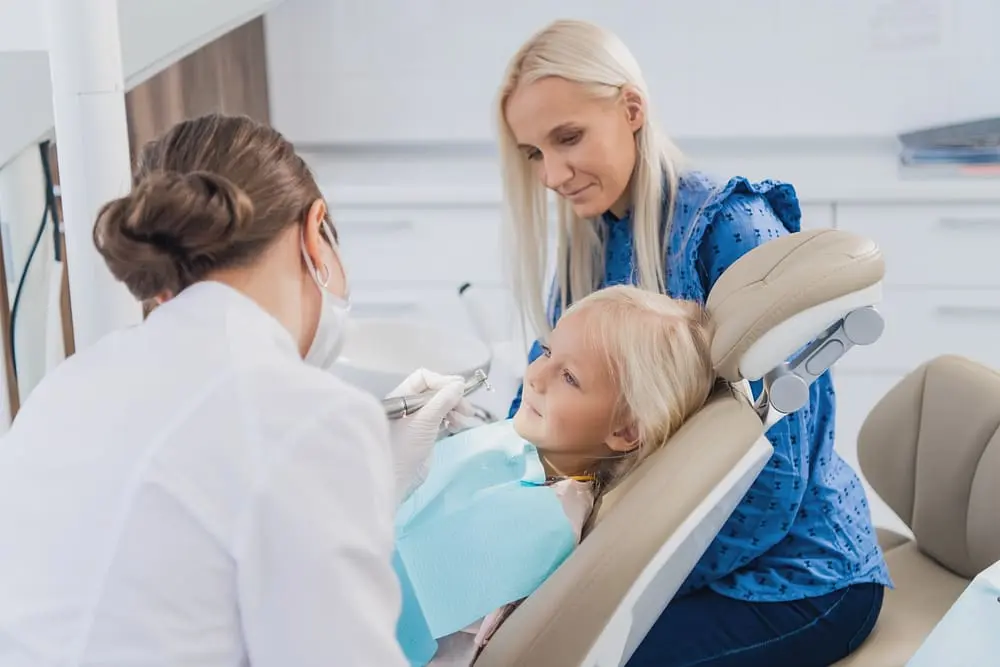
Dr. Viecilli’s framing for Austin families is simple. Watch for the signs below, but treat them as a reason to schedule a screening, not as a checklist that proves anything. Only an exam with records can sort a developing problem from a normal stage, and that is the entire purpose of the age-7 visit.
The list that follows pairs each sign with a plain explanation and an honest note on whether it is usually concerning or often normal. None of it replaces a clinical evaluation. It is meant to help a parent decide when to ask for one.
The Ten Signs to Watch
These are the signs that most often bring a child in for a first orthodontic screening. Read them as reasons to ask an orthodontist, not as a way to self-diagnose at home.
1. Crowded or overlapping teeth.
Teeth that twist, overlap, or look too tight for the jaw are the most familiar sign parents notice. In a young mouth still losing baby teeth, mild crowding can ease as the jaw grows, so it is worth a screening but is often less urgent than it looks.
2. Mouth breathing.
A child who routinely breathes through the mouth, especially while sleeping, can develop a narrow upper jaw and bite changes over time. Mouth breathing has medical causes beyond orthodontics, so it deserves both a screening and a conversation with the child’s pediatrician.
3. Thumb or finger sucking past about age 5.
Sucking is normal in toddlers and usually fades on its own. A habit that continues past roughly age 5, once permanent teeth are arriving, can push front teeth forward and open the bite. This is one of the signs most worth acting on early.
4. Difficulty chewing or biting food.
A child who struggles to bite into food, chews on only one side, or avoids certain textures may have teeth that do not meet correctly. Real, consistent chewing difficulty is a meaningful sign and a clear reason to schedule a screening.
5. Baby teeth lost very early or very late.
Baby teeth guide the adult teeth into place, so timing matters. Teeth lost much earlier or held much later than expected can let neighboring teeth drift into the wrong spot. The exact timing varies widely between children, which is why an orthodontist, not a calendar, should judge it.
6. Speech sounds that do not clear with age.
Tooth and jaw position can affect how a child makes certain sounds. Many speech issues are developmental and resolve with time or speech therapy, so this sign is best read alongside input from a speech-language professional rather than on its own.
7. Front teeth that protrude.
Upper front teeth that stick out noticeably are easier to injure in a fall or sport and often reflect a bite or jaw relationship worth evaluating. Strongly protruding front teeth are among the signs that most reliably point to a real orthodontic issue.
8. Crossbite.
In a crossbite, upper teeth sit inside the lower teeth when the child bites down, often on one side. A posterior crossbite can steer jaw growth off center and is one of the signs an orthodontist most wants to catch early, which makes it a strong reason for a timely screening.
9. Noticeable spacing or gaps.
Gaps between teeth can look like a problem to a parent but are frequently a normal and even helpful stage in young children, because they leave room for larger adult teeth. This is one of the most over-read signs. A screening confirms whether the spacing is developmental.
10. Jaw clicking, popping, or shifting.
A jaw that clicks, pops, or shifts to one side when the child opens or closes can signal a joint or bite issue. Occasional sounds are common and not always significant, so this sign is best evaluated in person rather than judged from a single noise at the dinner table.
Read the list as a whole rather than counting items. One strong sign can matter more than several mild ones, and the only way to weigh them accurately is an examination with proper records.

Which Signs Matter Most, and Which Are Over-Read
Not every sign carries the same clinical weight. After thousands of pediatric evaluations at Limestone Hills, Dr. Viecilli groups them roughly into signs that more often point to a real problem and signs that parents tend to over-read.
The signs that more often warrant early attention are a posterior crossbite, strongly protruding front teeth, a thumb or finger habit that has not stopped by school age, and genuine, consistent chewing difficulty. These tend to reflect a structural or functional issue that benefits from being caught while a child is still growing.
The signs parents most often over-read are early spacing and mild crowding in a young mouth. Gaps in a six-year-old frequently make room for adult teeth, and crowding at seven can ease as the jaw develops. Both are still worth a screening, because only an exam can confirm they are developmental, but they alarm families more than the records usually justify.
This is not a ranking a parent should apply alone. It is the reason a professional screening matters. An orthodontist weighs the signs together, against growth and records, instead of reacting to the single feature that happens to be most visible in the mirror.
The Age-7 Screening and What It Involves
The American Association of Orthodontists recommends that every child have a first orthodontic check by age 7. By that age a child usually has a mix of baby and permanent teeth and enough jaw growth for an orthodontist to spot a developing problem early, while most children that age need only monitoring.
The screening itself is short and not stressful for a child. Dr. Viecilli reviews the teeth, the bite, and jaw growth, takes records when they are useful, and explains in plain terms whether anything needs attention now, later, or not at all. There is no assumption that a visit leads to braces.
Three outcomes are normal. Many children need nothing and simply return for a recheck as they grow. Some have a habit or developing issue that is worth watching closely. A smaller group has a problem where early, limited treatment makes later care simpler. The screening exists to tell those paths apart.
At Limestone Hills the age-7 screening in Austin is free. A no-cost first visit removes the financial reason a parent might put it off, and it means a family is not paying to be told their child is developing normally, which is the most common result.
A Candid Note for Parents
The honest part is this. Seeing a sign on this list does not mean a child needs braces. Several of these signs, especially spacing and mild crowding in young children, are normal stages of growth that resolve on their own as adult teeth come in.
The age-7 screening exists precisely to sort real issues from normal development, and at Limestone Hills it is usually free. A parent who notices one of these signs is not behind by scheduling a screening, and is not committing to treatment by attending one.
Dr. Viecilli would rather see a child early and recommend simple monitoring than have a family delay out of worry that a visit forces a decision. The point of catching a sign early is more information, not more treatment. For most children, the screening confirms that nothing needs to be done yet.
Children and the Problems Limestone Hills Treats
For families who want to understand the next step, the children’s care page explains how early evaluation and, when it is genuinely needed, early treatment work at Limestone Hills, and the orthodontic problems page describes the specific bite and alignment issues a screening can catch.
Many of the signs above connect directly to a defined orthodontic problem. A crossbite, protruding front teeth, or a thumb-habit open bite are conditions an orthodontist evaluates and, where appropriate, addresses with limited early care rather than a full course of braces in a young child.
The takeaway for parents is steady, not urgent. Watch for the signs, get a screening around age 7, and let an examination rather than the mirror decide what, if anything, comes next.
Austin and the Hill Country
Limestone Hills screens children from across Austin and the surrounding Hill Country, including Lakeway, Cedar Park, Round Rock, and Bee Cave. The signs a parent should watch for are the same in every neighborhood, because tooth and jaw development does not change by zip code.
What the screening provides is the same everywhere too. An ABO Diplomate looks at the child, weighs the signs against growth and records, and separates a real developing issue from a normal stage. For an Austin-area family, that free age-7 visit is the practical step that turns a worry in the mirror into a clear answer, and the children’s care page explains where it leads.
Common Questions About Signs a Child Needs Braces
What are the signs a child needs braces?
Common signs that warrant a screening include crowded or overlapping teeth, mouth breathing, thumb sucking past about age 5, difficulty chewing, very early or very late baby-tooth loss, speech sounds that do not clear with age, front teeth that protrude, a crossbite, noticeable spacing, and jaw clicking. Each is a reason to have an orthodontist look, not proof that braces are needed. Only an exam can determine that.
At what age should a child first see an orthodontist?
The American Association of Orthodontists recommends a first orthodontic check by age 7. By then a child has enough adult teeth and jaw growth for an orthodontist to spot a developing problem early, while many children that age need nothing more than monitoring. At Limestone Hills the age-7 screening in Austin is free, so the visit carries no cost pressure to start treatment.
Does a child with spacing or gaps always need braces?
No. Spacing between baby teeth is often a normal and even welcome stage, because gaps leave room for larger adult teeth to come in. Dr. Viecilli treats early spacing as one of the most over-read signs. It is worth a screening to confirm the spacing is developmental, but in many young children it resolves on its own as the adult teeth erupt.
Which signs are the most important to act on?
In Dr. Viecilli’s clinical assessment at Limestone Hills, a posterior crossbite, strongly protruding front teeth, a persistent thumb or finger habit past age 5, and significant chewing difficulty are the signs most likely to point to a real problem worth early attention. Crowding and spacing matter too, but they are read accurately far less often by parents than these four.
Is the first orthodontic screening really free at Limestone Hills?
Yes. The first orthodontic screening for a child around age 7 is free at Limestone Hills in Austin. The point of the visit is to separate true developing issues from normal growth, so a no-cost screening removes the financial reason a parent might delay it. If nothing needs treatment, the recommendation is simply to monitor and recheck later.
Sources. American Association of Orthodontists guidance on the first orthodontic check by age 7 and standard indicators warranting orthodontic evaluation in children, stated qualitatively. Specifics that could not be independently verified are stated qualitatively rather than as exact figures. Clinical observations from Limestone Hills Orthodontics, Austin, TX.