
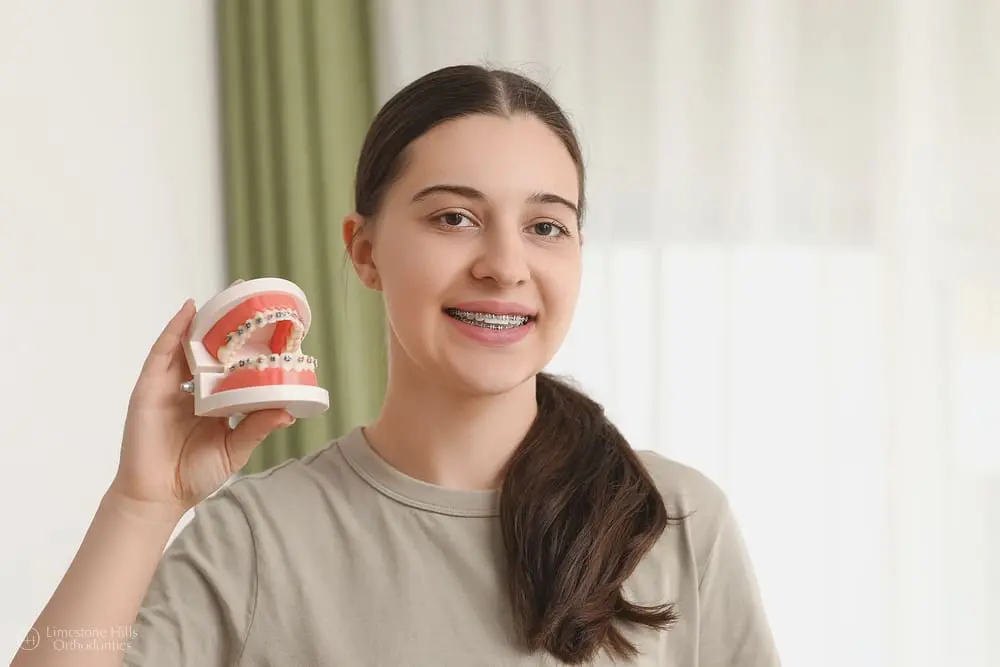
An overbite is when the upper front teeth overlap the lower front teeth, vertically and from front to back, when the back teeth are closed. An underbite is the opposite, with the lower teeth or lower jaw sitting ahead of the upper. Both range from mild and cosmetic to a true skeletal mismatch, and their causes and severity differ.
Overbite and underbite look like opposites in a mirror, and they are. What patients across Austin rarely hear is where the line sits between a normal bite, a cosmetic mismatch, and a problem that affects how the teeth and jaw work.
That distinction is the part most online explanations skip, and it is the part that decides whether a bite is something to watch or something to evaluate.
Across 5,000-plus treated cases at Limestone Hills, Dr. Rodrigo Viecilli draws that line from the diagnosis, not the label. As an ABO Diplomate with a PhD in orthodontic biomechanics, his framing is specific: severity depends on the size of the mismatch and whether it comes from tooth position or jaw structure, not from the word overbite or underbite alone.
What an Overbite Is
An overbite describes how far the upper front teeth cover the lower front teeth when the back teeth bite together. Almost everyone has some overbite. A small amount of vertical overlap, often a few millimeters, is normal and part of a healthy bite.
The term covers two related measurements. Vertical overlap is how much the upper teeth come down over the lower teeth. Horizontal overlap, sometimes called overjet, is how far forward the upper teeth sit ahead of the lower ones. People often use overbite loosely to mean either, which is one reason the condition gets misjudged.
A deep overbite is when that vertical overlap is excessive and the lower front teeth bite high behind the upper teeth, sometimes against the gum. A large horizontal overjet is the protruding look people associate with prominent front teeth. Both are forms of overbite, and they behave differently, which matters when severity is assessed.
What an Underbite Is
An underbite is the reverse relationship. The lower front teeth, or the entire lower jaw, sit ahead of the upper front teeth when the back teeth are closed. Instead of the upper teeth covering the lower, the lower teeth lead.
Underbites are less common than overbites. They are often more visible in profile, because a forward lower jaw changes the line of the chin and lower face in a way a deep overbite usually does not. Even a modest underbite tends to be noticeable from the side.
Like an overbite, an underbite can be dental, where the teeth are tipped but the jaws are roughly balanced, or skeletal, where the lower jaw is genuinely longer or set forward relative to the upper. The dental and skeletal versions can look alike from the front yet differ significantly underneath, which is central to how severity is judged.
How They Look Side by Side
From the front, an overbite often shows as upper teeth that dominate the smile, with the lower teeth partly or fully hidden when the mouth is relaxed. A strong horizontal overjet adds a forward set to the upper teeth and can make the lips rest apart.
An underbite reads differently. The lower teeth show more, the upper teeth can look set back, and the lower lip and chin often appear forward. The clearest difference between the two shows in profile, where an overbite tends to set the chin back and an underbite tends to push it forward.
Appearance alone does not establish severity. Two people with a similar look in the mirror can have very different bites once the back teeth and jaw position are examined. The visible front is a clue, not the diagnosis.
What Causes Each Condition
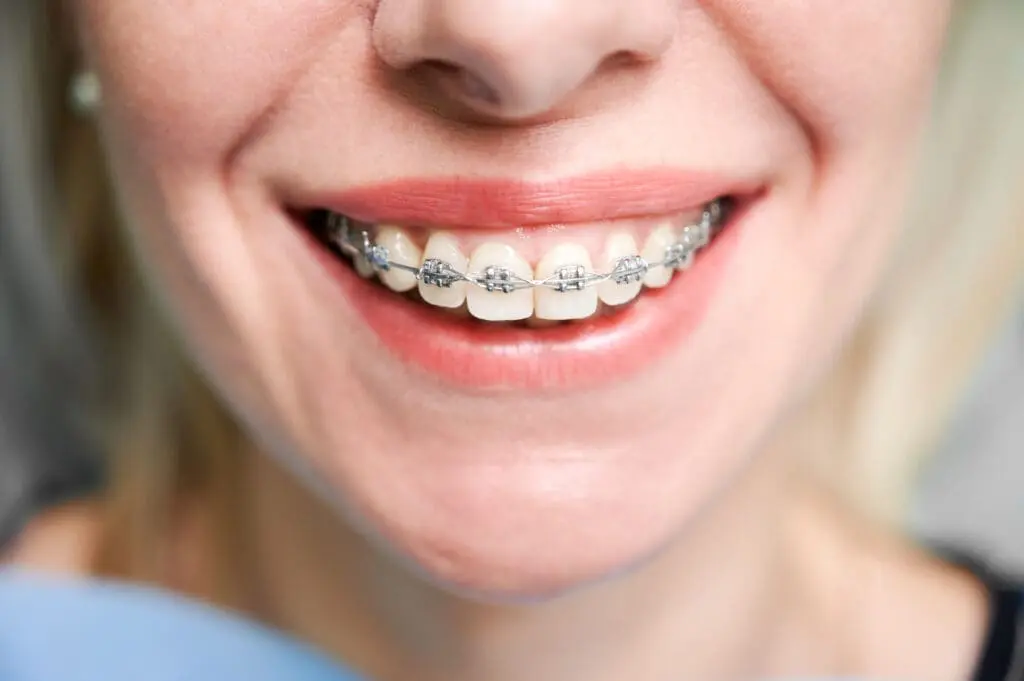
Overbite vs underbite share several causes and differ on others. The most common root is inherited jaw size and shape. If the upper and lower jaws grow at different rates or to different proportions, the front teeth end up overlapping too much or too little. Family history is often the strongest single factor.
Childhood habits play a larger role in overbites. Prolonged thumb or finger sucking, extended pacifier use past the toddler years, and tongue thrusting can push the upper front teeth forward and the lower teeth back, deepening an overbite or increasing overjet over time.
Underbites lean more on jaw growth. A lower jaw that grows longer or more forward than the upper jaw produces a skeletal underbite, and that tendency frequently runs in families. Early loss of baby teeth, missing or extra adult teeth, and airway or breathing patterns can also shift either bite during the growing years.
Because these causes overlap and combine, a single explanation rarely tells the whole story for one person. A child with a thumb habit may also have inherited jaw proportions, and the result is a mix. Identifying the actual drivers is a clinical task, which is why the cause is established by exam rather than assumed from the bite type.
Dental Versus Skeletal: The Distinction That Sets Severity
The most useful way to grade either bite is to ask whether it is dental or skeletal. A dental overbite or underbite means the jaws are reasonably balanced and the teeth themselves are tipped or positioned in a way that creates the mismatch. The bones are close to where they should be.
A skeletal overbite or underbite means the jaw bones differ in length or position. The teeth may be sitting correctly on the jaws, but the jaws do not relate to each other in a balanced way. This is the deeper version of either condition, and it is the distinction that changes how severity is understood.
Orthodontists also describe bite relationships using Angle classification, a long-standing system that groups how the upper and lower back teeth meet. In plain terms, it sorts bites into a balanced group and groups where the lower arch sits too far back or too far forward relative to the upper.
A pronounced overbite often falls in the group where the lower arch is set back, and a true underbite in the group where the lower arch is set forward.
None of this is something a person can sort out alone. A dental and a skeletal version of the same bite type can look identical from the front and need very different evaluation underneath. That is the single biggest reason self-assessment from the mirror is unreliable.
Mild, Moderate, and Severe in Plain Language
Both conditions sit on a range rather than in fixed boxes. A mild overbite is the normal, healthy amount of overlap that most people have and that needs nothing done. A mild underbite is a small reverse relationship that is often cosmetic and stable.
A moderate version of either is a clearer mismatch. The overlap or the reverse bite is visible and may begin to affect how the teeth meet and wear, but it is usually still primarily a tooth-position issue rather than a structural one.
A severe version is a large mismatch, frequently skeletal, where the jaws themselves differ enough that function and facial balance are affected. The same word, overbite or underbite, covers all of this, which is why the label by itself says very little about how significant a given case is. The size and the source of the mismatch are what matter.
When Each Is a Health Concern Versus Cosmetic
This is the question most comparisons leave vague, and it is where a clinician’s framing helps. A bite mismatch crosses from cosmetic into functional when it starts to affect how the teeth and jaw work, not when it simply looks different.
For an overbite, the functional signs are uneven or accelerated wear on the front teeth, lower teeth biting into the gum or palate behind the upper teeth in a deep bite, strain on the jaw joints and muscles, and in strong overjet cases a higher exposure of the upper front teeth to trauma. A small overbite with none of these signs is cosmetic at most, and often nothing at all.
For an underbite, the functional concerns are difficulty biting and chewing efficiently because the front teeth do not meet correctly, faster wear on the teeth that do make contact, added load on the jaw joints, and in pronounced cases an effect on certain speech sounds. A mild underbite without these effects can be a cosmetic matter the patient chooses to address or leave.
Dr. Viecilli’s clinical framing is consistent for both. The decision is not driven by the name of the condition but by whether the bite is doing measurable functional harm, by how the mismatch is trending in a growing patient, and by what the patient wants cosmetically. Those three inputs come from an exam, not from a category.
Why a Photo Cannot Diagnose Severity
It is reasonable to look in the mirror and try to place a bite as an overbite or an underbite. The front-tooth relationship is visible and the broad direction is usually clear. What a photo cannot show is everything that determines severity.
A picture does not reveal how the back teeth meet, whether the cause is tooth position or jaw structure, how the bite loads the jaw joints, or how a child’s jaws are still growing. Two bites that look the same in a selfie can be a simple dental tip in one person and a true skeletal discrepancy in another.
The honest position is that self-diagnosis from a photo is unreliable for anything beyond the general label, and even the label can be misread when overjet and overbite are confused.
This is a candid point worth stating plainly. Many mild mismatches are cosmetic only and may never need treatment, and only a clinical exam with imaging can tell a mild cosmetic case from one that warrants attention. The label is a starting point for a conversation, not a conclusion.
When to See an Orthodontist
An evaluation is worth scheduling when a bite mismatch is pronounced, when it appears to be getting worse, when there are functional signs such as uneven wear or difficulty chewing, or when the cosmetic effect matters to the patient. For children, an early orthodontic check lets a specialist watch jaw growth before a skeletal pattern becomes fixed.
Treatment for both overbite and underbite exists and is routine, but the right approach depends entirely on the individual case, the patient’s age, and whether the mismatch is dental or skeletal. Those treatment specifics belong on the dedicated pages rather than in a comparison article.
For how each condition is corrected, see the overbite treatment page, the underbite treatment page, and the orthodontic problems overview.
Austin and the Hill Country
Limestone Hills evaluates overbites and underbites for patients across Austin and the surrounding Hill Country, including Lakeway, Cedar Park, and Round Rock. The way each condition is defined and diagnosed does not change by city. What changes is the individual case.
A child in Bee Cave with a developing skeletal underbite and an adult in Westlake with a deep dental overbite are different clinical problems even though the categories sound simple. An exam is the step that turns the overbite-versus-underbite question into a specific assessment of severity.
To move from understanding the conditions to evaluating a treatment plan, the orthodontic problems overview is the right next stop.
Common Questions About Overbite and Underbite
What is the difference between an overbite and an underbite?
An overbite means the upper front teeth sit in front of and over the lower front teeth when the back teeth are closed. An underbite is the reverse, with the lower front teeth or the whole lower jaw sitting ahead of the upper front teeth. They are opposite mismatches in the front-to-back and vertical relationship of the two arches.
Is an overbite or an underbite more serious?
Neither is automatically worse. Severity depends on how large the mismatch is and whether it comes from tooth position or jaw structure. A small overbite is normal and a mild underbite can be cosmetic. A pronounced version of either can affect chewing, tooth wear, jaw comfort, or speech. Only an exam grades the actual case.
What causes an overbite or an underbite?
Both can run in families through inherited jaw size and shape. Childhood habits such as prolonged thumb sucking or tongue thrusting can push teeth into an overbite pattern. Uneven jaw growth, missing or extra teeth, and airway issues also contribute. The causes overlap, which is why a clinical assessment matters more than a single explanation.
Can you tell the severity of a bite problem from a photo?
No. A photo shows the front teeth but not the back-tooth relationship, the jaw position, or whether the cause is dental or skeletal. Two bites that look similar in a mirror can need very different evaluation. Severity is judged from a clinical exam and imaging, not from a self-taken picture.
Does an overbite or underbite always need treatment?
Not always. A slight overbite is normal and many mild mismatches are cosmetic rather than functional. Treatment is considered when the bite causes uneven wear, chewing or speech difficulty, jaw strain, or the patient wants the cosmetic change. An orthodontic exam, not the label alone, decides whether intervention is warranted.
Sources. Standard orthodontic malocclusion-classification literature, including Angle classification and the distinction between skeletal and dental discrepancy, stated qualitatively.
Common etiologic factors for overbite and underbite, including inherited jaw proportion, oral habits, jaw growth discrepancy, missing or extra teeth, and airway influence, described in general terms. Specifics that could not be independently verified are stated qualitatively rather than as exact figures. Clinical observations from Limestone Hills Orthodontics, Austin, TX.