
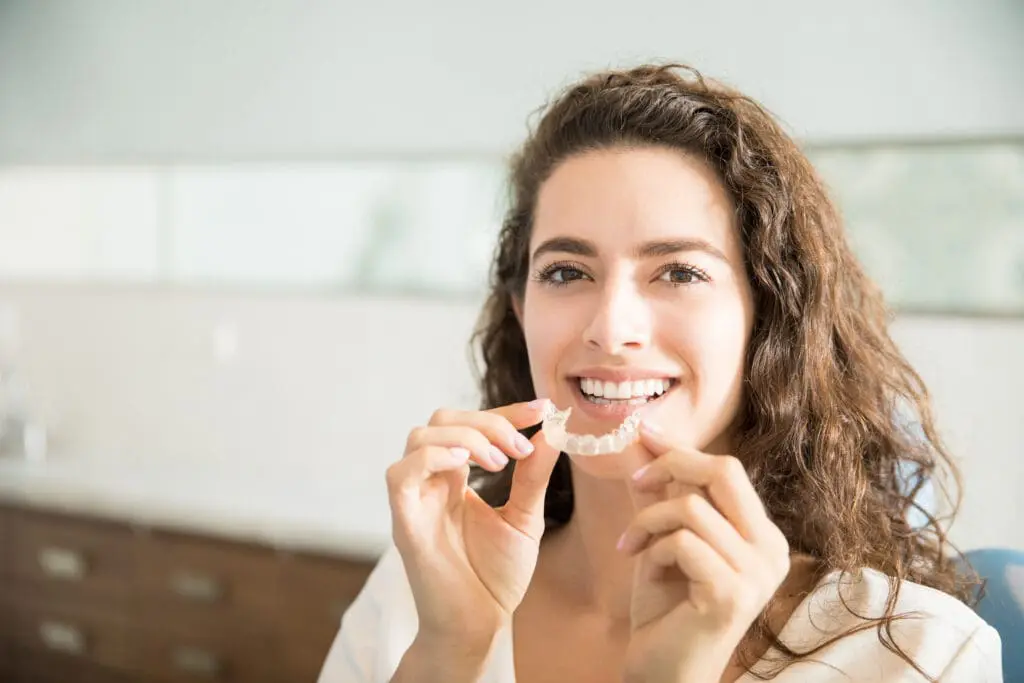
Invisalign can correct many dental overbites and mild-to-moderate cases using bonded attachments, elastics, planned staging, and bite-control features. A deep skeletal overbite, especially in a growing child or a severe jaw discrepancy, often needs braces, growth modification, or surgical coordination instead.
The right answer depends on the diagnosis, and only a clinical exam with imaging settles which category a given overbite belongs to.
An overbite is not one problem. It is a label for two different situations that look similar in the mirror but call for different treatment. Across 5,000+ treated cases at Limestone Hills in Austin, Dr. Rodrigo Viecilli sorts every overbite into a dental cause or a skeletal cause before deciding whether aligners are enough.
That sorting step is the part most online answers skip. As an ABO Diplomate with a PhD in orthodontic biomechanics and a co-inventor of the SmartArch wire system, Dr. Viecilli treats overbite correction as a force-and-anchorage question, not a brand question. The tool follows the diagnosis.
The framework below is the same one used in the practice: what kind of overbite is this, how severe is it, is the patient still growing, and what does a stable finish actually require. Those answers decide aligners, braces, or surgery, never the other way around.
What an Overbite Actually Is
An overbite is the vertical overlap of the upper front teeth over the lower front teeth when the back teeth are together. A small overlap is normal and healthy. The clinical concern is a deep overbite, where the upper teeth cover much or all of the lowers, sometimes far enough that the lower teeth bite into the palate.
A deep overbite is worth treating for more than appearance. It can drive uneven wear on the front teeth, strain the jaw joint, irritate the gum tissue behind the upper teeth, and complicate any future dental work. Correcting it is a function decision as much as a cosmetic one.
People often use overbite loosely to mean any front-teeth problem. It is specifically the vertical overlap. A horizontal gap where the upper teeth sit far ahead of the lowers is overjet, a related but separate measurement. The two often travel together, and a thorough exam measures both.
The companion guides on overbite treatment at Limestone Hills and overbite vs underbite cover the distinctions in more depth.
Dental Overbite vs Skeletal Overbite
This is the single most important distinction for the Invisalign question, and it is the one a blog cannot answer for any specific person.
A dental overbite is caused by the teeth. The upper front teeth are tipped inward or have erupted too far down, the lower front teeth have over-erupted, or both, while the jaws themselves sit in a reasonable relationship. The deep bite lives in the tooth positions, so moving the teeth can resolve it. Dental and mild-to-moderate overbites are where clear aligners do their best work.
A skeletal overbite is caused by the jaws. The lower jaw may be set back or undersized relative to the upper jaw, or the way the jaws grew creates a deep vertical relationship. Here the teeth are often just reporting a jaw problem. Moving teeth alone can mask the appearance without correcting the underlying structure, which tends to relapse and can compromise long-term stability.
Most real cases sit on a spectrum rather than at a pure extreme. Many overbites are primarily dental with a mild skeletal component, and those frequently treat well with aligners and elastics. A strongly skeletal overbite is where the conversation shifts to braces, growth modification, or surgery. Telling those apart needs records, not a guess.
How Invisalign Moves an Overbite
When the diagnosis points to a dental or mild-to-moderate overbite, Invisalign has several mechanics for opening a deep bite. They work together, and the plan matters more than any single feature.
Bonded attachments are the foundation. Tooth-colored composite shapes are bonded to specific teeth as handles the tray can grip, which lets the aligner deliver controlled forces it could not apply against smooth enamel alone. Deep-bite correction depends heavily on well-placed attachments.
Staged intrusion and tooth repositioning open the bite. The treatment plan can sequence the front teeth to move in a controlled way, easing the deep overlap step by stage rather than all at once. The software stages the movement, but an orthodontist sets and supervises the plan that the software follows.
Elastics and bite-control features handle the bite relationship. Small elastic bands hooked between the arches help correct how the teeth meet, and selected cases use bite ramps or precision bite features that discourage the back teeth from fully closing so the deep bite can decompress.
Interproximal reduction, a careful reshaping of tooth contacts, can create the small amount of space some cases need.
None of this is automatic. Aligner overbite correction is a planned sequence of forces, and the same tray system can finish predictably or stall mid-treatment depending on the diagnosis behind it and the clinician directing it.
The mechanics are standard orthodontics; the judgment about whether they are enough is the clinical part. The how does Invisalign work guide walks through tray mechanics in more detail.
The Aligner Options at Limestone Hills
When a case is a good aligner candidate, Limestone Hills offers two clear-aligner systems and explains the trade-off plainly. Both are premium products, and the recommendation depends on the case and on what the patient values.
Limestone Hills leans toward Angel Aligners as the preferred orthodontist-only system. Angel is supplied exclusively to orthodontists rather than to general dental offices or direct to consumers, which keeps it in specialist hands.
The Angel Pro protocol pairs a softer and a stiffer aligner per stage for more graded force, which is relevant to overbite work because deep-bite and posterior control are exactly where aligner cases most often need careful force management.
Angel also builds a transparent angelButton into the tray for elastics rather than relying only on separate bonded buttons, and its leaner distribution model often carries lower cost that the practice can partly pass to patients.
Invisalign remains fully available for patients who specifically prefer that brand. It has the longest operational record and the largest clear-aligner case database in the category, and that familiarity is a legitimate factor for someone who will wear trays for a year or more.
Dr. Viecilli presents both honestly rather than steering every patient to one, and the same ABO Diplomate plans and supervises the case either way. The Invisalign page covers the brand-specific details for patients who want them.

A Case-Severity Guide for Overbites
The table below is how a clinician thinks about overbite severity. It is a framework for understanding the decision, not a self-diagnosis tool. Two patients with the same visible overlap can land in different rows once imaging shows what is driving it.
| Case profile | What is driving it | Typical direction |
|---|---|---|
| Mild dental overbite | Slightly tipped or over-erupted front teeth; jaws in a reasonable relationship | Often treats well with clear aligners and attachments |
| Moderate dental overbite | Noticeable deep bite from tooth position, mild skeletal component at most | Frequently treatable with aligners plus elastics and bite-control features; sometimes braces are the cleaner choice |
| Deep overbite, mixed dental and skeletal | Tooth position plus a real jaw-relationship component | Case-by-case; aligners or braces depending on the balance, with elastics and careful staging |
| Skeletal overbite, growing child or teen | Jaw-size or jaw-position discrepancy with growth still available | Growth modification or braces, often with a functional appliance, to guide the jaw relationship while growth can still help |
| Severe skeletal overbite, adult | Significant jaw discrepancy, growth complete | Braces with coordinated orthognathic surgery for a stable, structural correction |
The pattern is consistent. The more the overbite is about teeth, the more aligners can do. The more it is about jaws, and the more severe the discrepancy, the more the case needs braces, growth modification in a still-growing patient, or surgical coordination for a result that holds.
When Invisalign Is Not the Answer
Being candid about the limits is part of an honest answer. There are clear situations where aligners alone are not the right call, and Limestone Hills says so rather than overpromising.
A significant skeletal discrepancy is the main one. When the deep bite is driven by jaw size or position rather than tooth position, moving teeth can improve the look without correcting the structure, which risks relapse and an unstable bite. These cases need the jaw relationship addressed directly.
A growing child with a skeletal pattern is another. Substantial growth is an opportunity. Guiding jaw development with growth modification or a functional approach while growth is still available can change what is possible, and that window does not stay open. Defaulting a growing skeletal case to adult-style aligner treatment can miss it.
A case that needs surgical correction is the third. When a stable, structural result requires repositioning a jaw, orthodontics is coordinated with oral and maxillofacial surgery. Aligners can play a role in such a plan, but as part of a surgical case, not as a substitute for it. The overbite treatment overview and choosing the best orthodontic treatment guide explain how these decisions are made.
What Only an Exam Can Determine
Here is the honest concession this whole topic turns on. No article, photo, or online questionnaire can tell a specific person whether Invisalign will fix their overbite. The mirror shows the overlap. It does not show the cause.
The cause is what decides treatment, and reading it requires diagnostic records. A clinical exam, 3D CBCT imaging, and an analysis of the jaw and tooth relationships are what separate a dental overbite from a skeletal one, measure the severity accurately, and assess remaining growth in a younger patient.
Two people with identical-looking overbites can need very different treatment once those records are in.
This is not a hedge to drive a visit. It is the genuine limit of remote answers for a medical-suitability question. Anyone who promises an aligner overbite outcome without examining the patient is guessing, and a deep bite is not a place to guess.
How Limestone Hills Decides
The process is deliberate and the same for every overbite case. Dr. Viecilli starts with the diagnosis, not the appliance.
Step one is records. A clinical exam plus 3D CBCT imaging shows whether the overbite is dental, skeletal, or mixed, how deep it actually is, and how much growth is still available in a younger patient. Step two is the question of stability. Dr. Viecilli plans for a result that holds, which is why a strongly skeletal case is not forced into an aligner just because the patient asked for one.
Step three is matching the tool to the case. A dental or mild-to-moderate overbite is often an excellent aligner candidate, and the patient then chooses between Angel and Invisalign with the trade-off explained. A skeletal case is routed to braces, growth modification, or surgical coordination, with the reasoning explained in plain terms.
The biomechanics background matters here, because deep-bite correction is fundamentally a force-control problem, and the plan is built around that rather than around a brand preference.
The shared thread is honesty about what each path can and cannot do. The recommendation is specific to the records in front of the doctor, which is the only way a suitability question like this can be answered responsibly.
Austin and the Hill Country
Limestone Hills assesses overbite cases for patients across Austin and the surrounding Hill Country, including Lakeway, Cedar Park, Bee Cave, and Round Rock. The available treatments do not change by neighborhood, but the right one always changes by case.
A teenager in Cedar Park with a mild dental overbite and an adult in Bee Cave with a deep skeletal pattern are different clinical problems with different answers, even though both might describe their concern as the same overbite. Suitability is decided at the exam, not before it.
The practical advantage of an orthodontist-led practice is that the full range stays on the table. Whether the answer is Invisalign, Angel Aligners, braces, growth modification, or surgical coordination, the same ABO Diplomate diagnoses the cause and supervises the plan.
A consultation is the step that turns this general guidance into a specific diagnosis and a specific plan for the patient in the chair. The Invisalign page and the overbite treatment page are the next reads for anyone weighing options.
Common Questions About Invisalign and Overbite
Can Invisalign fix an overbite?
It depends on the diagnosis. Invisalign can correct many dental overbites and mild-to-moderate cases using attachments, elastics, and bite-control features. A deep skeletal overbite, especially in a growing child or a severe jaw discrepancy, often needs braces, growth modification, or surgical coordination. Only a clinical exam with imaging determines which category a given overbite falls into.
What is the difference between a dental and a skeletal overbite?
A dental overbite comes from tooth position, where the upper front teeth are tipped or erupted too far over the lower teeth while the jaws sit in a reasonable relationship. A skeletal overbite comes from the jaws themselves, where jaw size or position drives the deep bite. Dental overbites respond well to aligners more often. Skeletal overbites are where braces, growth modification, or surgery enter the conversation.
How does Invisalign correct an overbite without braces?
Invisalign uses composite attachments bonded to the teeth as handles, planned staging to intrude or reposition the front teeth, elastics for bite correction, and bite-control features on some cases. Interproximal reduction can create space when needed. Dr. Viecilli plans the sequence so the deep bite opens in a controlled way rather than relying on the tray alone.
When is Invisalign not enough to fix an overbite?
Aligners are usually not the full answer when the overbite is driven by a significant jaw-size or jaw-position discrepancy, when a child still has substantial growth that calls for growth modification, or when the case needs surgical jaw repositioning for a stable result. In those situations Limestone Hills recommends braces, a growth appliance, or coordinated orthognathic surgery instead of overpromising what trays can do.
Can a deep overbite come back after Invisalign?
A corrected overbite can relapse without retention, which is why Limestone Hills uses retainers after any overbite treatment. Deep-bite cases in particular benefit from consistent retainer wear because the bite has a tendency to deepen again over time. Dr. Viecilli reviews a specific retention plan at the end of treatment rather than treating retention as optional.
Sources. Manufacturer product information (Invisalign/Align Technology; Angel Aligner) and standard orthodontic overbite-correction literature, stated qualitatively. Specifics that could not be independently verified are stated qualitatively rather than as exact figures. Clinical observations from Limestone Hills Orthodontics, Austin, TX.