
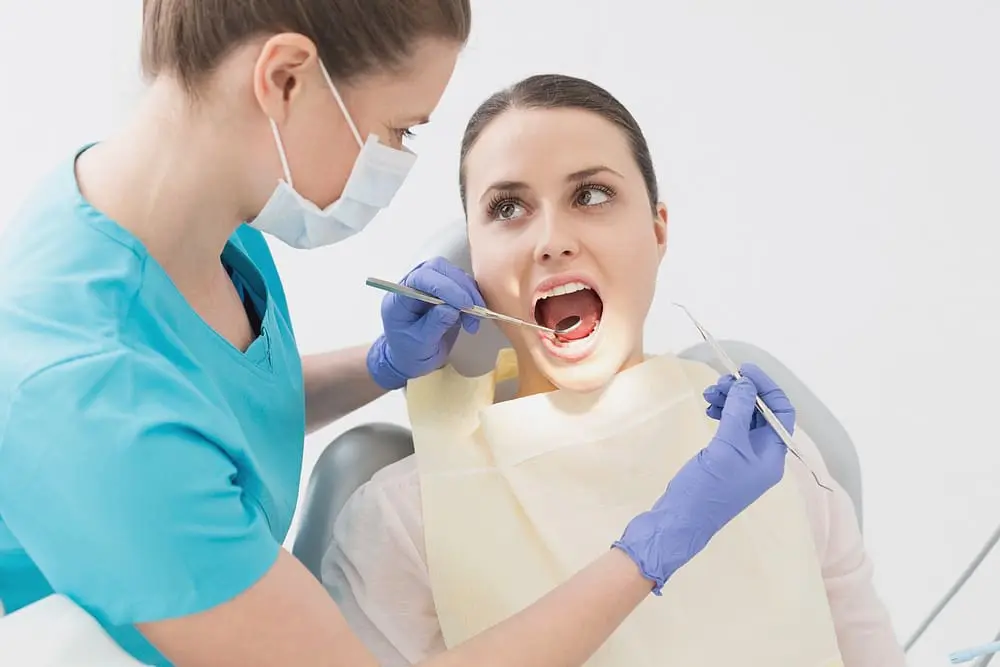
TADs orthodontics, or temporary anchorage device, is a tiny temporary titanium screw placed in the jawbone to serve as a fixed anchor. The orthodontist moves a stubborn tooth against the screw instead of against other teeth, so those other teeth stay put. It is placed under local anesthetic, most patients feel pressure rather than sharp pain, and it is removed once the movement is done.
Anchorage is the variable that decides whether a hard tooth movement is predictable. In Dr. Rodrigo Viecilli’s clinical framework at Limestone Hills, a TAD is the most direct way to get that anchorage, because it borrows the bone instead of borrowing other teeth.
That distinction is the whole point. Dr. Viecilli, an ABO Diplomate with a PhD in orthodontic biomechanics, a SmartArch co-inventor, and the author of 27+ publications, studies the forces that move teeth for a living. A screw in solid bone does not drift the way an anchor tooth does, which is why it makes the difficult movements behave.
Across 5,000+ treated cases in Austin, the pattern is consistent. When the mechanics genuinely need a fixed point, a small temporary screw turns an unpredictable case into a controlled one. When they do not, the case finishes without one.
What a TAD Actually Is
A TAD is a small titanium screw, far smaller than a dental implant, placed into the jawbone to act as an anchor. The full name is temporary anchorage device. Patients also hear orthodontic mini screw or miniscrew, and all three terms describe the same thing.
The reason it exists is a basic law of physics. To move a tooth, an orthodontist has to push or pull against something. If that something is another tooth, the other tooth tends to move too, in the opposite direction. That side effect is often unwanted and can undo part of the plan.
A TAD solves that problem by giving the orthodontist a fixed point that does not move. The screw is anchored in bone, so force applied against it goes entirely into the tooth that needs to move. Orthodontists call this skeletal anchorage, and it is one of the most useful tools added to the field in modern practice.
The word temporary is the key word. A TAD is placed for a job, used for the months that job takes, then removed. It is not a permanent implant and it does not replace a tooth. The bone simply heals over the small site once the screw is out.
How a TAD Is Placed, Step by Step
The placement is one of the shorter appointments in orthodontics, and knowing the steps removes most of the worry patients carry into it.
First, the site is planned. Dr. Viecilli reviews 3D CBCT imaging to choose a spot in the bone with enough support and a safe distance from tooth roots and other structures. The screw goes where the mechanics need the anchor, not in a guessed location, and the imaging makes that choice precise.
Next, the area is numbed. A local anesthetic is applied so the placement site is fully numb, the same kind of numbing used for routine dental work. Patients feel the numbing, then the area goes quiet.
Then the screw is placed. The mini screw is gently driven into the bone through the gum tissue. No surgical flap or stitches are needed for a routine TAD. This step is brief, and because the site is numb the sensation patients describe is pressure rather than pain.
Finally, the anchor is connected. Once the screw is seated, an elastic chain, a spring, or a wire is attached from the screw to the tooth that needs to move. That connection delivers a steady, controlled force in exactly the planned direction. The screw itself does nothing until the orthodontist hooks the force to it.
From numb to finished, a routine single TAD placement is quick. The planning that precedes it takes longer than the placement itself, which is the part that makes it work.
What It Feels Like and How to Care for It
The honest version, which is the one Dr. Viecilli gives, is that the idea of a screw in the mouth sounds far worse than the reality. Two things are true at once: the procedure is minor, and the fear of it is normal.
During placement the site is numb, so most patients report pressure and a sense of movement rather than the sharp pain they brace for. The appointment is short. The anticipation is usually the hardest part, and it tends to deflate quickly once the numbing is in.
Afterward, mild soreness or tenderness around the site for a day or two is common, similar to other minor dental work, and is generally well managed with over-the-counter pain relief. The discomfort fades as the area settles, and most patients adapt to the screw being there within a few days.
Aftercare is simple but it matters. The site is kept clean with gentle brushing and any rinse the practice recommends, because a clean site is a stable site. Sticky or hard foods directly on the screw are avoided so the anchor is not disturbed while it is doing its job. Good hygiene around the TAD is one of the factors that keeps it reliable through treatment.
The Cases That Need Skeletal Anchorage
A TAD is not used because it is available. It is used when a specific movement needs an anchor that teeth alone cannot give. A few case types come up repeatedly.
Intruding an over-erupted tooth. When a tooth has drifted down or up into a gap left by a missing opposing tooth, it has to be pushed back into the arch before that gap can be restored. Pushing a tooth up into bone is one of the hardest movements in orthodontics, and a TAD gives the fixed point that makes it predictable.
Uprighting a tilted molar. A back tooth that has tipped into a space, often where a neighboring tooth was lost, needs to be stood back upright before a crown or implant can fit. A TAD anchors that uprighting movement so the molar rotates into position without dragging other teeth along.
Correcting an asymmetry. When a midline is off or one side of the bite needs more correction than the other, force has to be applied unevenly. A TAD lets the orthodontist anchor one side independently, which is difficult to do cleanly using teeth as the anchor.
Anchorage for demanding movements. Closing a large space, retracting front teeth significantly, or any plan where unwanted movement of the anchor teeth would compromise the result. A TAD protects the teeth that are supposed to stay still.
| Often benefits from a TAD | Usually does not need a TAD |
|---|---|
| Intruding an over-erupted tooth back into the arch | Mild crowding corrected with braces or aligners alone |
| Uprighting a molar tilted into a missing-tooth space | Routine alignment where anchor teeth can hold position |
| Correcting a midline or side-to-side asymmetry | Symmetric cases with balanced force on both sides |
| Large space closure or significant front-tooth retraction | Small movements where minor anchor drift is acceptable |
The table shows tendencies, not rules. The actual decision is made from the diagnostic records, because two cases that look similar can need different mechanics.
Why a TAD Can Replace Headgear or Extractions in Some Cases
For certain problems a TAD changes the menu of options, and that is worth understanding plainly.
Before TADs were common, controlling anchorage for difficult movements sometimes meant headgear, an external appliance worn many hours a day, with results that depended heavily on how reliably the patient wore it. A TAD provides steady anchorage without that compliance burden, which is one reason it is now a routine choice where headgear once was.
In some plans a TAD also reduces the need to remove healthy teeth. When the goal is to create or close space, a fixed anchor can sometimes achieve the planned movement in a way that, in selected cases, makes an extraction-based plan unnecessary. This is case dependent and not a universal substitution.
Dr. Viecilli is careful with this point. A TAD does not abolish headgear or extractions across the board, and presenting it that way would overpromise. What it does is widen what an orthodontist can achieve with controlled anchorage, so the right plan for a given patient can sometimes be the less invasive one. Whether it applies to a specific case is a clinical judgment from the records.
How a TAD Is Removed
Removal is simpler than placement, and it surprises patients how quick it is. Once the screw has done its job and the planned movement is complete, the TAD comes out.
Because the screw is anchored in bone rather than fused to it, removal is brief and is generally easier than placement. Many patients need little or no anesthetic for it, and the appointment is short. The screw is taken out and the small site is left to heal.
The bone and gum heal over the site on their own over a short period, and the area returns to normal. There is no lasting hardware, which is exactly what the word temporary in temporary anchorage device means. The TAD existed only for the part of treatment that needed it.
Placed In-Office at Limestone Hills
At Limestone Hills, Dr. Viecilli places TADs in-office for routine cases. There is no separate referral to an outside surgeon for routine TAD placement, which keeps the planning, the placement, and the tooth movement under one orthodontist who designed the mechanics in the first place.
That continuity is a clinical advantage, not just a convenience. The person who decided where the anchor needs to be, based on the biomechanics of the case, is the person who places it and connects the force. The 3D CBCT imaging used to plan the site is the same imaging used to keep it safe.
For more complex situations that fall outside routine TAD placement, coordination with the appropriate provider is arranged. The default for the cases that need a standard mini screw, though, is a single practice and a single orthodontist from plan to placement to removal.
The Candid Part: Fear Versus Reality, and a Targeted Tool
Here is the honest framing Dr. Viecilli gives patients. The idea of a screw being placed in the mouth generates real anxiety, and that reaction is completely understandable. It is worth saying directly that the mental image is harsher than the experience.
The site is numbed, the placement is brief, most patients feel pressure rather than the sharp pain they expect, and the soreness afterward is short-lived and manageable. The honest summary is that the fear of a TAD is reliably worse than having one. That is not a sales line; it is the consistent pattern.
The second candid point matters just as much. A TAD is a targeted tool, not a routine part of every treatment. It is not better care to add a screw to a case that does not need one. Many patients finish excellent results with no TAD at all.
Dr. Viecilli recommends a TAD only when the mechanics of the specific case genuinely call for it. When the case does need that fixed anchor, the small inconvenience of the screw buys a level of control that teeth alone cannot deliver. When it does not, the responsible answer is simply not to use one.
Austin and the Hill Country
Limestone Hills treats patients from across Austin and the surrounding Hill Country, including Lakeway, Cedar Park, Round Rock, Bee Cave, and Westlake. For cases that need skeletal anchorage, the practice plans and places routine TADs in-office so the same orthodontist handles the mechanics from start to finish.
The consistent message for Austin-area patients is that a TAD is a precise solution for a specific problem, not a routine add-on. A consultation with 3D CBCT imaging shows whether a fixed anchor would make the planned movements more predictable, and what that would mean for the individual case.
For patients weighing options nearby, the practical value of an orthodontist-led practice is that the anchorage decision is made by the same biomechanics specialist who designs and supervises the rest of the plan. That work begins with the TADs consultation in Austin.
Common Questions About Orthodontic TADs
What is a TAD in orthodontics?
A TAD, short for temporary anchorage device, is a small titanium screw placed in the jawbone to act as a fixed anchor point. The orthodontist pulls or pushes a tooth against the screw instead of against other teeth, which keeps those other teeth from drifting. It is temporary by design and is removed once the planned movement is finished. Patients also hear it called an orthodontic mini screw or miniscrew.
Does placing a TAD hurt?
Placement is done with local anesthetic, so the area is numb and the procedure itself is usually quick. Most patients report pressure during placement rather than the sharp pain they expect. Mild soreness for a day or two afterward is common and is generally managed with over-the-counter pain relief. The honest summary is that the fear of the procedure is usually worse than the experience of it.
How reliable are orthodontic mini screws?
In routine orthodontic use TADs are highly reliable and have become a standard tool for difficult movements. Most stay stable for the time they are needed. If a screw loosens, it is removed and the site simply heals, and the orthodontist can place another in a nearby spot. Reliability depends on bone quality, placement site, and hygiene, which is why planning and aftercare matter.
Is a TAD a permanent dental implant?
No. A TAD is not a permanent implant and does not replace a tooth. It is a temporary anchor used only during active treatment, and it is removed once it has served its purpose. The removal is brief and the bone fills back in. A dental implant is a long-term tooth replacement, which is a different device with a different purpose entirely.
Does every orthodontic case need a TAD?
No. A TAD is a targeted tool, not a routine part of every treatment. It is used when a specific movement needs an anchor that teeth alone cannot provide, such as intruding an over-erupted tooth, uprighting a tilted molar, or correcting an asymmetry. Many cases finish well without one. At Limestone Hills, Dr. Viecilli recommends a TAD only when the mechanics of the case genuinely call for it.
Sources. Standard orthodontic literature on temporary anchorage devices and skeletal anchorage, including the role of mini screws in tooth intrusion, molar uprighting, asymmetry correction, and anchorage control for demanding movements, stated qualitatively.
Success-rate, comfort, placement-time, and healing specifics that could not be independently verified are stated qualitatively rather than as exact figures: TADs are described as highly reliable in routine use, placement as quick and performed under local anesthetic, and the typical sensation as pressure rather than sharp pain.
Headgear and extraction comparisons are stated as case-dependent rather than universal.
Clinical observations from Limestone Hills Orthodontics, Austin, TX.