

A large and growing share of orthodontic patients are now adults. The drivers are social acceptance of treatment, the way remote and hybrid work normalized it, near-invisible appliance options, and motivations that go beyond appearance, including abnormal wear and bite function. The trend is real and ongoing. Whether to treat remains a personal, case-specific decision.
Across 5,000-plus treated cases at Limestone Hills in Austin, many of them adults, the pattern Dr. Rodrigo Viecilli sees is steady growth in adults who proceed for function and discreet alignment, not appearance alone. An ABO Diplomate with a PhD in orthodontic biomechanics and 27-plus publications, he reads the trend through mechanics and tissue health rather than fashion.
The reasons adults give have shifted. Some want easier cleaning and a more even bite to protect teeth long term. Others simply feel free to do something they postponed for years because the options are now discreet.
The local adult-consultation process at the practice is built around that. The first visit sorts a health-driven case from a purely elective one, in plain terms, before any plan is proposed.
The Shift in Who Gets Treated
For a long time orthodontics was framed as something done in adolescence and finished before adulthood. That framing no longer matches who walks into a specialist practice. Adults are a large and growing share of orthodontic patients, and treating them is routine rather than unusual.
Stated qualitatively, the adult segment has expanded substantially over time. The exact share is reported differently across sources, so this post does not attach a single figure to it. What matters clinically is that adult treatment is now a standard part of practice, not an edge case a few offices handle.
The shift is not a marketing invention. It tracks a real change in how adults view treatment and in what the appliances can do without being visible. The sections below name the drivers and then explain how a Limestone Hills adult consultation actually works.
Driver 1: Social Acceptance Changed
The stigma that once attached to adult orthodontic appliances has largely faded. Aligning teeth as an adult reads today as a normal health and self-care decision, similar to other elective health choices a working adult might make. That cultural shift removed a barrier that used to keep adults from starting.
Part of the change is exposure. Many adults now know peers, colleagues, or family members who treated as adults, so the decision no longer feels out of step with their age group. When a choice is common in someone’s circle, the social cost of making it drops.
Dr. Viecilli sees this at the consultation level. Fewer adult patients open with worry about how treatment will look to others, and more open with a specific functional or health goal. The conversation has moved from whether it is acceptable to do this as an adult to which approach fits the case.
Driver 2: Remote and Hybrid Work Lowered the Visibility Cost
The normalization of remote and hybrid work changed the day-to-day visibility math for adults considering treatment. An adult who spends part of the week on video calls or working from home is less concerned about appliances being noticed in person every day.
This matters most in the early adjustment period of any appliance, when speech and comfort are still settling. A more flexible work setting gives an adult room to adapt without feeling on display in a way a fully in-person schedule once did.
The effect is practical rather than clinical. It does not change how teeth move. It changes how willing an adult is to begin, because the perceived social friction of starting treatment is lower than it used to be. That lowered friction is one reason more adults now proceed.
Driver 3: The Options Turned Discreet
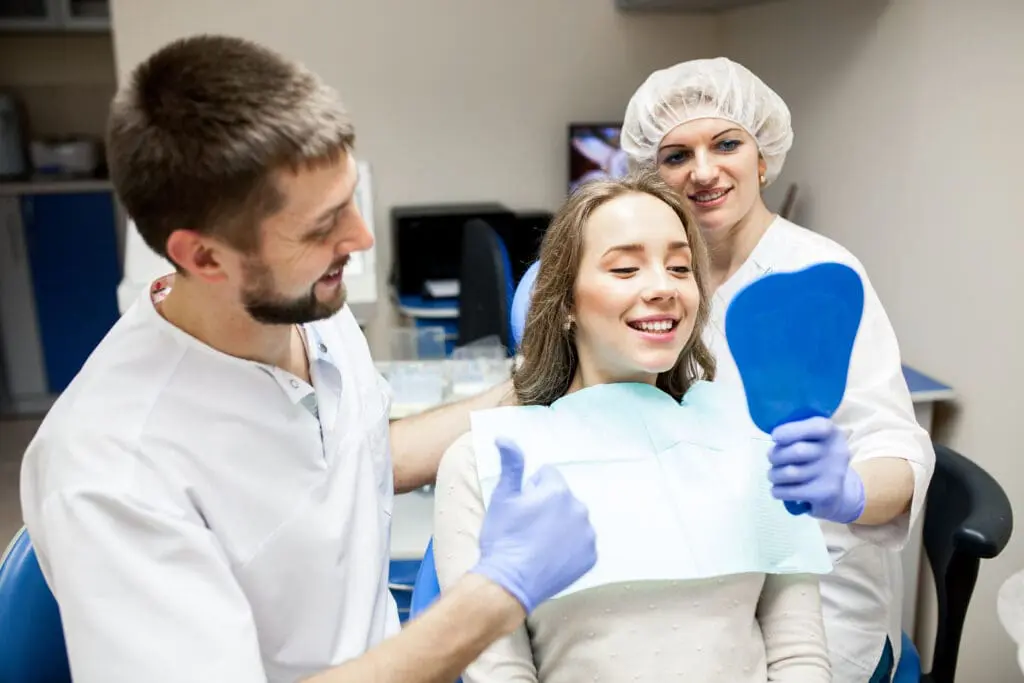
Appliance technology improved in ways that directly serve adult patients. Clear aligners and tooth-colored bracket options made it possible to align teeth without the visibility many adults associated with treatment. Discretion is no longer a trade-off an adult has to accept to get a result.
Clear aligners are the most visible example of this shift. For adults who present professionally, a removable, near-transparent tray addresses the visibility concern that used to stop them. Tooth-colored fixed options serve adults whose cases are better treated with braces but who still want a lower-profile appliance.
Limestone Hills offers braces, clear aligners, and Invisalign. For aligners specifically, the practice provides both Angel Aligners, an orthodontist-only system Dr. Viecilli prefers for many cases, and Invisalign for patients who specifically want that brand.
The choice is matched to the case and to the patient’s visibility preference, and the trade-off is explained plainly. Neither system is presented as a weak option, because both are premium products and the right one depends on the diagnosis rather than on the brand name.
The clinical point underneath the discretion is worth stating. A discreet appliance still has to move teeth predictably, so the diagnosis and the orthodontist supervising the case matter more than how visible the appliance is. Discretion expands who is willing to treat. It does not replace clinical judgment about how to treat.
Health Benefits Beyond Appearance
The most important shift in adult orthodontics is not visibility. It is motivation. A growing number of adults pursue treatment for function and long-term dental health rather than appearance alone, and those reasons carry a clearer clinical rationale.
Alignment makes teeth easier to clean. Crowded or overlapped teeth trap plaque in places a brush and floss reach poorly, and over years that contributes to gum problems and decay risk. Straighter teeth are simpler to keep clean, which supports long-term periodontal health in an adult who intends to keep these teeth for decades.
Bite function is the second reason. When teeth meet correctly, chewing force spreads across the arch. When the bite is off, certain teeth take more load than they were built for, which can contribute to abnormal wear, chipping, and uneven stress on individual teeth over time. Correcting the bite redistributes that force.
Jaw-joint and muscular symptoms are where the framing has to stay honest. A poor bite can be associated with some functional concerns, and orthodontic correction may help selected cases. It is not a guaranteed cure for jaw-joint disorders, and the evidence on orthodontics and joint symptoms varies. Dr. Viecilli treats this as a case-by-case clinical question, not a blanket promise.
The pattern Dr. Viecilli sees at Limestone Hills is that the adults with the clearest reason to proceed are usually the function-driven and health-driven ones. Protecting teeth from uneven wear, supporting gum health, and improving how the bite works are durable reasons that hold up over a treatment measured in many months.
The Local Adult Consultation Process
The adult consultation at Limestone Hills is built to answer two questions in plain terms: is there a function or health reason to treat, and if the patient wants to proceed, what is the right approach for this specific case. The process is straightforward and does not assume a default answer.
It starts with a clinical exam and diagnostic records. Dr. Viecilli reviews the bite, the periodontal condition, existing dental work, and the planned tooth movements. For adults this step matters more than for a growing child, because an adult skeleton is set and gum and bone health gate what is safe to do.
From those records the conversation separates a health-driven case from a purely elective one. If a periodontal issue exists, it is addressed before orthodontics, because moving teeth through inflamed tissue is not safe. If the case is sound, the discussion moves to options, braces, clear aligners, or Invisalign, with the trade-off explained rather than a single brand pushed.
The consultation is free, and it ends with a specific plan and a specific number for the patient in front of the doctor rather than a blog estimate. An adult leaves the visit knowing whether there is a clinical reason to treat, what the options are, and what it would cost, which is the information an adult needs to make the decision on their own terms.
The Honest Part: Elective Versus Health-Driven
The growth of adult orthodontics does not mean every adult with imperfect teeth should treat. That is the candid point this post is built around. A boom in demand is not a clinical instruction.
Purely elective alignment is a legitimate personal choice. An adult whose teeth are healthy and whose bite functions can reasonably decide that cosmetic alignment is not worth the time and cost to them, and that decision is valid. Wanting it is a fine reason to do it, and not wanting it is a fine reason to skip it.
Cases driven by function or dental health are different. When a bad bite is contributing to abnormal wear, or crowding is undermining gum health, the rationale is clinical rather than aesthetic, and the cost of doing nothing is real. Those cases have a clearer reason to proceed.
Dr. Viecilli draws that line openly at the consultation. He tells an adult which category the case falls into rather than recommending treatment by reflex, because an honest separation of elective from health-driven is more useful to the patient than a sales pitch riding a trend.
Austin and the Hill Country
Limestone Hills sees the adult shift across Austin and the surrounding Hill Country, including Lakeway, Cedar Park, Round Rock, Bee Cave, and Westlake. Adult patients arrive with the same mix the trend describes: some for discreet alignment, more for function and long-term dental health.
The local adult-consultation process does not change by neighborhood. Whether a patient comes from Steiner Ranch or central Austin, the same ABO Diplomate reviews the records, separates the elective question from the health-driven one, and explains the options in plain terms.
A free consultation turns the trend into a specific answer for the individual adult rather than a general claim about a growing category. The practical advantage of an orthodontist-led practice is that the same specialist designs and supervises the plan, and the elective-versus-health line is drawn the same way every time.
Common Questions About the Adult Orthodontics Trend
Why are more adults getting braces?
Several forces moved together. Orthodontic appliances stopped carrying the stigma they once did, remote and hybrid work made treatment less visible day to day, and clear options matured so that alignment can be discreet. At the same time, more adults pursue treatment for function and long-term dental health rather than appearance alone. The growth is real and ongoing across adult age ranges.
Is adult orthodontics really that common now?
Adults are a large and growing share of orthodontic patients, and treating adults is routine at a specialist practice rather than an exception. Dr. Viecilli treats adults at every age range at Limestone Hills. Stated qualitatively, the adult segment has expanded substantially, which is why discreet options and adult-focused planning have become standard parts of orthodontic practice.
What health reasons lead adults to treatment, not just appearance?
Aligned teeth are easier to clean, which supports long-term gum health, and a balanced bite spreads chewing force so individual teeth wear less over time. A poor bite can contribute to abnormal wear and to some functional concerns. Orthodontics may help selected functional issues, though it is not a guaranteed cure for jaw-joint problems, and the rationale is assessed case by case.
Can adult treatment be discreet at work?
Often yes. Clear aligners and tooth-colored options reduce visibility for adults who present professionally. Limestone Hills offers braces, clear aligners, and Invisalign, and for aligners provides both Angel Aligners, an orthodontist-only system the practice prefers for many cases, and Invisalign for patients who want that brand. A consultation matches the option to the case and to visibility preferences.
Does every adult with crooked teeth need treatment?
No. The growth of adult orthodontics does not mean every adult should treat. Purely elective alignment is a personal choice, and a patient can reasonably decline it. Cases driven by function or dental health carry a clearer clinical rationale. Dr. Viecilli separates the two honestly at the consultation rather than recommending treatment by default.
Sources. Standard commentary on the growth of adult orthodontic treatment and its drivers, including social acceptance, the normalization of treatment alongside remote and hybrid work, discreet clear and tooth-colored appliance options, and functional and dental-health motivations, all stated qualitatively.
The adult share of orthodontic patients and any jaw-joint or functional-benefit claims are stated qualitatively rather than as exact figures or guarantees, because the precise share is reported differently across sources and the evidence on orthodontics and joint symptoms varies. Clinical observations from Limestone Hills Orthodontics, Austin, TX.