
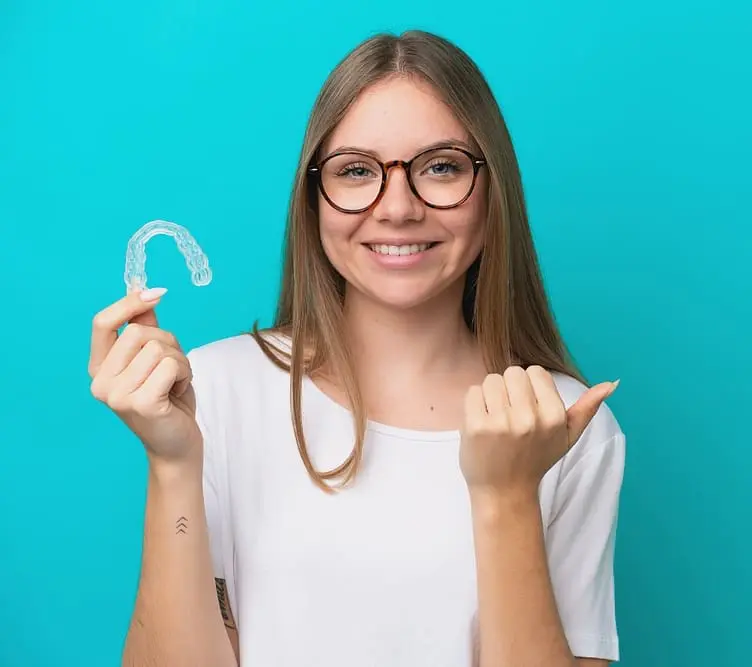
Skip wearing Invisalign is the single most common self-inflicted cause of treatment delay seen at Limestone Hills Orthodontics in Austin. Teeth begin drifting back toward their old position within hours of an aligner coming out, so a skipped day is not a free day; it is lost ground that compounds.
Light skipping costs extra weeks. Chronic skipping causes tracking loss, which can force a full rescan and a new set of trays at added time and sometimes added cost. The honest test is simple: if the next tray does not seat fully, the case is already behind.
Dr. Viecilli holds a PhD in orthodontic biomechanics from Indiana University and has authored 27 peer-reviewed publications on how orthodontic forces translate into tooth movement and tissue response.
His clinical observation across roughly 1,200 adult Invisalign cases at Limestone Hills Orthodontics is consistent: skipped wear time, not pain and not a manufacturing flaw, is the reason most cases that run long actually run long.
Teeth begin to relapse toward their old position within hours of an aligner being out. A skipped day is not a free day. It is lost ground that compounds tray over tray.
Dr. Viecilli’s rule for every aligner patient: if the next tray does not fully seat, the patient is already behind. The recovery protocol, drop back a tray, use chewies, and call before it compounds, is reviewed at the start of treatment so nobody discovers it the hard way three months in.
What actually happens when Invisalign wear is skipped
An Invisalign tray works by holding a tooth under continuous, gentle pressure. That pressure compresses the soft tissue on one side of the root and stretches it on the other. The body responds by remodeling the bone around the root, and the tooth migrates a fraction of a millimeter toward its planned position over the days the tray is worn.
The part most patients miss is what happens when the pressure stops. Each tooth is anchored in its socket by a thin layer of elastic fibers called the periodontal ligament. During treatment those fibers are stretched into a new shape, and they retain a memory of where they used to sit.
The moment the aligner comes out, those fibers behave like tiny stretched rubber bands and pull the tooth back toward its previous position.
This is why skipped wear is not neutral. The teeth are not paused while the tray sits in its case; they are actively drifting backward. The freshly remodeled bone around a recently moved tooth stays immature for several months, which is exactly why early relapse happens fast once continuous pressure is removed.
So a skipped day is not a free day with no progress. It is a day of reverse progress on top of zero forward progress. Two skipped days in a week can quietly erase the gain a full tray was supposed to deliver.

Tracking loss, the technical name for the problem
When a tray no longer matches the teeth it is supposed to be moving, orthodontists call it tracking loss, or say the case is not tracking. Every Invisalign tray is manufactured for one exact set of tooth positions planned for that stage. The next tray assumes the previous tray finished its job.
When wear time drops, the teeth never reach the position the next tray expects. Insert that next tray and it will not sit fully. It may rock when the patient bites, lift visibly off one or two teeth, or feel like it touches only the front teeth and floats over the back ones. That visible gap is the case telling the patient it is behind.
A small tracking gap is recoverable with chewies and a longer wear period. A large gap, where the tray clearly does not seat on a tooth no matter how long it is worn, is not recoverable by pushing forward. Continuing to advance trays on a case that is not tracking widens the gap, because each new tray asks for a position the teeth are even further from.
This is the failure mode that turns a few weeks of lost time into a rescan: not a single missed day, but a pattern of skipped wear no one corrected because the patient kept advancing trays on schedule while the teeth fell behind.
How much skipping causes how much damage
Not all skipping is equal. The consequence scales with how often wear is missed and for how long the teeth go without continuous pressure. The matrix below reflects the pattern Dr. Viecilli sees most often at the practice. It is a guide to severity, not a license to skip up to a threshold.
| Skipping pattern | What is happening to the teeth | Likely consequence |
|---|---|---|
| A rare missed day, tray back in by the next morning | Minor backward drift on actively moving teeth. The next tray usually still seats with chewies. | Negligible if it stays rare. The current tray may feel tighter for a day. |
| Routinely below the daily minimum, several short out periods adding up | Teeth never fully reach each planned stage. A small tracking gap accumulates slowly. | Treatment runs weeks to a couple of months long. Extra refinement trays likely. |
| One full week with little or no wear | Measurable relapse on the teeth that were moving. Current tray often will not seat on one or two teeth. | Drop back to the last fully seating tray and re-advance slowly. Possible partial rescan. |
| Chronic skipping over multiple trays, gap never corrected | Teeth are far off the planned path. No prior tray recaptures them. | Full rescan and a new series of trays. Added treatment time and sometimes added cost. |
The pattern that does the real damage is the second and fourth rows: not a dramatic single lapse, but a steady habit of falling short of the daily wear target while continuing to swap trays on the calendar as if nothing were wrong.
The 22-hour rule, and why it is not arbitrary
The American Association of Orthodontists guidance is that clear aligners be worn 20 to 22 hours per day, each tray typically worn about a week, moving teeth a fraction of a millimeter at a time. Most orthodontists, including Dr. Viecilli, target 22 hours because it leaves a realistic margin for eating and cleaning.
The number is not a round figure picked for simplicity. It reflects how long continuous pressure must be present for bone remodeling to outpace the relapse pull of the periodontal ligament. The two are in a tug of war: aligner pressure moves the tooth forward; the ligament pulls it back the instant pressure is gone.
At roughly 22 hours of daily wear, the forward force wins clearly and the tooth tracks on plan. Drop into the 17 to 19 hour range and the two forces near a stalemate, so movement slows or stalls even though the patient feels like they are wearing the trays most of the time. That is the trap of partial compliance: it feels close enough, and it is not.
The two allowed off hours are for meals and brushing, not evenings without the tray. A tray left out through dinner and overnight has already burned far past the daily budget.
How to recover if a case is already behind
The instinct when behind is to speed up: jump to the next tray, or double up trays, to catch the calendar back up. That instinct is exactly backward and is the single most common way patients turn a recoverable lapse into a rescan.
Recovery means slowing down and recapturing tracking before advancing. The protocol below is what Dr. Viecilli reviews with patients at the start of treatment so it is already known if it is ever needed.
- Stop advancing trays immediately. The moment a tray does not seat fully, do not move to the next one on schedule. Advancing on a case that is not tracking widens the gap with every tray. The calendar is no longer the guide; tray seating is.
- Drop back to the last tray that seats completely. Work backward through the recent trays until one sits fully against every tooth with no rock and no lift. That tray represents a tooth position the teeth can still be recaptured to. If even several trays back will not seat, the gap is large and step 6 applies.
- Use aligner chewies several times a day. Aligner chewies are small foam cylinders that, when bitten, press the tray fully into contact with each tooth. On a recovery tray they do real work, closing a small tracking gap by seating the tray completely and letting it hold the teeth against their previous position.
- Hit a true 22 hours of daily wear on the recovery tray. Recapturing tracking requires the same continuous pressure that moving teeth required in the first place, with no margin to spare. The recovery tray comes out only for meals and brushing until it seats fully and feels neutral, which usually takes longer than a normal tray period.
- Re-advance one tray at a time on a longer schedule. Once the recovery tray seats fully, move forward one tray at a time, holding each one until it is completely seated before advancing rather than switching on a fixed weekly date. This is slower than the original plan on purpose; rushing reopens the gap.
- Call the practice before it compounds. If no recent tray seats, or the teeth visibly look like they moved backward, that is a rescan conversation, not a self-recovery situation. Calling early, while a few trays back still seat, is the difference between a longer wear period and a brand-new series of trays.

Why catching up later does not work
The most persistent misconception in aligner treatment is that lost wear time is a debt that can be repaid by wearing the trays harder later. Orthodontic tooth movement does not work like a savings account. The biology runs on continuous pressure over time, and time that passed without pressure cannot be recreated by adding intensity afterward.
Wearing the current tray for thirty hours straight does not deliver three days of movement in one. The tooth still moves at the rate the periodontal ligament and bone remodeling allow, regardless of how the hours are stacked. Meanwhile, every hour the skipped days went unworn, the teeth were drifting backward.
Stacking two trays or jumping ahead to make up ground applies forces the teeth are not prepared for, which the published clinical guidance and Dr. Viecilli’s own caseload both show makes tracking loss worse. There is no fast-forward button, only the slow recapture in the recovery protocol above.
The honest framing the practice gives every patient: the only reliable way to catch up is to never fall behind, and wear-time discipline in the first ninety days sets the rhythm for the entire case.
The honest part: chronic skipping can mean a rescan and added cost
Most blog content on this topic implies every lapse is gently recoverable. That is not always true, and patients deserve the straight version. When skipping is chronic and the teeth drift far enough off plan that no prior tray recaptures them, the case requires a fresh intraoral scan and an entirely new series of trays built from where the teeth actually are now.
Depending on how the original treatment agreement was written, that mid-course correction can add weeks or months and, in some cases, an additional cost. Refinement rounds, which a large share of aligner cases need at least once anyway, also become more likely and more extensive when wear-time compliance is poor.
Limestone Hills is direct about this at the start of treatment rather than discovering it together at month four. Wear-time discipline is the one variable fully in the patient’s control, and it is the lever that protects both the finish date and the budget. The practice would rather a patient hear the consequence plainly up front than feel blindsided later.
Austin and the Hill Country
Limestone Hills Orthodontics treats Invisalign patients from across the Austin metro and the Hill Country. Adults travel to the practice from Lakeway, Cedar Park, Round Rock, Bee Cave, Westlake, and Steiner Ranch for clear aligner treatment, and the wear-time conversation is the same one Dr. Viecilli has with every Austin-area patient at the start of a case.
Distance matters here in a practical way. For patients thirty or more minutes from the office, a tracking gap caught early at home is one short conversation; the same gap ignored for several trays can mean an extra trip for a rescan and a restarted series.
Limestone Hills schedules in-person check-ins roughly every six to eight weeks during active treatment, with virtual tray-tracking checks between visits, so patients in the farther suburbs do not have to guess whether a case is on track. Knowing the seating test lets Austin and Hill Country families protect a case from their own kitchen table between visits.
Common Questions About Skipping Invisalign Wear
Is it okay to skip a day of Invisalign?
A single occasional missed day will not ruin a case, but it is not a free day either. Teeth begin drifting toward their previous position within hours of an aligner coming out, because the periodontal ligament that anchors each tooth behaves like a stretched elastic band and pulls back when continuous pressure is removed. One missed day usually means the next tray feels tighter and seats a little less fully. The problem is not one missed day; it is the pattern of repeated missed days that compounds into tracking loss. The honest test is whether the next tray seats completely. If it does, a rare missed day was absorbed. If it does not, the case is already behind.
What happens if I don’t wear Invisalign for a week?
A full week without aligner wear is enough for measurable relapse on the teeth that were actively moving. When the patient resumes, the current tray often will not seat on one or two teeth because those teeth drifted off the planned path while the tray sat in its case. The usual recommendation is to drop back to the last tray that seats completely, wear it with aligner chewies until it is fully seated, then advance one tray at a time on a longer-than-normal schedule. If the teeth drifted too far for any prior tray to recapture them, a new scan and a new set of trays are required. The practice is direct about that consequence rather than implying every lapse is recoverable.
Why does my Invisalign tray not fit anymore after I skipped wearing it?
A tray that lifts off the teeth or rocks when bitten is showing a tracking gap. Each Invisalign tray is manufactured to the tooth positions planned for that exact stage. When wear time drops below the daily minimum, the teeth do not reach the position the next tray expects, so the tray and the teeth no longer match. Aligner chewies and a longer wear period on the current tray solve a small gap. A large gap, where the tray clearly does not seat on a tooth, means dropping back to an earlier tray or rescanning. A tray that does not fit is a signal to call the practice, not a signal to skip ahead to the next tray.
Can I catch up by wearing two Invisalign trays at once or changing trays faster?
No. Wearing two trays stacked, or advancing to the next tray early to make up lost time, applies forces the teeth are not prepared for and frequently makes tracking loss worse, not better. Each tray is engineered to move teeth a fraction of a millimeter over its full wear period; skipping that period does not skip the biology. The correct recovery is the opposite of speeding up. It means slowing down: returning to the last fully seating tray, using chewies, and extending the wear time per tray until tracking is recaptured. The catch-up instinct is the single most common way patients turn a recoverable lapse into a rescan.
Will skipping Invisalign wear cost me more money?
It can. If chronic skipping pushes the teeth off the planned path far enough that no prior tray recaptures them, the case needs a fresh intraoral scan and a new series of trays. Depending on how the original treatment agreement was written, that mid-course correction can add treatment time and, in some cases, additional cost. Refinement rounds, which most aligner cases need at least one of anyway, also become more likely and more extensive with poor wear-time compliance. Limestone Hills reviews this consequence at the start of treatment so the patient understands that wear-time discipline is the lever that protects both the timeline and the budget.
Sources. American Association of Orthodontists, “Clear Aligner Therapy” and aligner wear-time guidance (aaoinfo.org). Align Technology, Invisalign clinical and patient wear-time information (invisalign.com).
Krishnan V., Davidovitch Z., “Biological Mechanisms of Tooth Movement,” including the biological background of relapse of orthodontic tooth movement (Wiley). Nature, “Biomechanical and biological responses of periodontium in orthodontic tooth movement” (International Journal of Oral Science). Clinical observations from Limestone Hills Orthodontics, Austin, TX.