
Do braces hurt? Yes, braces cause some soreness, but most patients overestimate it. The placement appointment itself is not painful. Tenderness builds gradually over the first four to twenty-four hours as the teeth begin to move, peaks around the twenty-four to forty-eight hour mark, and fades back to normal within five to seven days. The discomfort is not from the brackets touching the teeth. It is from the tissue around each tooth root remodeling under gentle, sustained pressure.
Dr. Viecilli holds a PhD in orthodontic biomechanics from Indiana University and has authored 27 peer-reviewed publications on how orthodontic forces translate into tooth movement and tissue response. His clinical position is that braces soreness is real but predictable, and that patient comfort in the first week is mostly a function of two things: the wire chosen for the first placement, and what the patient eats and does at home in the seventy-two hours after the appointment.
Why Braces Cause Soreness in the First Place
Each tooth sits in a small socket in the jawbone. Between the tooth root and the bone is a thin layer of soft tissue with its own blood supply and nerves. When a braces wire applies gentle, sustained pressure to a tooth, that soft-tissue layer compresses on one side and stretches on the other.
The body responds the way it responds to any small tissue compression. Blood flow shifts, inflammatory signals release, and specialized cells begin remodeling the bone around the tooth root. On the pressure side, cells break down old bone so the tooth can move. On the opposite side, different cells build new bone behind it. Over weeks, the tooth migrates to its new position.
The soreness patients feel is not the tooth itself hurting. It is that thin layer of soft tissue responding to pressure, similar to how a mild bruise feels tender. The sensation is dull and pressure-like, not sharp, and it eases as the tissue adapts.
The Soreness Timeline Most Patients Follow
Orthodontic discomfort is one of the more predictable sensations in dentistry. The published research and decades of clinical observation point to the same pattern after placement or an adjustment.
Hours 0 to 4 after placement. Almost no discomfort. The teeth feel different, and the cheeks and lips are aware of the brackets, but most patients leave the office and eat a normal lunch.
Hours 4 to 24. A dull pressure builds. By bedtime on day one, most patients are choosing softer foods and may take an over-the-counter pain reliever.
Hours 24 to 48. Peak soreness. This is the window where chewing harder foods is uncomfortable, and where a sandwich crust can feel like a workout. The teeth feel tender to bite pressure.
Days 3 to 5. Steady improvement. Each morning is noticeably better than the one before. Patients return to most normal foods, with caution around the truly hard items.
Days 5 to 7. Back to baseline. By the end of the first week, most patients forget the braces are there until something reminds them. The cheeks have adapted to the brackets, and chewing feels normal.
After each routine adjustment appointment, the same pattern repeats in a milder form. Most adjustments produce two or three days of mild tenderness rather than a full week.
What hurts most, what hurts least
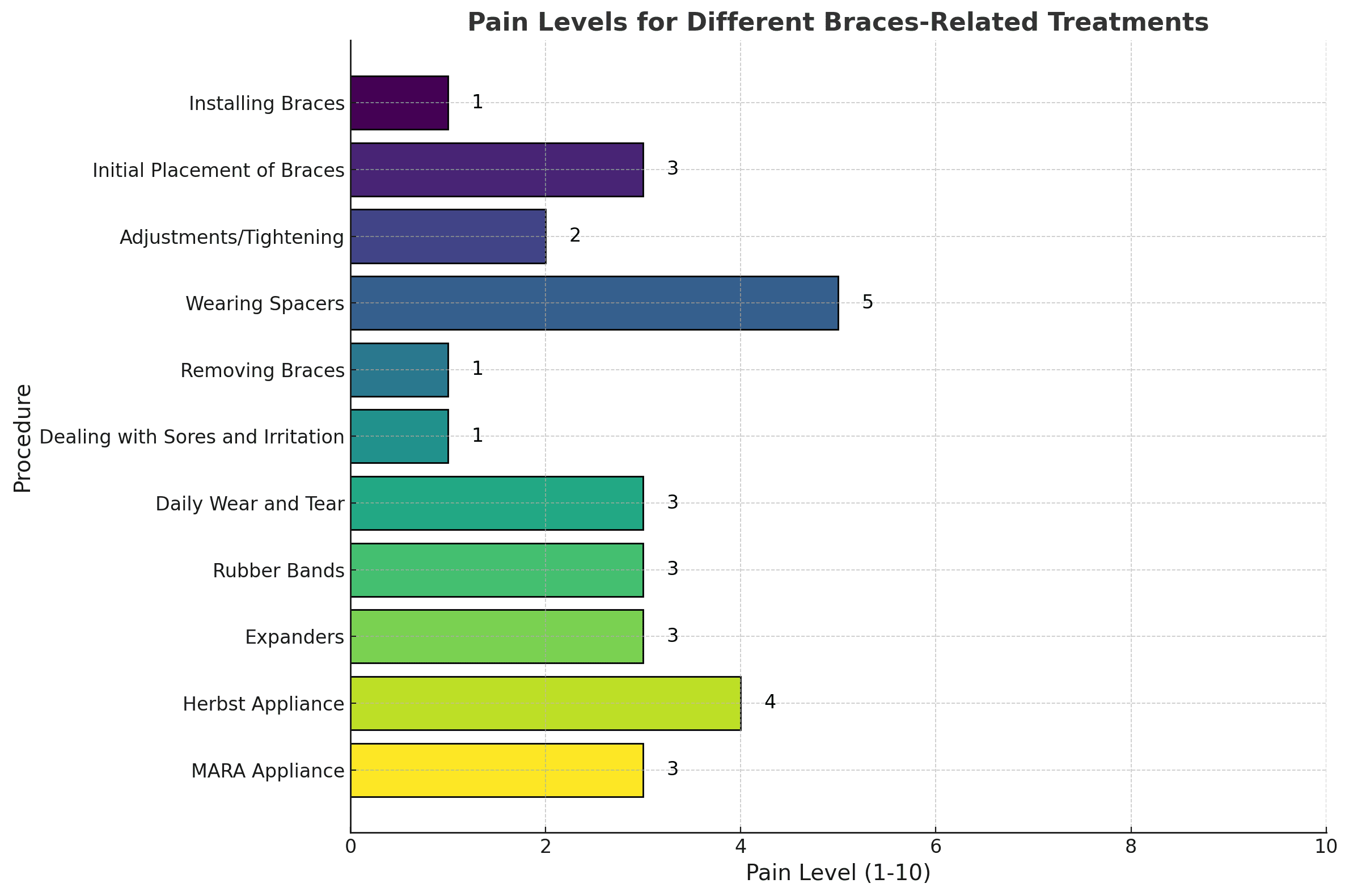
Not every part of the braces experience produces the same level of discomfort. Patients planning treatment usually want to know which moments to brace for and which ones are easier than expected.
Easier than expected. The placement appointment itself, which involves no drilling, no needles, and no anesthesia. The brackets are bonded to the outside of the teeth with a dental adhesive that sets in seconds. Most placement appointments take sixty to ninety minutes and produce zero pain during the visit.
Most uncomfortable. The twenty-four to forty-eight hour window after the first placement, and the same window after the first one or two adjustment appointments. Chewing pressure is the trigger, so foods that require biting through a crust or working through tough fibers are the harder moments.
Occasional and brief. Cheek or tongue irritation in the first ten to fourteen days while the soft tissue toughens against the brackets. Orthodontic wax handles this well, and the irritation usually resolves on its own as the cheek adapts.
Surprising to most patients. Adult patients often report less soreness than they expected, and teen patients often bounce back faster than their parents anticipated. The reality is most patients overestimate the pain of braces before treatment and underestimate how quickly the discomfort fades.
How modern wires changed the first-week experience
Braces wire technology has changed substantially over the last thirty years, and the modern wires used at Limestone Hills Orthodontics are not the same materials patients may remember from the 1990s.
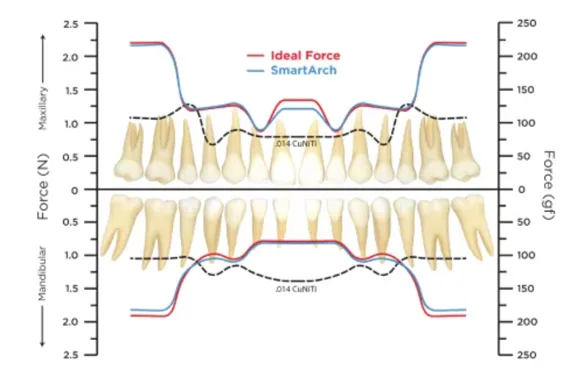
The older generation of braces used stainless-steel wires that applied a high force at the start of treatment and gradually lost that force over weeks. The peak force was concentrated in the first few days, which is why some older patients remember that first week as the rough one.
The wires used today are made of a heat-activated alloy that applies a much lower, more constant force over a longer period. The force is gentler at the start, which translates to a softer onset of soreness, and the wire continues working for longer between adjustments. Dr. Viecilli’s research on wire mechanics is one of the technical reasons Limestone Hills selected the wire system the practice uses on every placement.
Modern wires do not eliminate soreness. They make it more predictable and, for most patients, less intense at peak.
The first-week comfort protocol Limestone Hills uses
Patients receive a written copy of this protocol at the placement appointment. The protocol is built around the timeline above and assumes a healthy patient with no medication restrictions. Patients on prescription medications or with stomach, kidney, or bleeding conditions should review the OTC steps with their physician first.
Day of placement. Eat a soft lunch within two hours after the appointment, before the tenderness sets in. Pasta, soft scrambled eggs, smoothies, or soup are good choices. Take the first dose of OTC pain reliever (ibuprofen or acetaminophen, per the label) at bedtime even if the soreness has not started yet. Apply orthodontic wax to any bracket the cheek is rubbing against. Keep a small mirror near the bathroom sink to apply wax in seconds.
Day 1. Stay on soft foods. Yogurt, mashed potatoes, oatmeal, ripe banana, soft pasta, soft fish. Cold foods like ice cream and smoothies can be soothing because cold reduces inflammation. Continue OTC pain reliever per the label timing if needed. Rinse with warm salt water (one teaspoon of salt dissolved in eight ounces of warm water) two or three times during the day, especially after meals.
Day 2. Soreness usually peaks today. Stay on the same soft-food plan. Salt-water rinses continue. OTC pain reliever as needed. This is the day to plan a lighter schedule if possible and avoid foods that require sustained chewing.
Days 3 to 5. Start re-introducing slightly firmer foods as comfort allows. Soft-cooked vegetables, soft-cooked chicken, soft sandwiches with the crusts removed, soft cheese. Continue salt-water rinses for the cheek soft tissue. OTC pain reliever can usually be discontinued by day four.
Days 5 to 7. Return to normal eating, minus the permanent braces-food restrictions (no ice chewing, no hard candy, no gum, no popcorn kernels, no caramel, no biting whole apples or whole carrots). The cheek has usually adapted to the brackets by now, so most wax can come off. Soreness should be at or near baseline.
Any patient who is not following this curve by day five should call the practice. Most adjustments to the wire or the bracket position resolve any outlier discomfort quickly.
When discomfort means call the doctor, not just push through
Most braces soreness is normal and resolves on the timeline above. A few situations warrant a phone call to the practice rather than another dose of ibuprofen.
A bracket has broken off. If a bracket detaches from a tooth, the loose bracket can slide along the wire and irritate the cheek or lip. Patients should call the practice. Limestone Hills Orthodontics treats broken-bracket repair as included for active patients.
A wire is poking and wax is not solving it. A wire end can shift as the teeth move and start poking the cheek. Orthodontic wax handles most cases. If the poking persists or the cheek develops a sore that does not heal, the wire needs a small trim in the office.
Pain is severe and OTC medication is not helping. Braces soreness should respond to ibuprofen or acetaminophen taken per the label. Pain that breaks through OTC medication, or pain that is sharp rather than dull and pressure-like, is not the typical pattern and should be evaluated.
Soreness has not started to ease by day five. The bell curve above peaks at day two and improves daily after that. A patient who is still at peak soreness on day five is outside the normal curve and worth a call.
A tooth feels loose in a way that worries the patient. Some tooth mobility is normal during active orthodontic treatment because the bone around the tooth is remodeling. The amount of normal mobility is small and not visible. A tooth that wiggles visibly, or that feels dramatically loose to the patient, should be checked.
Pain Management for Austin and Hill Country Patients
Limestone Hills Orthodontics treats patients from across the Austin metro and Hill Country. Families travel to the practice from Lakeway, Cedar Park, Round Rock, Bee Cave, Westlake, and Steiner Ranch for braces and aligner treatment. The first-week-discomfort protocol above is the same protocol Dr. Viecilli reviews with every Austin-area family at the post-banding visit. The protocol does not change by neighborhood, age group, or insurance plan.
For patients who live more than 30 minutes from the practice, the soft-food and OTC-medication protocol covers the entire first week without requiring an in-office visit. Limestone Hills schedules a chairside check-in roughly four to six weeks after banding, and the practice’s same-day comfort policy means patients in active treatment who develop a sharp pain, a poking wire, or a bracket failure can be seen quickly. Families in farther Austin suburbs build their treatment schedule around that cadence with confidence.
Common Questions About Braces Pain
Do braces hurt when they are first put on?
No. Placing braces does not involve drilling, needles, or anesthesia. The brackets are bonded to the outside of the teeth with a dental adhesive, and a thin wire is threaded through them. Patients walk out feeling pressure but not pain. Soreness builds gradually over the next four to twenty-four hours as the teeth begin to move.
How long do braces hurt after they are put on?
Discomfort typically starts around four hours after placement, peaks between twenty-four and forty-eight hours, and fades back to normal within five to seven days. After that first week, most patients forget the braces are there until the next adjustment, which produces a milder version of the same pattern.
What can I take for braces pain?
Over-the-counter pain relievers like ibuprofen or acetaminophen work well for orthodontic soreness, taken per the label directions. The American Association of Orthodontists supports OTC use during the first one to three days of discomfort. Patients on prescription medications, blood thinners, or with stomach conditions should ask their physician before starting any OTC routine.
What foods are easiest the first week with braces?
Soft foods that require minimal chewing. Yogurt, smoothies, scrambled eggs, mashed potatoes, oatmeal, pasta, soup, soft fish, ripe banana, ice cream, and pudding all work well. Avoid hard, crunchy, sticky, and chewy foods entirely for the first week and on a permanent basis for items like ice, hard candy, gum, popcorn kernels, and caramel.
When should I call the orthodontist about braces pain?
Call if pain is severe and not relieved by OTC medication, if a bracket breaks off, if a wire is poking the cheek and orthodontic wax does not solve it, if a tooth feels loose in a way that worries the patient, or if soreness has not started to ease by day five. Limestone Hills Orthodontics treats these visits as included for active patients.
Sources. American Association of Orthodontists, “Do Braces Hurt? Your Comprehensive Guide to Managing Orthodontic Pain” (aaoinfo.org). Krishnan V., “Orthodontic pain: from causes to management – a review,” European Journal of Orthodontics. Long H. et al., “Current advances in orthodontic pain,” International Journal of Oral Science. Sandhu S.S., Sandhu J., “A randomized clinical trial investigating pain associated with superelastic nickel-titanium and multistranded stainless steel archwires during the initial leveling and alignment phase of orthodontic treatment,” Journal of Orthodontics. Polat O., “Pain and discomfort after orthodontic appointments,” Seminars in Orthodontics. Clinical observations from Limestone Hills Orthodontics, Austin, TX.