

Five steps stop most braces pain. Take an OTC pain reliever (ibuprofen or acetaminophen, per the label) at the 4 to 6 hour mark, before soreness peaks. Eat cold soft foods. Rinse with warm salt water twice daily. Apply orthodontic wax to any irritating bracket edge. Avoid hard, sticky, and chewy foods for 5 to 7 days. Most patients feel back to normal by day 7.
Where Braces Pain Actually Comes From
The soreness patients feel is not the tooth itself. It is the soft tissue around the tooth root responding to gentle, sustained pressure. Knowing the source changes which relief steps work and why the timing of each step matters.
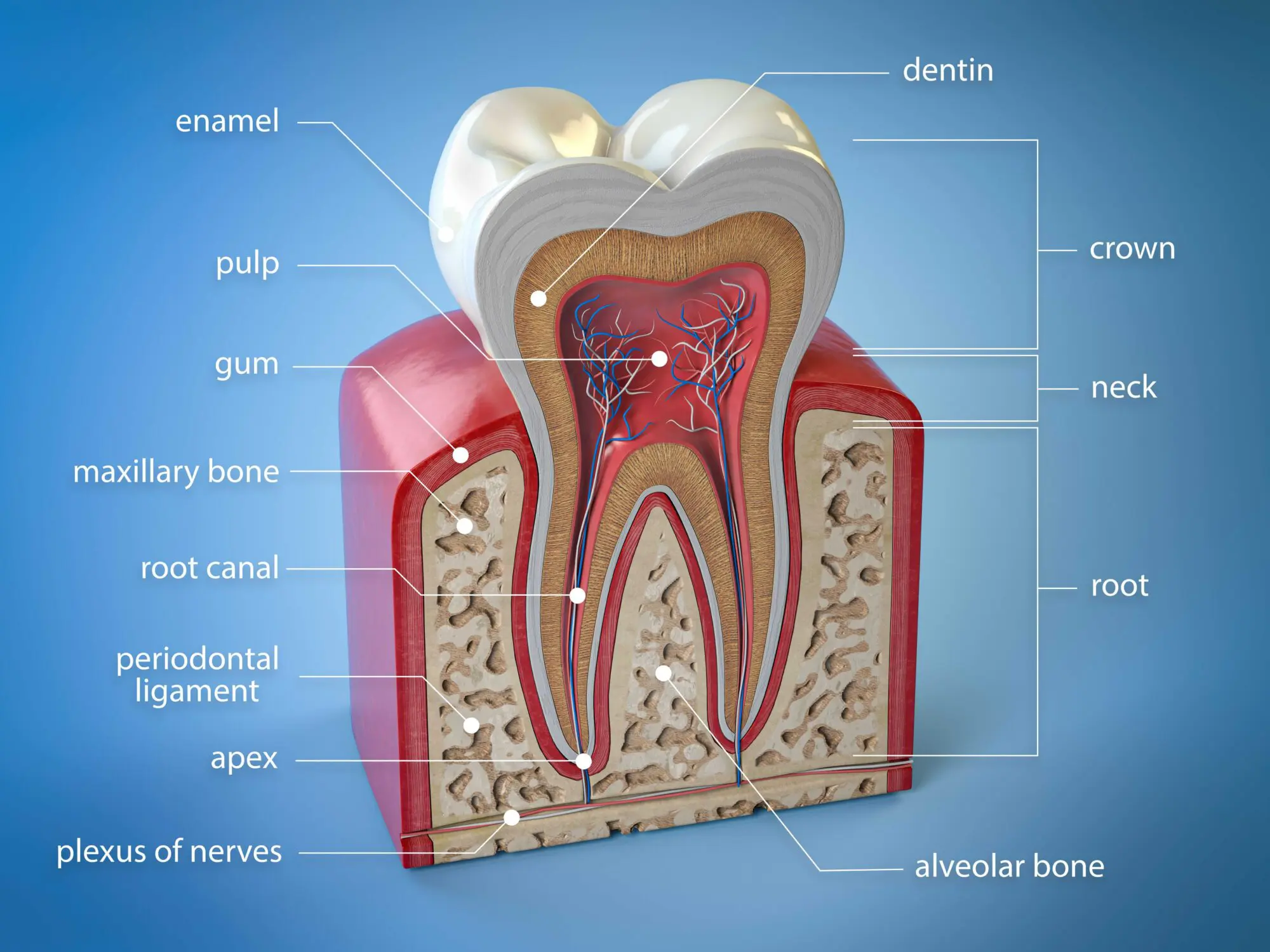
When a braces wire applies pressure to a tooth, the soft tissue around the root compresses on one side and stretches on the other. The body releases inflammatory signals and starts remodeling the bone so the tooth can move. That same signaling is what the patient feels as soreness.
Pain-relief steps that work either calm the inflammation, numb the surface, or reduce the pressure that triggers the signal in the first place. Each step in the protocol below targets one part of that pathway.
Dr. Viecilli’s PhD research in orthodontic biomechanics at Indiana University centered on the exact tissue response above: how much force, how long, how the cells around the tooth react. The 5-step protocol Limestone Hills uses for first-week pain is built around that research, not assembled from a generic checklist. Each step targets one part of the pain pathway in a specific order.
The 5-Step Pain Protocol
The order matters. The protocol works best when each step is started at the right moment in the soreness curve.
Step 1. OTC pain medication, timed before the peak. Take ibuprofen or acetaminophen per the label directions at the 4 to 6 hour mark after the appointment. Soreness builds gradually starting around the 4-hour mark and peaks at 24 to 48 hours. A first dose timed before the peak prevents the worst of the build-up rather than chasing it later.
Step 2. Cold soft foods. Eat a cold soft food within an hour of the appointment and again at meals for the first 2 days. Yogurt, smoothies, ice cream, chilled applesauce, and pudding deliver soft texture plus mild surface numbing. Cold also reduces inflammation in the tissue around the tooth root, which is where the pain signal starts.
Step 3. Warm salt-water rinse. Dissolve half a teaspoon of salt in 8 ounces of warm water. Swish for 30 seconds, then spit. Twice a day for the first week, especially at bedtime. The rinse is a comfort practice rather than a medical treatment; it soothes irritated cheek tissue and helps any small abrasions where a bracket has rubbed the inside of the lip.
Step 4. Orthodontic wax on any irritating edge. Roll a small piece of wax between the fingers to soften it, then press it onto the bracket or wire end that is rubbing. Replace as needed. Wax is provided at the new-braces appointment and is also sold at any pharmacy. Most cheek and lip soreness in the first 2 weeks responds to wax alone.
Step 5. Avoid hard, sticky, and chewy foods for 5 to 7 days. Each bite of a hard food re-loads the same tissue that is already inflamed. Skipping hard, sticky, and chewy foods for the first week lets the tissue calm down rather than re-trigger the pain signal at every meal. After day 7, most foods return; the permanent restrictions on ice, hard candy, gum, popcorn, and caramel stay in place.
Patients who follow all 5 steps in the first 24 hours report the smoothest first week. Patients who skip the timing on Step 1 and start medication only after the pain peaks usually report a harder day 2 and day 3.
When to Take OTC Pain Medication (Timing Matters)
The American Association of Orthodontists supports the use of ibuprofen or acetaminophen for orthodontic soreness, taken per the label directions. No specific milligram dosing is published; the label and the physician are the right reference.
The timing is the part most patients miss. Soreness builds gradually over the first 4 to 24 hours after the appointment and peaks at 24 to 48 hours. The first dose works best when taken at the 4 to 6 hour mark, before the peak. A dose taken at bedtime on the day of the appointment is the simplest version of the rule. Subsequent doses follow the label timing, usually for 2 to 3 days.
Acetaminophen (Tylenol) is the preferred option for patients who cannot take ibuprofen. That includes patients with stomach ulcers, kidney conditions, or certain blood-thinner medications. Acetaminophen does not slow tooth movement.
Ibuprofen (Advil, Motrin) works well for most patients and reduces inflammation in addition to relieving pain. Patients with stomach sensitivity should take it with food.
Aspirin is not recommended for patients under 19 because of the risk of Reye’s syndrome. Use acetaminophen or ibuprofen instead. Any patient on prescription medications, blood thinners, or with kidney, liver, or stomach conditions should review the OTC step with their physician before starting.
Soft-Food Strategy for the First Week
Cold soft foods do double duty. They require no chewing pressure on tender teeth, and the cold itself reduces inflammation in the tissue around the tooth root. Most Austin families stock the kitchen the day before the appointment.
The dependable first-week list:
- Cold options. Yogurt, smoothies, ice cream, chilled applesauce, pudding, ripe banana, cold milk, cottage cheese, soft cheese.
- Soft warm options. Oatmeal, mac and cheese, mashed potatoes, soft pasta, soup, scrambled eggs, soft polenta, ramen with soft noodles, soft fish (tilapia, salmon, cod).
- Protein anchors. Greek yogurt, scrambled eggs, smooth peanut butter, hummus, refried beans, soft tofu, slow-cooked shredded chicken. Two protein servings a day keeps energy up.
The first week feels restrictive, but the foods to avoid are short: hard items (ice, popcorn kernels, hard candy, whole nuts), sticky items (caramel, taffy, gum, gummy candy), and chewy items (beef jerky, bagels, crusty bread). Crunchy-but-healthy foods like apples and carrots return after week 1 with one rule, cut into small pieces before eating.
Salt-Water Rinse: Comfort, Not Cure
The salt-water rinse is a comfort practice that soothes irritated cheek tissue and any small abrasions where a bracket has rubbed the inside of the lip. It is not a medical treatment for tooth soreness, and the published evidence base is modest. Orthodontists recommend it because patients report it helps and there is no downside.
The ratio that works: half a teaspoon of salt dissolved in 8 ounces of warm water. Swish gently for 30 seconds, then spit. Twice a day for the first week, with bedtime and post-lunch being the most useful times. Patients on low-sodium diets can ask their physician whether the small amount used in oral rinses is acceptable for them.
Orthodontic Wax: When and How
Wax handles most cheek and lip irritation in the first 2 weeks. The brackets are new to the soft tissue inside the mouth, and the lining toughens against them over 10 to 14 days. Wax bridges the gap while the cheek adapts.
The technique is short: roll a small pea-sized piece of wax between the fingers until it softens, dry the offending bracket edge with a clean tissue or a corner of a paper towel, and press the wax onto the bracket. Hold it for 5 seconds. Replace whenever it falls off (usually after a meal) or whenever the irritation returns.
Wax is provided at the new-braces appointment in a small plastic case. It is also stocked at any pharmacy near the toothbrush aisle. A small case in a backpack and a second case at home is the standard setup. If a wire ends up poking the cheek and wax cannot hold it in place, call the practice; a 5-minute wire trim in the office solves it.
When to Call the Orthodontist (Pain That Means More)
Most braces soreness responds to the 5 steps above. A few situations warrant a phone call instead of another dose of ibuprofen.
Severe pain that does not respond to OTC medication. Braces soreness should ease with ibuprofen or acetaminophen taken per the label. Pain that breaks through the medication, or pain that is sharp rather than dull and pressure-like, is not the typical orthodontic pattern.
A broken bracket. A bracket that has detached from a tooth slides along the wire and irritates the cheek. Limestone Hills Orthodontics treats broken-bracket repair as included for active patients.
A poking wire wax cannot solve. Wax handles most poking. A wire that has shifted enough to keep poking through the wax needs a small in-office trim.
A tooth that visibly wiggles. Small tooth mobility is normal during active orthodontic treatment. Visible wiggling or a tooth that feels dramatically loose is outside the normal pattern and should be checked.
Soreness still at peak by day 5. The soreness curve peaks at 24 to 48 hours and improves daily after that. A patient still at peak on day 5 is outside the normal pattern.
The reality is most braces pain responds to a simple protocol. If pain breaks through OTC medication or lasts beyond a week, that is worth a call. It is not the typical pattern.
Pain Management for Austin and Hill Country Braces Patients
Limestone Hills Orthodontics treats families from across the Austin metro and the Hill Country. Patients come from Lakeway, Cedar Park, Bee Cave, Westlake, Steiner Ranch, and Northwest Hills, with farther suburbs adding to the weekly rotation. The 5-step protocol above is the same protocol Dr. Viecilli reviews with every Austin-area family at the post-banding visit.
The same-day comfort-visit policy is the part that matters for families more than 20 to 30 minutes from the practice. Active patients with severe pain not responding to OTC medication, a broken bracket, or a poking wire that wax cannot hold are seen same-day or next-day at no additional charge.
Families in Cedar Park, Round Rock, Bee Cave, Davenport Ranch, Four Points, and the farther Hill Country suburbs plan treatment around that cadence with confidence. The 5-step protocol handles the routine first week at home, and the practice is in reach for the rare outlier visit.
Common Questions About Stopping Braces Pain
What’s the fastest way to relieve braces pain?
The fastest combination is an over-the-counter pain reliever taken before peak soreness sets in, plus a cold soft food eaten within an hour of the appointment. Ibuprofen or acetaminophen per the label directions reaches its effect within 30 to 60 minutes. A cold yogurt or smoothie eaten while the medication takes effect adds mild surface numbing to the sore areas. Most patients feel a clear improvement within an hour of starting both steps together. Patients on prescription medications, blood thinners, or with stomach conditions should review the medication step with their physician first.
Can I take Tylenol for braces pain?
Yes. The American Association of Orthodontists supports the use of acetaminophen (Tylenol) or ibuprofen (Advil, Motrin) for orthodontic soreness, taken per the label directions. Acetaminophen is the preferred choice for patients who cannot take ibuprofen, including those with stomach ulcers, kidney conditions, or certain blood-thinner medications. Aspirin is not recommended for patients under 19 because of the risk of Reye’s syndrome. Any patient on prescription medications should review the choice with their physician before starting an OTC routine.
How long does braces pain last after adjustment?
Soreness after a routine adjustment typically lasts 2 to 4 days, with the first 24 to 48 hours being the most tender. The pattern is the same as the first placement appointment, only milder. Most patients return to normal eating within 3 to 5 days after an adjustment, compared to 5 to 7 days after the first placement. If soreness has not started to ease by day 4 after an adjustment, that is outside the typical curve and worth a call to the practice.
Does cold or warm food help braces pain more?
Cold soft foods help more during peak soreness. Cold reduces inflammation in the tissue around the tooth root, which is the source of the pain, and adds a mild numbing sensation on the surface. Yogurt, smoothies, ice cream, and chilled applesauce are the dependable options. Warm soup is fine if cold foods are not appealing, but very hot foods are uncomfortable on tender teeth and are best skipped for the first 2 days. Warm salt-water rinses, separately, help the cheek soft tissue rather than the tooth soreness.
When should I call my orthodontist about braces pain?
Call the practice if pain is severe and not relieved by OTC medication, if soreness has not started to ease by day 5, if a bracket has broken off, if a wire is poking and orthodontic wax does not solve it, or if a tooth feels visibly loose in a way that worries the patient. Limestone Hills Orthodontics treats these visits as included for active patients. Comfort visits are same-day or next-day when scheduling allows. Severe or sharp pain that is not pressure-like is not the typical orthodontic pattern and should be evaluated.
Sources. American Association of Orthodontists, “Do Braces Hurt? Your Comprehensive Guide to Managing Orthodontic Pain” (aaoinfo.org). American Dental Association patient resource library on orthodontic care and OTC pain medication (ada.org/resources/ada-library).
Krishnan V., “Orthodontic pain: from causes to management – a review,” European Journal of Orthodontics. Long H. et al., “Current advances in orthodontic pain,” International Journal of Oral Science.
Reyes-Habito C.M., Roh E.K., “Cutaneous reactions to chemotherapeutic drugs and targeted therapies for cancer,” Journal of the American Academy of Dermatology (Reye’s syndrome aspirin-under-19 background reference).
Clinical protocol from Limestone Hills Orthodontics, Austin, TX. Reviewed by Dr. Rodrigo Viecilli, DDS, PhD in Orthodontic Biomechanics (Indiana University), Diplomate of the American Board of Orthodontics.