
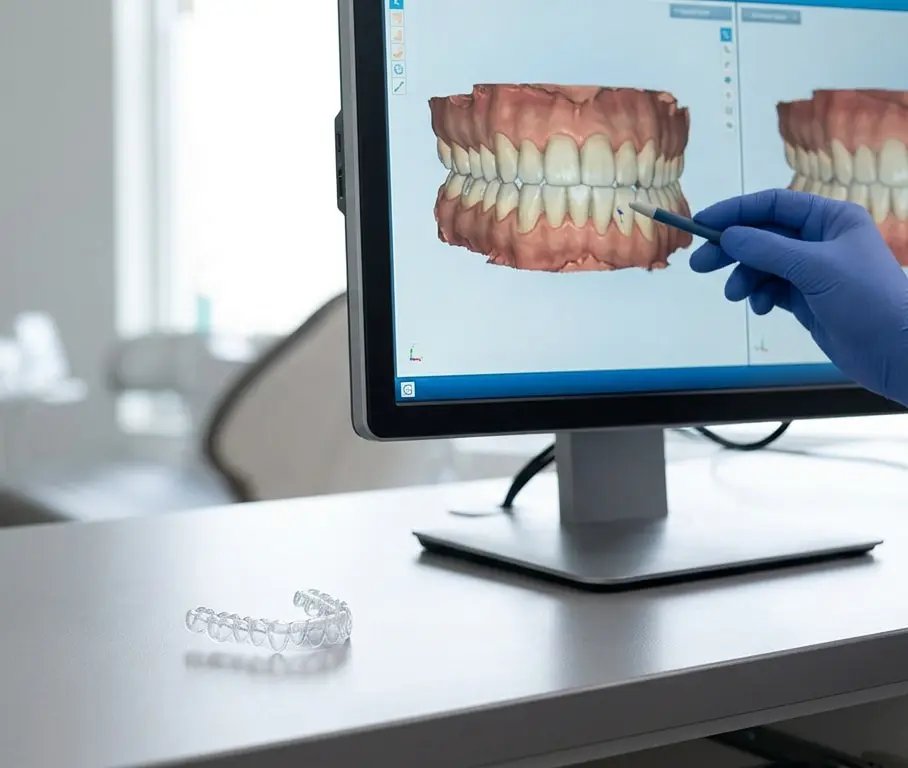
An Invisalign refinement is a fresh scan taken partway through treatment and a new set of aligners that finishes the result precisely. It happens because teeth do not always track the digital plan exactly, since tooth movement is biological. Refinements are common, expected, and a normal part of a supervised aligner case, not a sign that anything went wrong.
Across 5,000+ treated cases at Limestone Hills in Austin, Dr. Rodrigo Viecilli’s clinical assessment is consistent: a treatment plan is a biomechanical forecast, not a guarantee that every tooth lands exactly where the software predicted.
An ABO Diplomate with a PhD in orthodontic biomechanics, a SmartArch wire co-inventor, and 27+ publications, he frames refinements around the biology rather than the product.
Bone remodels at different rates in different patients. A root moving through dense bone responds differently than one moving through softer bone, and attachment grip, wear time, and individual anatomy all shift the result slightly off the predicted path. That deviation is biological, not a defect in the aligner.
This is why a supervising orthodontist planning the refinement matters. Reading where the teeth actually are, deciding which movements still need force, and staging the finish is a diagnostic judgment, not a reorder.
What an Invisalign Refinement Actually Is
A refinement is a planned mid-course correction. Partway through an Invisalign case, the orthodontist takes a fresh intraoral scan of where the teeth currently sit, compares that to where the original plan expected them to be, and orders a new set of aligners that closes the remaining gap.
The simplest way to think about it: the first set of aligners moves the teeth most of the way. A refinement set finishes the last part precisely, working from the real position of the teeth rather than the original prediction. The goal of a refinement is accuracy at the finish line.
Patients in Austin sometimes hear “refinement” and assume it signals a problem. It does not. It is a routine, expected stage in a well-run aligner case, and many comprehensive cases include one. Dr. Viecilli plans for the likelihood from the start rather than treating it as a surprise late in treatment.
Why Teeth Deviate From the Digital Plan
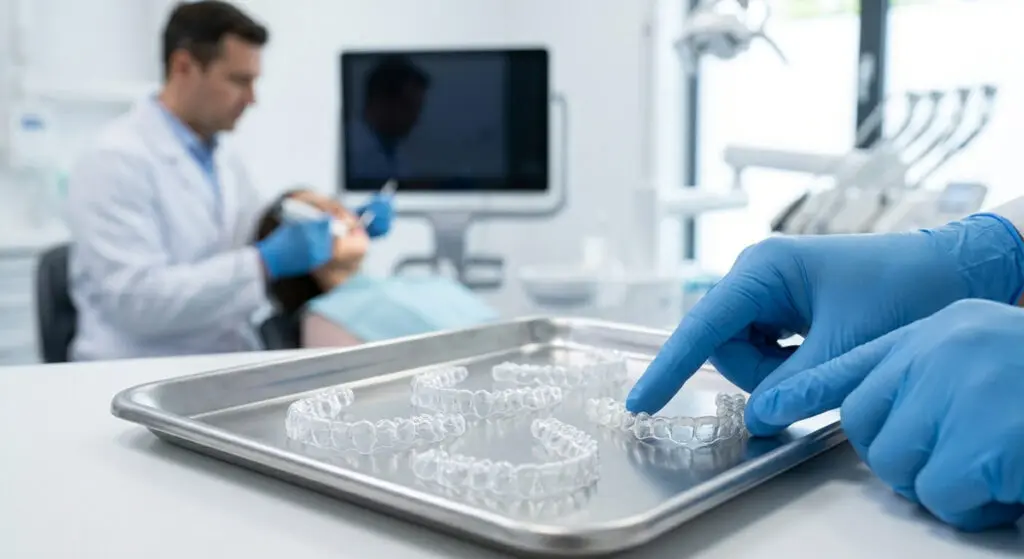
The digital plan is a prediction of an ideal path. It is built by software and refined by the orthodontist, but it cannot perfectly forecast how every tooth in a living mouth will respond to force over many months. Several biological and practical factors move the real result slightly off the predicted one.
Bone biology is the largest one. When a tooth is pushed, bone resorbs on one side and rebuilds on the other, and that remodeling happens at different speeds in different people and even at different teeth in the same mouth. A plan assumes an average response; a real patient is not an average.
Tracking is the second factor. An aligner has to fit closely to grip and move a tooth. If a tooth lags slightly behind its planned position, the next tray seats less precisely, and the small gap can compound over several stages until the path drifts from the prediction.
Attachments matter too. The small tooth-colored bumps bonded to certain teeth act as handles the tray pushes against to produce harder movements like rotations. If an attachment wears, chips, or grips less than planned, that specific movement under-expresses and needs finishing.
Wear time is the practical factor patients control. Aligners only work while they are in the mouth for the planned hours each day. Time spent out of the trays slows the planned movement, and over a full case that can leave a few teeth short of target by the last aligner.
Anatomy is the last. Root shape, root length, crown shape, and the starting bite all influence how predictably a given tooth moves. Some movements, such as closing an extraction space or rotating a round tooth, are biomechanically harder to express fully on the first pass and are common refinement targets.

The Refinement Workflow Step by Step
A refinement is not a restart and not a new diagnosis from scratch. It is a focused finishing phase that follows a clear sequence at Limestone Hills.
First, the orthodontist reviews progress at a checkpoint. When the current aligners have done most of their work, Dr. Viecilli compares the actual tooth positions to the planned ones and decides which movements still need expression. This is a clinical judgment, not an automatic reorder.
Second, a fresh intraoral scan captures the teeth as they are now. The refinement plan is built from this real starting point, not the original projection, which is what makes the finish accurate rather than a repeat of the same prediction.
Third, the orthodontist designs the revised plan. Only the remaining movements are staged, the force sequence is adjusted, and attachments may be added, removed, or repositioned to express the movements that under-tracked the first time.
Fourth, the new finishing aligners are manufactured and the patient continues with the refinement series, monitored at checkpoints the same way as the original phase. The case ends when the result is precise and stable, then moves into retention.
How Many Refinement Sets and How Long
There is no fixed number of refinement sets, and any source that quotes one is generalizing. The honest answer is that it varies with case complexity and with how the teeth respond to force, which is biology rather than a schedule.
A mild case that tracked well may need only a short single refinement to perfect a few positions. A more complex case with rotations, bite correction, extraction-space closure, or larger movements may need a longer or additional refinement, because those movements are harder to express fully on the first pass.
The added treatment time scales the same way. A small refinement extends a case by a short period; a larger one adds more. Dr. Viecilli estimates the specific added time once the mid-treatment scan shows exactly what remains, so the patient receives a concrete expectation rather than a generic range pulled from a blog.
The useful way to think about it: refinements are budgeted into a careful plan from the beginning, and the precise scope is confirmed at the checkpoint when the real data is available, not guessed at the start.
Is the Refinement Included in the Cost
How refinements are handled financially depends on the practice and the specific treatment agreement, and it would be inaccurate to assert a single universal policy. The right place to get an exact answer is the consultation and the practice’s cost page, not a blog estimate.
At Limestone Hills, refinements are planned as part of a supervised comprehensive case. The consultation states exactly what is included for that patient before treatment starts, so there is no ambiguity once the case is underway. What is included is set out clearly up front rather than raised later.
Because the final treatment figure depends on case complexity and how many arches are treated, the specific number and the inclusion terms are confirmed during the consultation and on the Invisalign cost page. A blog cannot quote a figure that is accurate for an individual case, and Limestone Hills does not estimate one here.
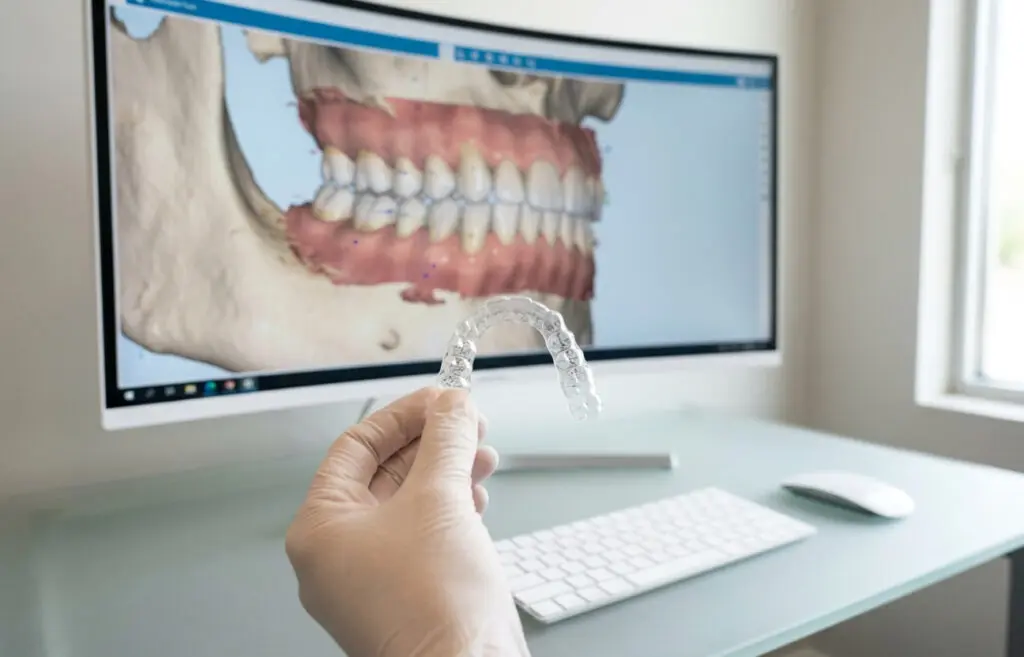
Refinements With Angel Aligners and Invisalign at Limestone Hills
Limestone Hills offers two clear-aligner systems. Angel Aligners is the practice’s preferred orthodontist-only system, and Invisalign is available for patients who specifically prefer that brand. Both are orthodontist-directed and supervised by Dr. Viecilli, an ABO Diplomate with a PhD in orthodontic biomechanics.
Refinements are a normal part of supervised aligner treatment with either system. Teeth deviate slightly from a digital plan because tooth movement is biological, and that is true regardless of which manufacturer produced the trays. A mid-course re-scan and a finishing series is standard aligner practice, not a quirk of one brand.
This article is anchored in the Invisalign context because that is the term most patients search, but the framing applies equally to Angel. Neither system is being criticized. Both are premium aligners from established manufacturers, and the detailed engineering comparison between them is covered in Invisalign vs Angel Aligners.
The point that carries across both systems is supervision. A refinement is only as good as the diagnostic judgment behind it, and at Limestone Hills the same orthodontist who planned the original case reads the new scan and designs the finish, whichever system the patient is in.
Why a Supervising Orthodontist Matters for Refinements
A refinement is a diagnostic decision, not a clerical reorder. Deciding that the teeth have deviated, identifying which specific movements under-expressed, and choosing how to re-stage the force are clinical judgments that depend on training in biomechanics.
Dr. Viecilli’s clinical view is that this is where supervision earns its value. A new scan only tells the orthodontist where the teeth are. Translating that into a corrected plan, deciding whether an attachment needs repositioning, and judging whether a movement is biologically realistic to push further is the part a careful clinician owns.
Reading root and bone position also informs the refinement. Pushing a tooth that has already moved a long distance carries different biological considerations than starting fresh, and a supervising orthodontist weighs that rather than simply re-running the software toward the original target.
This is the same standard Dr. Viecilli applies to wires, brackets, and every clinical decision in the practice. The refinement is planned and supervised by a named, licensed orthodontist who is accountable for the finished result, not delegated to an automatic process.
The Candid Part
An honest explanation states it plainly. A refinement is normal and expected. It does not mean the treatment failed, and it does not mean the orthodontist made a mistake.
It means the teeth did not track a software prediction exactly, which is expected because tooth movement is biology and a plan is a forecast, not a guarantee. A case that needs a refinement and a case that does not are both normal outcomes.
There is a candid industry point worth stating. Because refinements are common, some providers treat them as add-on charges raised after treatment is underway, which can leave a patient surprised by a cost they did not expect. That is a business practice, not a clinical necessity, and it is worth a patient asking about up front anywhere they consider treatment.
At Limestone Hills the approach is the opposite. Refinements are planned as part of the supervised case, and the consultation states exactly what is included for that patient before anything starts. The intent is no surprises, because a refinement is anticipated clinical work, not an upsell discovered late.
Austin and the Hill Country
Limestone Hills treats clear-aligner patients from across Austin and the surrounding Hill Country, including Lakeway, Cedar Park, Round Rock, Bee Cave, Westlake, and Steiner Ranch. The refinement standard does not change by neighborhood, and neither does the supervision behind it.
Whether the plan ends in supervised Invisalign or Angel Aligners, the same ABO Diplomate designs the original case, reads the mid-treatment scan, and plans the refinement to a precise finish.
A consultation is the step that turns a general explanation into a specific plan and a specific expectation for the patient in front of the doctor, detailed on the Invisalign page and the clear-aligners overview.
For Austin families comparing options, the practical advantage of an orthodontist-led practice is consistency. The person who planned the case is the person who finishes it, and what a refinement involves is explained the same way every time before treatment starts.
Common Questions About Invisalign Refinements
Why do Invisalign refinements happen?
Teeth do not always track a digital plan exactly. The plan predicts an ideal path, but tooth movement is biological and depends on bone response, tray wear time, attachment performance, and individual anatomy. When a few teeth finish slightly off the predicted position, a refinement is a fresh scan of where the teeth actually are and a new set of aligners that finishes the result precisely. It is a normal, expected step in supervised aligner treatment, not a sign of a problem.
How many refinement sets should a patient expect?
It varies by case. A mild, straightforward case may need a short single refinement, while a more complex case with rotations, bite correction, or larger movements may need more. The number depends on case difficulty and how the teeth respond to force, which is biology rather than a fixed schedule. At Limestone Hills the supervising orthodontist plans the likely scope during the original treatment plan and reviews it at each checkpoint rather than quoting a generic number.
Are Invisalign refinements included in the cost?
How refinements are handled depends on the practice and the specific treatment agreement. At Limestone Hills refinements are planned as part of a supervised comprehensive case, and the consultation states exactly what is included for that patient before treatment starts. Because the final figure depends on case complexity, the specific cost and inclusion terms are confirmed at the consultation and on the Invisalign cost page rather than estimated in a blog.
Do refinements mean the orthodontic treatment failed?
No. A refinement is not a failure and does not mean the orthodontist made a mistake. It means the teeth did not track the digital prediction exactly, which is expected because tooth movement is a biological process and a plan is a forecast, not a guarantee. Planning for a refinement is part of how a careful aligner case is finished to a precise result. A case that needs a refinement and a case that does not are both normal outcomes.
How much time do refinements add to Invisalign treatment?
Refinements extend treatment by the time needed for the additional finishing aligners, which varies with how many movements remain and how the teeth respond. A small refinement adds a short period; a larger one adds more. The supervising orthodontist at Limestone Hills estimates the added time once the mid-treatment scan shows what remains, so the patient gets a specific expectation rather than a generic range.
Sources. Manufacturer product information for Invisalign and Align Technology on staged aligner treatment, attachments, and additional aligners for finishing, and for Angel Aligner as an orthodontist-directed clear-aligner system.
Established orthodontic clinical principles on tooth movement as a biological remodeling process, including variation in bone response, tracking, attachment performance, wear-time dependence, and anatomic factors that cause real tooth positions to deviate from a digital treatment prediction.
Refinement-set counts, treatment-time extensions, and cost or inclusion specifics vary by individual case and treatment agreement and could not be stated as universal figures, so they are described qualitatively and routed to the consultation and the Invisalign cost page rather than asserted. Clinical observations from Limestone Hills Orthodontics, Austin, TX.