
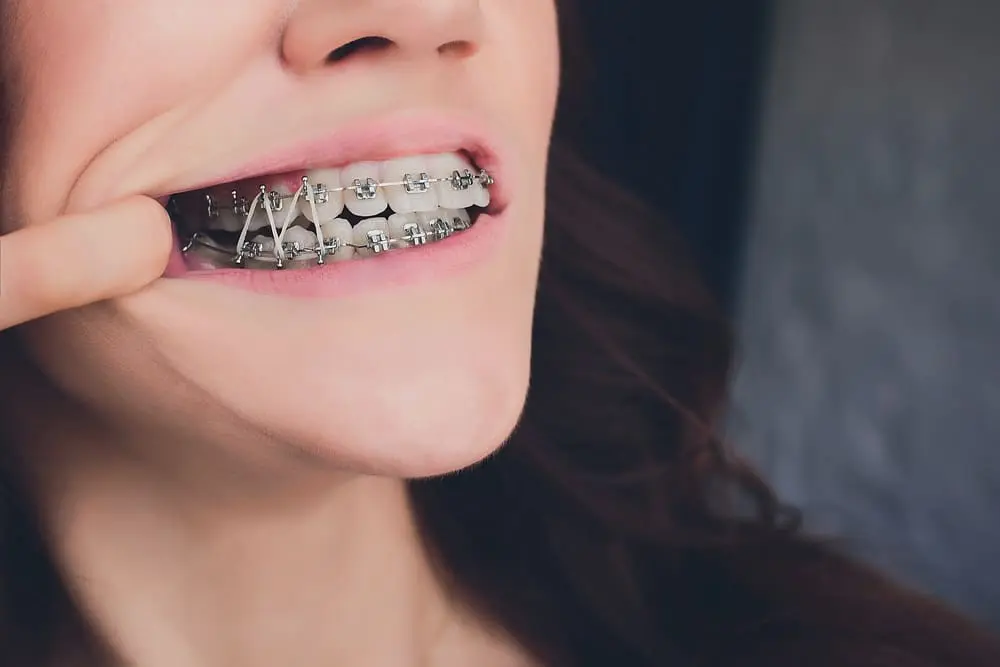
If a patient not wearing orthodontic elastics, the teeth still straighten but the bite does not correct, because braces move teeth within each jaw and elastics are what fix how the upper and lower teeth meet. Skipping them is the single most common reason a case stalls in the bite-correction phase, and it can add several months or end in a compromised result.
At Limestone Hills Orthodontics in Austin, the orthodontist measures bite progress at every visit, so a wear problem is named within a checkup or two, while there is still time to recover it.
Dr. Viecilli puts it plainly to families: the elastics are the patient’s job, not the wire’s. The braces align the teeth, but the elastics are what actually correct the bite, the overbite, the underbite, and how the two arches meet.
Skipping them is the single most common reason a case stalls in the bite-correction phase. The wire cannot compensate for missed elastics, and the belief that “the braces will still work anyway” is a myth for bite correction.
The good news for parents: non-compliance is not hidden. The orthodontist can usually see it at a checkup within one or two visits, which is why catching it early is the entire point of the Limestone Hills progress-check protocol.
What Actually Stalls When Elastics Get Skipped
This is the part that surprises most families. When a teen stops wearing elastics, the braces do not stop working. The teeth keep straightening into a neat row on the top and a neat row on the bottom, because that is the part the wire and brackets do on their own.
What stops is the bite. Elastics are the only part of fixed-braces treatment that moves the upper teeth and lower teeth into the right relationship with each other. Without them, the arches stay misaligned even while the individual teeth look straight.
So a patient who skips elastics for months can arrive at what should be the finish line with a straight-looking smile and a bite that still does not fit. The teeth look done. The job is not done. That gap between how the smile looks and what the bite is doing is the core consequence, and it is invisible to the patient until the orthodontist points it out.
The reason this matters beyond appearance: a bite that does not meet correctly changes how the teeth take force during chewing. Over years, that uneven loading is associated with faster wear on specific teeth and more strain on the jaw joints. Correcting the bite is not a cosmetic add-on. It is a functional part of the treatment that elastics carry.
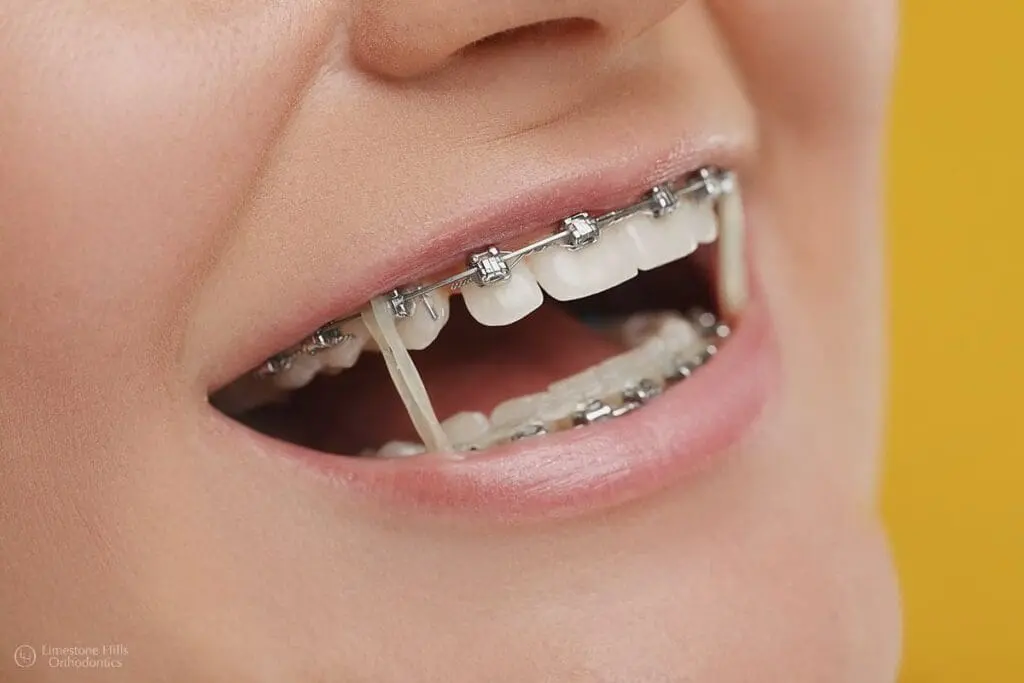
How the Orthodontist Knows Within a Visit or Two
Parents often assume there is no way to tell whether a teen has been wearing elastics at home. There is. The orthodontist does not need a confession; the bite reports it.
At each visit, Limestone Hills measures how far the bite has moved since the last appointment and compares it to where it should be by that point in the plan. The expected movement for a given stage is predictable. When the teeth are aligning on schedule but the bite has barely changed across two checkups, that specific mismatch is the signature of inconsistent elastic wear.
There are smaller tells too. The hooks the bands attach to leave faint pressure marks and a touch of soreness when elastics are worn near full-time. When a patient has not been wearing them, those signs are absent, and the patient often cannot recall which configuration was prescribed. None of this is detective work. It is a clinical pattern the orthodontist sees constantly.
This is why the conversation at that appointment is calm rather than accusatory. The point of catching it within one or two visits is not to assign fault. It is that a wear problem found at month four is recoverable with no real cost, while the same problem found at month fourteen often is not.
It also helps parents to know that the orthodontist is not relying on what the teen reports. A teen who has slipped is often not trying to mislead anyone; many genuinely believe a few nights of wear counts as wearing the bands. The clinical measurement settles it without anyone having to take a position, which keeps the visit focused on the fix rather than on who said what.
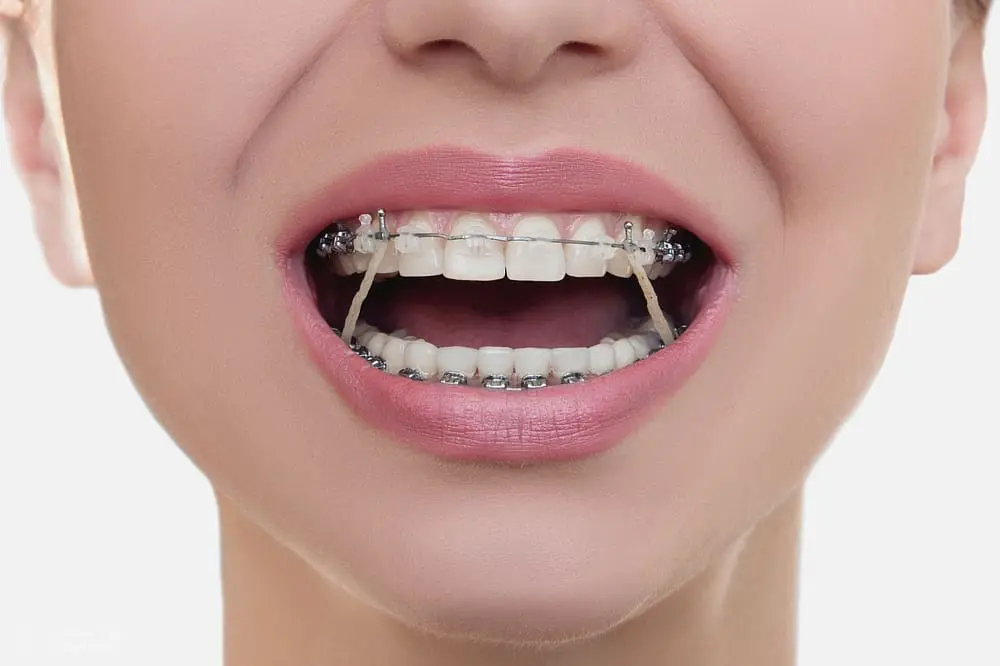
Why Part-Time Wear Is Almost as Bad as None
The most common misunderstanding is that some elastic wear is most of the benefit. It is not. Elastics lose the majority of their pulling force within the first 4 to 5 hours, and bite correction depends on near-continuous gentle force across the whole day. A band worn for only the hours of sleep delivers a small fraction of the prescribed force time.
The result is that a teen wearing bands “most nights” can be making almost no progress on the bite while sincerely believing the elastics are being worn. The honest picture, drawn from the practice’s own caseload, looks like this.
| Wear pattern | Effect on bite correction | Typical added time |
|---|---|---|
| Full-time, removed only to eat and brush | Bite corrects on the projected schedule | None; on plan |
| Evening and overnight only | Bite moves slowly; force time is a fraction of what is prescribed | Several months |
| Weekdays on, weekends off | Bite drifts back over each break; net progress is small | Several months |
| On-and-off, a few days a week | Bite stalls; teeth can rebound between the worn days | Many months |
| Not worn | No bite correction; teeth straighten but the arches stay misaligned | Bite phase does not complete |
The pattern that does the quiet damage is the third and fourth rows. A teen genuinely trying, wearing bands several days a week, can still produce a stalled case, because the days off let the bite rebound toward where it started. Consistency is the active ingredient, not effort.
This is also why a weekend-off habit is so deceptive. Two days of wear during the week can move the bite a small amount, and two days without bands can let it settle most of the way back.
The teen feels diligent on the days the bands are in, the parent sees them being worn, and the net result over a month is close to zero. Nothing about the experience signals a problem until the orthodontist measures it.
The practical takeaway for a parent is simple. The question to ask at home is not “did you wear your bands today,” which invites a yes. The more useful question is “have your bands been out for any whole stretch this week,” because it is the gaps, not the good days, that decide whether the bite phase finishes on time.
The Real Time Cost, and the Honest Compromise
The first instinct, when a wear problem surfaces, is to ask how to make up the lost time. There is no shortcut. Doubling up on bands does not move teeth faster and can overload the roots. The only recovery is consistent wear from that point forward, which means the months already lost are simply added to the end of treatment.
In the Limestone Hills caseload, part-time elastic wear is the single biggest swing factor in total treatment time, ahead of case difficulty. A plan projected at 18 months can stretch toward 24 to 27 months almost entirely because of how reliably the bands were worn. The case did not get harder. The force did not get applied.
Here is the candid part the practice does not soften. When chronic non-wear continues despite reminders, there is a point where the bite cannot be fully corrected within a reasonable treatment length. At that point there are two honest options, and Dr. Viecilli names them at the mid-treatment check rather than after the fact.
The first option is to extend treatment until the bite is right, which only works if wear becomes consistent. The second is to remove the braces on schedule with the teeth straight but the bite not fully corrected.
That second outcome is a real compromise, not a quiet failure, and it is explained in plain terms with what it means long term. Most families would rather hear that at month fourteen than discover it on the day the braces come off.
Naming the choice early also protects the family financially and emotionally. A teen who hears at the mid-treatment check that the bite phase is at risk has a concrete reason to change a habit, with months still on the clock to act.
The same conversation held at the end offers no path forward, only an explanation. Honesty at the midpoint is the difference between a fixable problem and a finished one.
How to Recover a Case That Has Slipped
A case behind on elastics is usually recoverable when the wear problem is caught early, and the path back is simple, if not always easy for a busy teen.
- Return to the full prescribed schedule the same day, removing bands only to eat and to brush, then replacing them right away. Do not try to compensate with extra bands.
- Change the bands often. Because most of the pulling force is gone within hours, fresh bands several times a day keep real force on the bite, not a tired band that is technically present but no longer working.
- Build a trigger. Most successful recoveries at the practice come from tying band changes to fixed daily moments, after each meal and at bedtime, and a phone reminder, rather than relying on memory.
- Keep every checkup. The practice can only confirm the bite is moving again, and adjust the plan, when it sees the patient on schedule. Skipped appointments hide whether the recovery is working.
For the mechanics of which elastic goes where, how to put one on with a mirror and fingertip, and what to do when a band snaps, the companion guide on orthodontic rubber bands covers the technique and the configurations in detail. This page is about what happens when wear slips and how to get the case back on track; that one is the how-to.
Austin and the Hill Country
Limestone Hills Orthodontics treats teens from across Austin and the surrounding Hill Country, including families from Lakeway, Cedar Park, Westlake, Bee Cave, and Steiner Ranch.
Across those communities the wear problem looks the same, and so does the schedule that makes it easy to miss: practices, club sports, longer commutes from the outlying neighborhoods, and a teen managing bands without a parent in the room.
That is why the practice builds the wear check into every visit rather than waiting for a problem to announce itself. A family driving in from Cedar Park or Lakeway should not lose a season of progress because a wear slip went unnoticed for months.
Catching it at the next checkup, naming it plainly, and resetting the routine is how a case from anywhere in the Austin area stays close to its original timeline.
Parents starting treatment can use the free consultation to understand exactly where elastics will fit in the plan, how long the bite phase is expected to take, and what consistent wear will look like for their teen before the first band is ever prescribed.
Common Questions About Skipping Orthodontic Elastics
Will braces still work if you do not wear the elastics?
Braces will still straighten the teeth within each jaw without elastics, but they will not correct the bite. Most bite problems, including overbites, underbites, and how the upper and lower teeth meet, depend on the elastics, not the wire. A patient who skips elastics can reach the end of treatment with straight-looking teeth and a bite that is still wrong. The common belief that the braces alone will fix everything is not true for bite correction. Elastics are the part of treatment the patient controls, and they decide whether the bite phase finishes.
Can my orthodontist tell if I am not wearing my rubber bands?
Yes, usually within one or two checkups. The orthodontist measures how far the bite has moved between visits against where it should be by that point. When the teeth are aligned but the bite has not changed on schedule, that pattern points to inconsistent wear, and it is visible on the clinical exam and on progress scans. Sore spots from the hooks also fade when bands are not worn. The conversation at that visit is not about blame; it is about catching the problem early enough to recover the time.
How many missed days of elastics actually matters?
A single forgotten day will not undo treatment, but a repeating pattern does. Elastics work through steady, gentle, continuous force. Teeth respond to that constant pressure; they do not respond well to pressure that starts and stops. A few days off here and there, repeated week after week, removes the consistency the bite correction depends on and is enough to add months. The fix is to return to the full prescribed schedule right away, not to double up on bands to catch up, which does not speed correction and can strain the tooth roots.
Is wearing elastics only at night good enough?
No. Evening-only or overnight-only wear is one of the most common reasons a case runs long. Elastics lose most of their pulling force within the first 4 to 5 hours, and a bite correction needs near-continuous force across the day to progress on schedule. Wearing bands for only the 8 or so hours of sleep delivers a fraction of the prescribed force time, so the bite moves slowly or barely at all. Part-time wear is closer in result to no wear than to full-time wear, which surprises most families.
What happens if a teen never gets the bite corrected?
If chronic non-wear continues, the practice names the choice honestly at the mid-treatment check rather than after. One option is to extend treatment until the bite is corrected, which requires consistent wear from that point on. The other is to remove the braces on schedule with the teeth straight but the bite not fully corrected, an acknowledged compromise that the orthodontist explains in plain terms. An uncorrected bite can affect chewing and long-term wear on the teeth, which is why Limestone Hills raises it early instead of letting it arrive as a surprise at the end.
Sources. American Association of Orthodontists, Orthodontic Elastics: Are They For You? (patient responsibility for placement and prescribed wear; elastics apply force braces alone cannot).
Orthodontic Elastics: A Narrative Review of Biomechanics, Biological Responses, and Evidence-Based Clinical Guidelines for Everyday Practice, PMC (full-time wear of approximately 20 to 22 hours per day produces the most predictable correction; intermittent use associated with treatment delay).
Force degradation of orthodontic latex elastics, in-vivo study, American Journal of Orthodontics and Dentofacial Orthopedics (the majority of pulling force is lost within the first 4 to 5 hours of wear). Clinical observations from Limestone Hills Orthodontics, Austin, TX.