Braces in Austin, TX

Braces at Limestone Hills Orthodontics in Austin are placed and adjusted by Dr. Rodrigo Viecilli, a board-certified orthodontist, at the practice's Northwest Austin office on Ranch to Market Road 2222. Metal braces start at $4,000 and clear ceramic braces at $4,600, or from $149 a month after a $600 down payment on the 0% in-house plan. The consultation is free and includes a 3D CT scan.

  • From $4,000 Metal · $4,600 Ceramic
  • Free 3D CBCT at Consultation
  • 5★ 225+ Reviews
*Free for new patients not in orthodontic treatment in the last 12 months. Patients treated in the last 12 months and MARPE or TMJ consultations: $300, due before the visit and credited toward treatment.
Overview of adult braces orthodontic treatment options at Limestone Hills Orthodontics in Austin, TX.
AAO Member · American Association of Orthodontists
ADA Member · American Dental Association
Licensed · Specialist in Orthodontics
In-Network PPO · All Major Dental Plans
Home / Braces

Who Treats Braces Patients at Limestone Hills Orthodontics

Every braces case at Limestone Hills is diagnosed, planned, and finished by Dr. Rodrigo Viecilli personally. No rotating associates, no PA-led adjustments, no clinical decisions handed off to a remote director. The same orthodontist who reviews the first scan also bonds the brackets, runs every adjustment visit, and removes the appliance on completion day.
Dr. Rodrigo F. Viecilli, award-winning orthodontist in Austin TX

Dr. Rodrigo F. Viecilli, DDS, PhD

PhD Orthodontist
Dr. Viecilli earned his orthodontic specialty certificate and a PhD in orthodontic biomechanics at Indiana University. He is a Diplomate of the American Board of Orthodontics and an Adjunct Associate Professor at Loma Linda University, and has treated more than 5,000 patients.

Types of Braces Offered at Limestone Hills in Austin

Limestone Hills offers two primary bracket systems: GC Orthodontics rhodium-coated metal brackets for patients who want colored elastic bands at every adjustment, and GC Orthodontics self-ligating ceramic brackets for adults and teens who prefer a tooth-colored, low-profile look. Both systems use SmartArch variable-force wire as the default archwire across the entire treatment.

Traditional metal braces used for effective teeth alignment at Limestone Hills Orthodontics in Austin, TX.
MOST POPULAR

Metal Braces

$4,000
/ comprehensive, from
GC Rhodium metal brackets, traditional ligation with elastic color ties at every adjustment
Colored elastic bands at every adjustment, Burnt orange and white for UT Longhorns fans, verde and black for Austin FC, holiday themes through the year.
Strongest 3D control for complex bite correction and rotation
Phase 1 (kids 7+) from $2,000
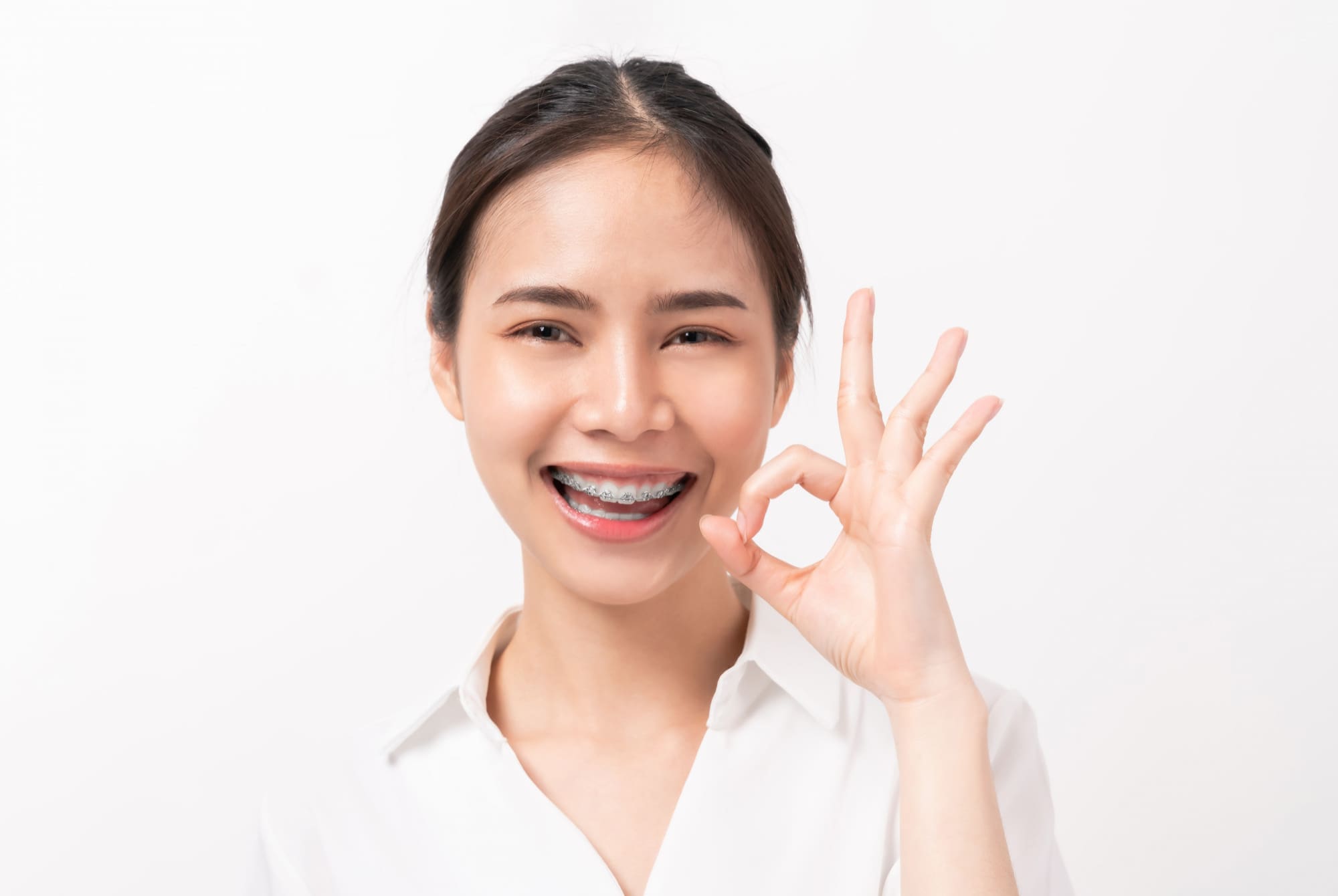
Smiling woman with ceramic braces making an OK sign at Limestone Hills Orthodontics in Austin, TX.

Clear Ceramic Braces

$4,600
/ comprehensive, from
GC self-ligating ceramic brackets, self-ligating. Built-in clips hold the wire without elastic ties
Tooth-colored, low-profile, blends with enamel
Self-ligating gate means no elastic ties to stain or trap plaque
Preferred by adults in client-facing roles
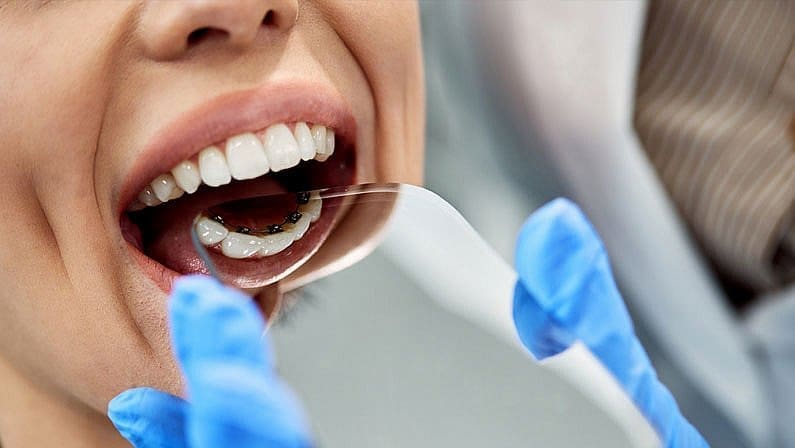
Lingual braces for adults, hidden behind teeth, at Limestone Hills Orthodontics in Austin, TX.

Adult Braces

$4,000
/ rhodium, from
Working professionals, parents, retirees, one-third of the practice
Two esthetic options: rhodium-coated metal (the same finish as white gold) at $4,000 or clear ceramic at $4,600
Morning appointments during non-peak hours for busy schedules
Adult bone responds fully, results are equivalent to teen cases
Not sure which option fits? Dr. Viecilli recommends a bracket system based on the bite problem the scans reveal, not on cosmetics alone. Book a free consultation to see which braces route is most predictable for your case.
Other braces services at Limestone Hills Orthodontics: braces removal for the day brackets come off and same-day retainer fitting, plus lingual braces for patients researching the discontinued behind-the-teeth option and the alternatives the practice recommends instead.

Braces vs Clear Aligners: How the Decision Gets Made

Both braces and clear aligners straighten teeth effectively, and both are offered at Limestone Hills Orthodontics. The deciding factor is not which option looks nicer, it is which system gives the most predictable control for the specific bite problem the scans reveal, and which option fits the patient’s daily life.

How Dr. Viecilli Presents the Choice

The deciding factor is how much tooth and bite control the case actually needs. For moderate-to-complex malocclusions, vertical bite corrections, root torque, or finishing precision, Dr. Viecilli recommends braces. The fixed appliance lets him deliver exact forces to each tooth and monitor progress visit-to-visit without depending on patient wear time. For simpler crowding, adult cases with reliable compliance, and aesthetically sensitive patients, aligners can produce equivalent results. Compliance profile, age, and motivation also factor in. A teen who will forget trays is a braces case even if the malocclusion would be aligner-eligible on the scan alone.

By the Numbers: Case Mix at Limestone Hills

Across active cases at Limestone Hills, the split runs roughly 60 percent braces and 40 percent aligners. Dr. Viecilli recommends braces more often than the national orthodontic average because moderate-to-complex bites, vertical corrections, and finishing precision are the work braces handle most reliably. Aligners carry the simpler crowding and adult cases where compliance is dependable. Angel Aligners Pro patients who need treatment beyond 24 months receive hybrid treatment with braces at no additional cost, which guarantees the outcome regardless of how the case progresses. The case-mix follows from clinical fit, not from which appliance the practice prefers to deliver.

How Braces Work in Austin

Braces straighten teeth by applying controlled force through brackets bonded to each tooth and an archwire that connects them. At each adjustment visit, the wire is changed or activated to continue moving teeth toward their final position. The brackets are the handles. The wire does the work.

What separates the Limestone Hills approach: most offices use a single, standard archwire that applies the same force to a small front tooth and a large molar. A front tooth has a small root and a thin periodontal ligament. A molar has a root two to three times larger.

Applying the same force to both means the front tooth gets hit with excessive pressure while the molar barely moves. SmartArch solves this by varying its stiffness along the length of the wire, matching force output to root anatomy, tooth by tooth.

1

Free Consultation

3D CBCT scan (i-CAT FLX V7) + digital impressions (Medit i700). Dr. Viecilli reviews your case, explains options, and gives you a fee estimate.

2

Braces Placement

Same-day starts available. Brackets bonded to teeth, first wire placed. About 60-90 minutes. You leave with your treatment in progress.

3

Adjustment Visits

Appointments every 6-8 weeks. Wire changes, progress checks, Grin Scope remote monitoring between visits. Your doctor is there at every appointment.

4

Removal + Retainers

Braces off, teeth polished, custom retainers fabricated in-house on 3D-printed models. Retainer fit checked that day.

How Long Does Braces Treatment Actually Take?

Standard comprehensive braces cases at Limestone Hills run 12 to 18 months. Complex cases involving significant bite correction, extractions, or skeletal coordination take 18 to 24 months. Phase 1 treatment for children typically completes in 6 to 12 months. SmartArch wire is designed to vary its force along a single wire, so smaller front teeth do not receive the same force as larger molars. Treatment time estimates are given at the free consultation and refined as the case proceeds.

Materials and Brands Limestone Hills Uses

The brackets and wires your orthodontist chooses determine how your treatment progresses. Dr. Viecilli selected Limestone Hills Orthodontics’s bracket systems deliberately, not based on what the rep offered cheapest.

Why Limestone Hills Orthodontics Chose GC Rhodium Metal Brackets

Dr. Viecilli chose GC Orthodontics rhodium-coated brackets for the metal system because the rhodium finish has a white-gold tone that blends with teeth, giving patients a cleaner and more refined look than standard stainless steel. The same supplier produces the self-ligating ceramic brackets used at Limestone Hills, with a built-in metal gate that holds the wire without elastic ties so the ceramic stays tooth-colored from bonding day to removal day. Both bracket families are precision-machined in Japan to a tighter manufacturing tolerance than commodity bracket lines, which translates to less slop in the slot, more predictable wire engagement, and finer finishing control as the case closes.

GC Rhodium Metal Brackets

GC Orthodontics Rhodium-coated (Japanese). Traditional ligation with elastic color ties at every adjustment. Used for every metal braces patient at Limestone Hills Orthodontics.

GC Self-ligating Ceramic Brackets

GC Orthodontics Self-Ligating Ceramic (Japanese monocrystalline). self-ligating. Built-in clips hold the wire without elastic ties. Tooth-colored for discreet adult and teen treatment.

i-CAT FLX V7

i-CAT FLX V7. Full airway, sinus, and dual-jaw imaging at every consultation, included at no charge.

Grin Scope Remote Monitoring

Smartphone-based scan app sent between visits. Broken brackets and progress checks assessed without an emergency trip to the office.

In-House 3D Printing

Custom indirect-bonding trays, custom bands (eliminating the separate spacer appointment), fidget toys for anxious kids, and same-day Essix retainers on removal day.

SmartArch™ Wire

Variable-force archwire designed to give each tooth a different force along a single wire. In a randomized trial, one SmartArch wire aligned crowded lower front teeth about as well over 16 weeks as two nickel-titanium wires used in sequence.

Braces for Kids, Teens & Adults

Roughly one out of every three braces patients at Limestone Hills Orthodontics is an adult. Braces correct bites, crowding, spacing, and jaw alignment at any age, the approach changes based on growth stage, not calendar age.
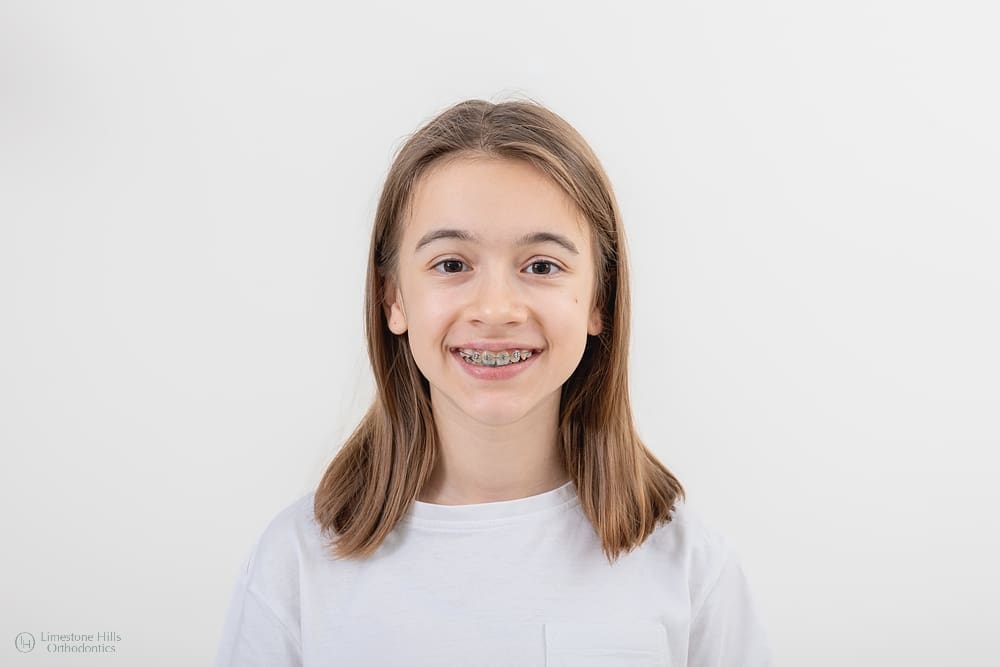
Smiling with braces, a child poses in a white shirt; Limestone Hills Orthodontics in Austin, TX.

Kids 7+

Dr. Viecilli agrees with the AAO recommendation for a first orthodontic check around age 7. Phase 1 treatment is only indicated when it prevents a worse problem later: crossbites with jaw shifting, severe crowding blocking adult teeth, or skeletal growth issues needing early correction.
Phase 1 from $2,000
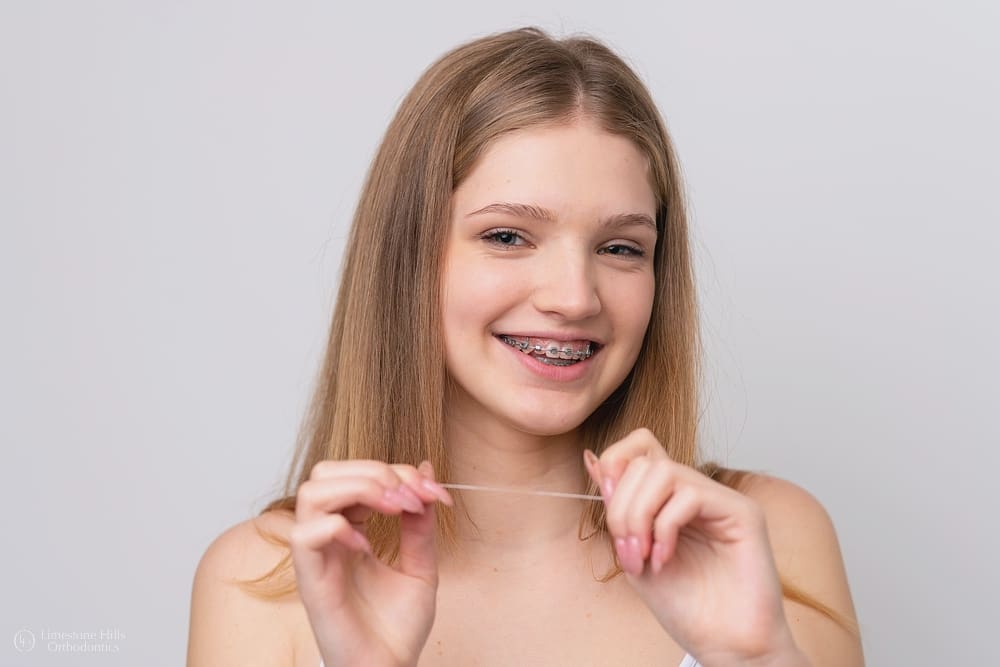
Smiling teen girl with braces and long blonde hair holds dental floss, promoting Limestone Hills Orthodontics in Austin, TX.

Teens

Colored elastic bands in school colors, holiday themes, or custom combinations (metal braces). Food rules are straightforward: no ice, no hard candy, no popcorn kernels, cut raw carrots into small pieces, skip corn on the cob. Grin Scope remote monitoring reduces unnecessary office visits.

Comprehensive from $4,000
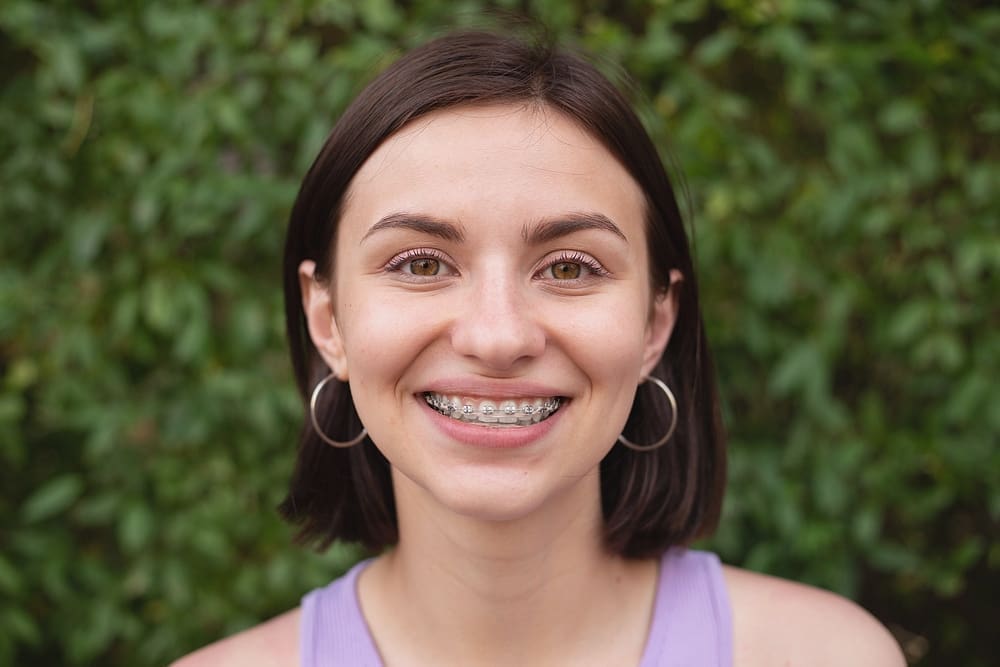
Young woman smiling with adult metal braces from Limestone Hills Orthodontics in Austin, TX.

Adults

Clear ceramic brackets blend with your teeth. Dr. Viecilli treats working professionals, retirees, and adults who missed orthodontic treatment as kids. Adult bone responds differently than growing bone, results are the same, just slightly longer in some cases.

Ceramic from $4,600

Why Choose Limestone Hills Orthodontics for Braces in Austin?

Limestone Hills is a single-orthodontist boutique practice serving Northwest Austin, Bee Cave, Lakeway, Westlake Hills, River Place, Four Points, and Steiner Ranch. Five elements separate the practice from corporate chains and rotating-associate offices in the area:

ABO Board-Certified Orthodontist

Dr. Viecilli is a Diplomate of the American Board of Orthodontics since 2010, a distinction held by fewer than half of practicing orthodontists. Board certification is an entirely voluntary process requiring years of documented, peer-reviewed clinical work.

Multilingual Practice

Dr. Viecilli speaks English · Portuguese · Spanish. No interpreter app needed for most Austin families.

Free 3D CBCT Scan

i-CAT FLX V7 at every consultation. Full airway, sinus, and dual-jaw imaging in under 30 seconds. Other Austin offices charge $200 to $500 for this scan.

Same-Day Braces Starts

If the schedule allows and the case is straightforward, brackets can be bonded the same day as the consultation. No second appointment needed to begin treatment.

Private, Not a DSO

Doctor-owned, not a corporate chain, not a franchise, not a rotating-associate model. Treating fewer patients with longer unhurried appointments is a deliberate choice at Limestone Hills Orthodontics.

Hill Country Office Setting

The Limestone Hills office sits with one of the best views of the limestone hills in Austin. The treatment area looks out across the hill country rather than into a parking lot, and the patient experience reflects the same care invested in the clinical work.

Braces Cost in Austin

Limestone Hills Orthodontics publishes starting prices so you know what treatment costs before you walk in the door. Final cost depends on case complexity, treatment length, and bracket system, but these starting points are real numbers, not marketing teasers.

Treatment Comprehensive Phase 1 (Kids)
Metal Braces
From $4,000
From $2,000
Clear Ceramic Self-Ligating
From $4,600
From $2,600
Invisalign (Clear Aligners)
From $4,700
From $3,700 (Invisalign First)
Angel Aligners ← Lower Entry
From $4,000
From $3,000

What Patients Get for the Fee

What patients receive at Limestone Hills for the published fee: a PhD orthodontist who co-invented the SmartArch wire used in their treatment, a free 3D CBCT scan at consultation (other Austin offices charge $200 to $500 for the same scan), the same doctor present at every adjustment visit, and a privately-owned practice with no corporate chain or rotating-associate model behind the chair.

Limestone Hills publishes the actual fee with full transparency. No unreasonable bracket-breakage charges, no hidden add-ons, no surprise costs. Cheaper alternatives exist in the Austin market, but few combine clinical research depth, advanced diagnostic imaging, continuity of care, and transparent pricing under one roof.

Financing Options

$149/mo

OrthoSync

0% interest. No credit check. $600 down.
$189.99

Cherry Down Payment

Soft credit check. Start braces today.
3% Off

Pay-in-Full Discount

HSA/FSA accepted. All PPO plans accepted.

Limestone Hills Orthodontics also accepts CareCredit with $0 down for qualified applicants.

Community discounts: Military $500 off · Teacher $300 off · First Responder $300 off · Healthcare $300 off · Family $300 off · Student $250 off. One discount per patient, applied before financing. View all discounts →

Insurance for Braces in Austin


Limestone Hills Orthodontics accepts all PPO dental plans. Typical orthodontic coverage reduces out-of-pocket cost by $1,000-$2,000 depending on the plan’s orthodontic lifetime maximum. The Limestone Hills team verifies benefits before treatment starts so families know exactly what they owe, no surprises mid-treatment.

PPO plans accepted: Delta Dental, Blue Cross Blue Shield, Cigna, Aetna, Guardian, MetLife, United Healthcare, Humana, Ameritas, Principal, Sun Life, and all other PPO dental insurance plans. HSA and FSA pre-tax dollars are also accepted. HMO and Medicaid plans are not accepted.

What to Expect: Braces Timeline in Austin

Braces treatment at Limestone Hills Orthodontics runs on a predictable schedule. Here is what the typical path looks like.

  • Day 1: Free consultation, 3D CT scan, digital impressions, treatment plan, cost estimate. About 60 minutes.
  • Placement day: Brackets bonded, first wire placed. 60-90 minutes. Teeth feel sore for 3-5 days after.
  • Every 6-8 weeks: Adjustment visits, wire changes, progress checks, photos. 30-45 minutes each.
  • Month 12-18: Standard comprehensive cases finish. Removal appointment, polishing, custom retainer fabrication.
  • Retention phase: Wear retainers nightly for life to prevent relapse. Annual check-ups recommended.

Who Is a Good Candidate for Braces?

Braces can correct orthodontic problems at virtually any age, but some conditions respond especially well to fixed appliances over removable aligners.

Braces are typically the first recommendation for:

  • Severe crowding requiring significant tooth rotation (beyond 20 degrees)
  • Complex bite corrections (deep bite, open bite, crossbite with skeletal components)
  • Extraction cases requiring controlled space closure
  • Vertical tooth movement (intrusion or extrusion of individual teeth)
  • Younger patients who may not comply with 20-22 hours daily aligner wear
  • Patients whose dental anatomy makes aligner attachments impractical
Dr. Viecilli reviews your CBCT scan and exam findings during the free consultation. If clear aligners would produce an equally predictable result, that option is offered alongside braces. Honesty about the right tool matters more than selling a preferred product.

What Limestone Hills Orthodontics Braces Patients Are Saying
The reviews below are excerpted from Google and aggregate-review sources referencing braces and orthodontic treatment at Limestone Hills Orthodontics. Full reviews and the current star rating live on the patient reviews page.
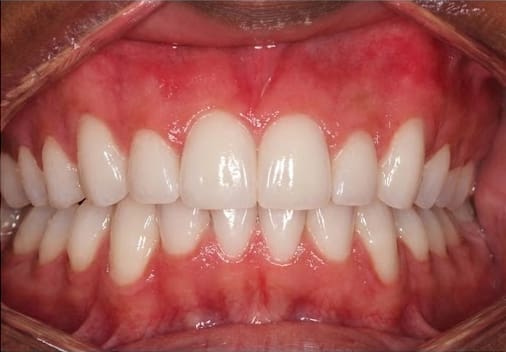
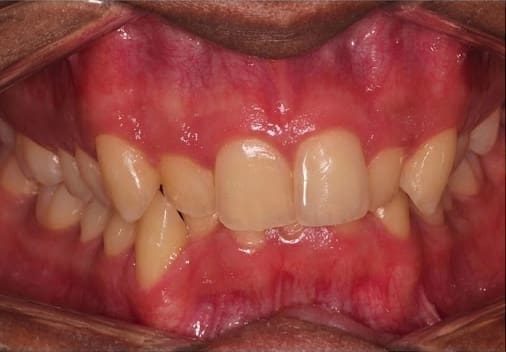
Crowded, misaligned teeth with visible gums shown before braces treatment at Limestone Hills Orthodontics in Austin, TX. A patient at Limestone Hills Orthodontics in Austin, TX shows straight, white teeth and healthy gums after overbite correction.
Before
After

Deep Overbite: Braces with Bite-Pads
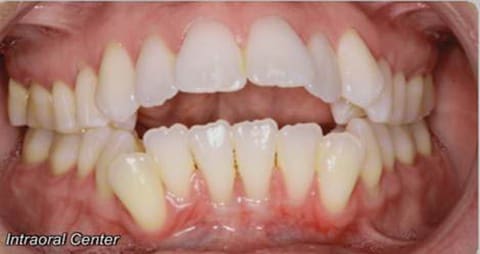
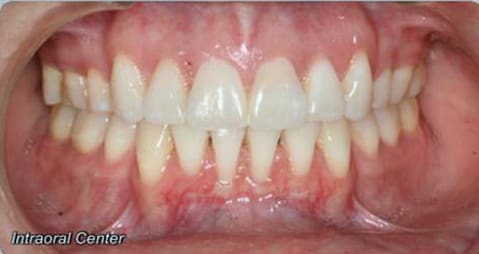
At Limestone Hills Orthodontics in Austin, TX, close-up of adult open bite and crowding with misaligned teeth and minor gum redness. Person’s mouth close-up after braces treatment for Open Bite and Crowding at Limestone Hills Orthodontics in Austin, TX.
Before
After

Open bite: Braces, Extractions and Myofunctional Therapy

Frequently Asked Questions

How much do braces cost in Austin at Limestone Hills?

From $4,000 for metal and $4,600 for clear ceramic. On the 0% in-house plan that is $600 down and then from $149 a month, and children’s Phase 1 braces start at $2,000. Your own fee is fixed at the free consultation.

Does insurance cover braces here?

Yes, when a PPO dental plan includes an orthodontic benefit; every PPO plan is accepted. HMO plans are not, and patients without PPO coverage usually pay through the 0% in-house plan, often with HSA or FSA money.

How long will I wear braces?

Most comprehensive cases at Limestone Hills take 12 to 18 months, complex ones 18 to 24, and children’s Phase 1 runs 6 to 12 months. Your timeline is set at the consultation, not estimated as a range.

Are braces different for teens and adults?

Dr. Viecilli chooses the appliance by what the case needs to move predictably, not by age. Adults who want a discreet appliance get clear ceramic brackets; metal braces come with colored bands, which many teens prefer.

I have braces from another office. Can you finish my treatment?

Yes. Transfer cases are accepted. A transfer consultation is $150; Dr. Viecilli tells you where the case stands and what finishing it here costs.

Are there Saturday appointments?

Yes, one Saturday a month, and those slots go first, so ask when you book. The other patient care days are Tuesday to Friday, 9 am to 5 pm.

Explore More Treatment Options

Metal Braces

GC Rhodium metal brackets, colored bands, from $4,000

Clear Ceramic Braces

GC self-ligating ceramic brackets, tooth-colored, self-ligating, from $4,600

Braces Cost Calculator

Personalized pricing in under 60 seconds

Invisalign

Clear aligners for teens and adults

Seeing a Dentist During Braces

How often, what to tell them, coordinated care

Crossbite in Children

Anterior vs posterior, skeletal vs dental, when to treat

First Orthodontist Visit for Kids

What happens at the age-7 screening, and what to ask

Phase 1 vs Phase 2 Orthodontics

Why two phases, cost, and when one is enough

How to Prepare Your Child for Braces

Emotional, physical, and practical prep + first week

Does My Child Need a Palatal Expander?

Signs, the age window, and what to expect

Clear Braces vs Invisalign for Adults

Visibility, lifestyle, maintenance, and cost

Am I Too Old for Braces?

Why age rarely disqualifies adult treatment

Braces at 30, 40, or 50+

How adult planning adapts by decade

The Adult Orthodontics Boom

Why more adults than ever are getting braces

Professional Adults with Braces

Discreet options by work context and the remote-work advantage

Orthodontic Treatment After 50

The health case: wear, hygiene, and restorative prep

Invisalign vs SmileDirectClub vs Byte

Why supervised in-office care is a different model

Self-Ligating Braces: Damon vs Traditional

An honest look at the speed and comfort claims

Jaw Surgery vs Braces

When a skeletal problem needs orthognathic surgery

Invisalign Refinements

Why they happen, how many sets, what is included

TADs in Orthodontics

What mini screws are and the cases that need them

Impacted Canine Teeth

Surgical exposure and guided orthodontic traction

MARPE and MSE Expanders

Non-surgical palatal expansion for teens and adults

Orthodontic Root Resorption

The risk, how it is detected, and how light force limits it

Congenitally Missing Teeth

Close the space or plan an implant: how the team decides

Fixed vs Removable Retainers

Pros, cons, hygiene, longevity, and which suits which case

Open Bite Treatment

Causes, anterior vs posterior, and treatment by severity

Tongue Thrust and Orthodontics

The open-bite cycle and why myofunctional therapy matters

Teeth Grinding (Bruxism)

What orthodontics can and cannot do, and the night-guard mainstay

Ozempic and Orthodontics

How GLP-1 medications may affect braces treatment

AI in Orthodontics

How technology augments precision without replacing the doctor

Remote Orthodontic Monitoring

Virtual check-ins that supplement, not replace, in-office care

How to Choose an Orthodontist

A patient checklist: credentials, technology, transparency

Orthodontic Myths Debunked

Common myths separated from the clinical reality

Smile Confidence and Wellbeing

What the research associates with treatment, honestly framed

HSA and FSA for Orthodontics

Using pre-tax accounts toward braces and Invisalign

Maximize Insurance Benefits

Lifetime maximums, coordination of benefits, and timing

Orthodontic Payment Plans

In-office, third-party, and pay-in-full options compared

How Often Are Orthodontist Visits?

Typical cadence, what happens at each visit, missed appointments

Switching Orthodontists Mid-Treatment

The transfer process, records, and continuity considerations

Questions to Ask at a Consultation

A printable checklist for comparing any orthodontic practice

What Happens at a Free Consultation

A step-by-step, no-pressure walkthrough of the first visit

Adult Braces

Braces options for working professionals

Kids Orthodontics

Phase 1 treatment for ages 7+

Foods to Avoid with Braces

Practical family guide for daily life

Reviewed and approved by Dr. Rodrigo Viecilli, DDS, PhD · Last updated November 2026