

Limestone Hills serves patients across the Austin area including Great Hills, Northwest Hills, Bull Creek, Allandale, Barton Creek, Rosedale, Tarrytown, River Place, Four Points, Jester Estates, Westlake Hills, Steiner Ranch, Cat Mountain, Davenport Ranch, Lost Creek, Westover Hills, Grandview Hills, Canyon Creek, Rollingwood, Downtown Austin, Anderson Mill, Jollyville, Bee Cave, Lakeway, Hudson Bend, Volente, Leander
Who Treats You
Most Invisalign providers in Austin are general dentists. Limestone Hills Orthodontics is led by a board-certified orthodontist with additional residency training beyond dental school focused on tooth movement, bite correction, and facial development. Dr. Viecilli has completed two orthodontic specialty residencies and a PhD in Orthodontic Biomechanics from Indiana University, totaling 9 years of training beyond dental school.

Dr. Rodrigo Viecilli, DDS, PhD
Dr. Viecilli personally designs every Invisalign treatment plan, not a computer-generated sales preview. You review the 3D plan before aligners are fabricated and provide input before treatment starts. 5,000+ completed orthodontic cases.
How Invisalign Works in Austin
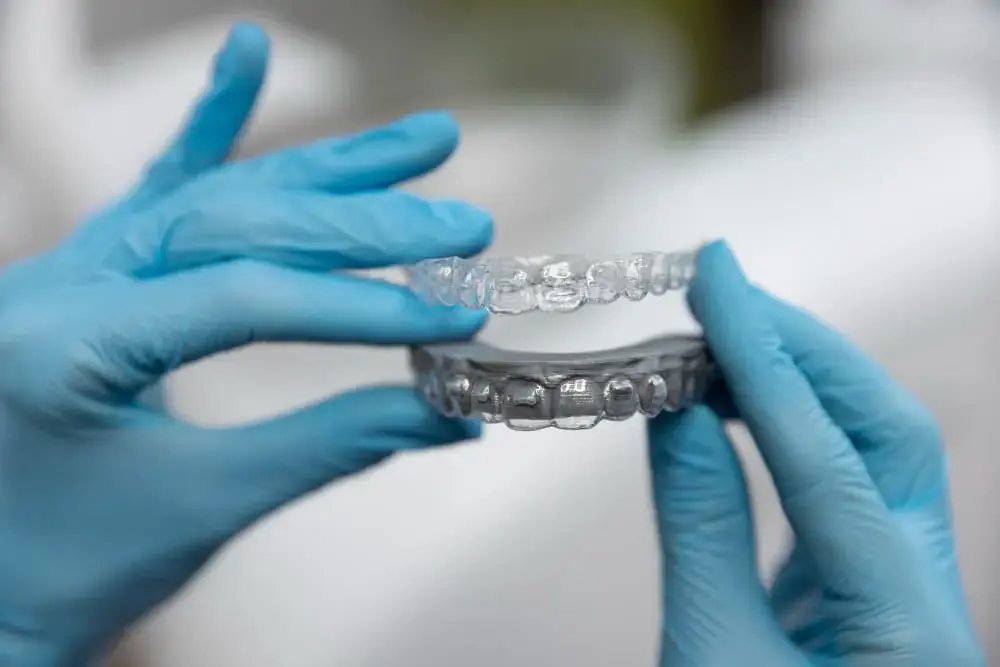
Invisalign uses a series of custom-made, clear plastic aligners to gradually move your teeth into proper alignment. Each set of aligners is worn for 1-2 weeks, then swapped for the next set in the sequence. Unlike braces, Invisalign aligners are removable, you take them out to eat, brush, and floss. Treatment is planned digitally using 3D imaging.
Why Limestone Hills Offers Invisalign (and Other Aligner Systems)
Most clear aligner systems use one type of tray at each step. Angel Pro uses two. It starts with a softer tray to begin the movement, then switches to a firmer tray to handle the heavy lifting.
Your Invisalign Treatment Timeline
Free Consultation + 3D CT Scan
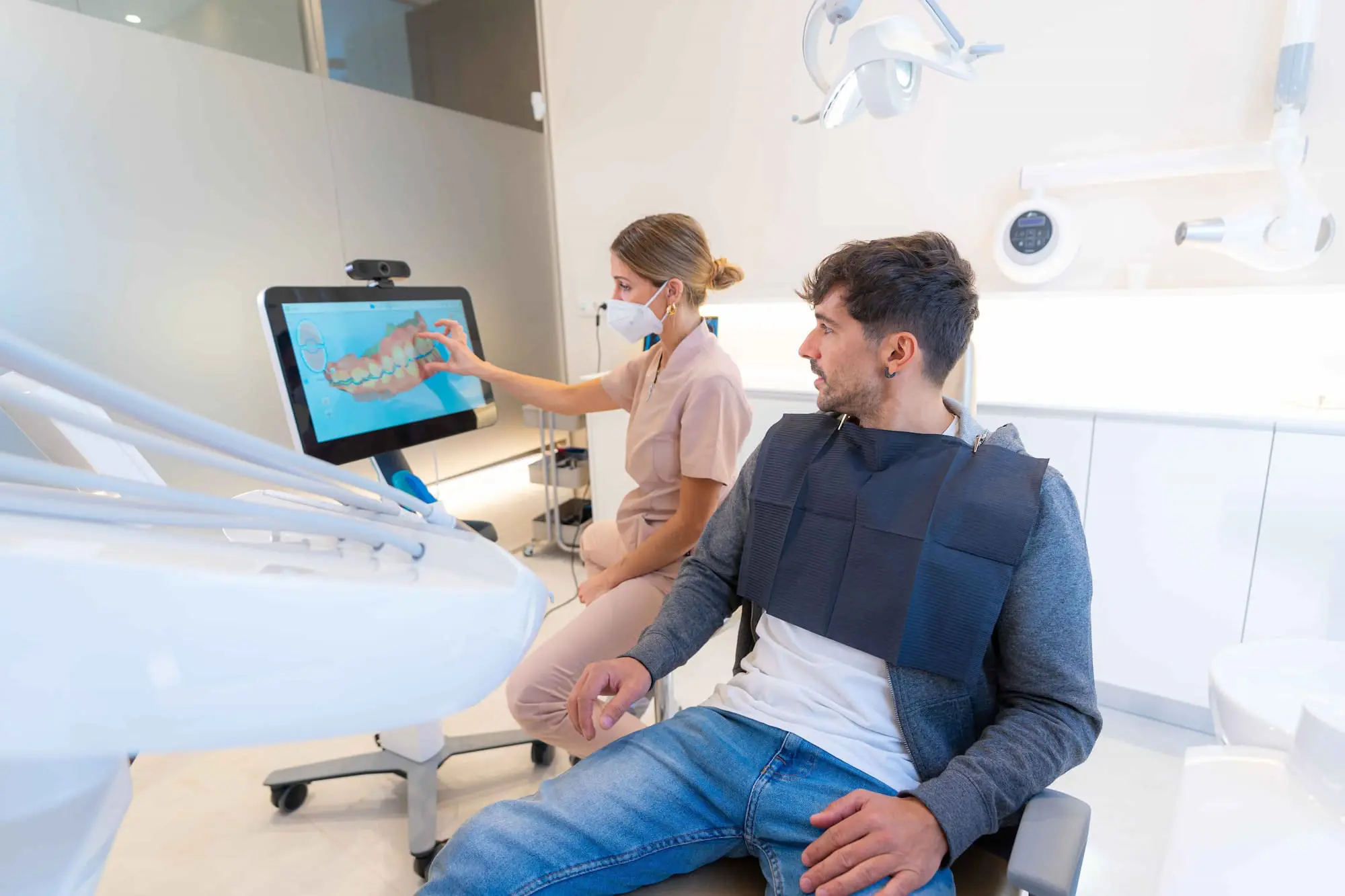
Dr. Viecilli personally evaluates your bite, takes a complimentary 3D CT scan, and discusses your treatment options honestly, Invisalign, braces, or a hybrid approach.
Your Personalized 3D Treatment Plan
Dr. Viecilli personally designs your 3D treatment simulation, positioning each tooth to the ideal outcome based on your bite, facial structure, and goals. You review the plan and provide input before aligners are fabricated.
Aligner Fabrication & Delivery
Once you approve the plan, your digital scan is sent to the Invisalign lab. Aligners are manufactured specifically for your teeth. The sequence of trays arrives ready, every movement mapped.
Wear & Switch Every 1–2 Weeks
Wear aligners 20-22 hours per day. Remove only to eat, drink (anything besides water), and brush. Grin Scope remote monitoring lets Dr. Viecilli track progress between visits, fewer trips to the office.
Final Result + Retainers
Once teeth reach final positions, custom retainers maintain results for life. Vivera retainers are 30% stronger than standard Essix material.
Invisalign vs Angel Aligners vs Braces
All three straighten teeth effectively. The right choice depends on your case, lifestyle, goals, and budget. Dr. Viecilli recommends based on what delivers the best clinical result, not the highest price tag.
Important distinction: Invisalign is the most-recognized brand because it advertises directly to patients and supplies general dentists nationwide. Angel Aligners is the orthodontist-only alternative. Available exclusively through specialists, with extra clinical features (Angel Pro dual-stiffness mode, transparent angelButtons built into the aligner) that general-dentist providers do not access. Patients who specifically prefer the Invisalign brand still receive it at Limestone Hills Orthodontics; for everyone else, Angel is the recommended platform.
How Limestone Hills Approaches Braces vs Clear Aligners
Dr. Viecilli decides between Invisalign and braces case by case, based on how much three-dimensional control the bite and tooth movements need. Invisalign is the right choice when the case is primarily alignment with mild-to-moderate bite correction and the patient can wear trays 20 to 22 hours per day. Braces carry the advantage when the case calls for precise rotations, large vertical movements, or extraction-and-space-closure mechanics that aligners handle slowly. A hybrid path is also possible: most cosmetic cases stay in clear aligners for the bulk of treatment and finish in braces for the final precision movements, so the patient spends most of the treatment in the esthetic system; the small subset with severe rotations or large extraction closures runs a short braces phase first and then finishes in aligners. The decision is presented at the free consultation with the 3D scan visible on-screen, never pushed based on which product carries a higher margin.
| Factor | Invisalign | Angel Aligners
Invisalign competitor |
Braces |
|---|---|---|---|
| Markets to |
General public, dentists, and orthodontists. Provided by any dentist or dental specialist
|
Orthodontists only. Not available to general dentists. Carries advanced features (Angel Pro 2-stiffness, transparent angelButtons) reserved for the orthodontic specialty
|
Orthodontists only
|
| Visibility |
Nearly invisible
|
Nearly invisible
|
Visible
|
| Removability |
Removable
|
Removable
|
Fixed 24/7
|
| Complex bite correction |
Good for mild-moderate
|
Angel Pro extends to complex cases
|
Best for complex
|
| Posterior force control |
Single-stiffness aligner only
|
Angel Pro 2-stiffness option
|
Built in via wire selection
|
| Tooth rotation |
Limited on severe
|
Limited on severe
|
Full control
|
| Elastic attachment buttons |
Bonded to teeth (metal or composite)
|
Built into the aligner (transparent angelButtons). Nothing on teeth
|
Built into the bracket
|
| Compliance required |
20–22 hrs/day
|
20–22 hrs/day
|
Always working
|
| Oral hygiene |
Normal brushing
|
Normal brushing
|
Extra tools needed
|
| Office visits |
Every 8–10 weeks
|
Every 8–10 weeks
|
Every 6–8 weeks
|
| Starting Price |
$4,700
|
$4,000
|
$4,000
|
When Braces Replace Aligners at Limestone Hills Orthodontics
Some difficult cases can be treated with aligners, but aligners are not always the most predictable tool. Dr. Viecilli replaces aligners with braces when the case involves severe tooth rotation (more than 20 degrees), significant vertical movement (intrusion or extrusion of individual teeth), complex anchorage requirements where each tooth needs an independent force vector, growing patients who will not reliably wear trays 22 hours a day, or skeletal discrepancies that need expanders, functional appliances, or surgical coordination. The deciding factor is not aligner marketing or patient preference. It is whether the trays can actually deliver the force pattern the bite requires.
Hybrid treatment at Limestone Hills Orthodontics. Dr. Viecilli often starts a case in clear aligners for the bulk of treatment, then finishes in braces for the final precision movements. The patient stays in the esthetic modality for most of the treatment and gets the mechanical control of fixed appliances only at the end. The decision is always case-specific and discussed at the free consultation, not pushed based on which product carries a higher margin.
Invisalign Cost in Austin
Invisalign at Limestone Hills Orthodontics starts at $4,700 comprehensive, with monthly payments from $149.99/month. The practice also offers Angel Aligners starting from $4,000 as a more affordable clear aligner option with comparable quality. Total treatment cost depends on case complexity. Limestone Hills Orthodontics accepts all major PPO dental insurance plans.
Clear Aligners for Every Budget
Limestone Hills Accepts All Major PPO Dental Insurance




Am I a Candidate for Invisalign?
Invisalign treats a wide range of orthodontic issues. During your free consultation, Dr. Viecilli evaluates whether Invisalign, braces, or a hybrid approach is the best path to your ideal result.
Cases Treated with Invisalign
When Braces May Be Better
Dr. Viecilli may recommend braces upfront when the case involves severe tooth rotation (more than 20 degrees), significant vertical tooth movement (intrusion/extrusion), complex bite correction requiring precise anchorage, young patients who may not comply with 20-22 hours of daily wear, or skeletal discrepancies requiring expanders or functional appliances.
Honesty about the right tool matters more than selling the preferred product.
Invisalign for Adults vs Teens

Adults
Over 60% of Invisalign patients at Limestone Hills Orthodontics are adults. Clear aligners are virtually invisible in professional and social settings. Grin Scope remote monitoring means fewer office visits, ideal for busy schedules.

Teens
Invisalign Teen includes blue compliance dots that fade with wear so parents (and Dr. Viecilli) can confirm the teen is wearing them enough. Eruption tabs accommodate teeth still growing in. Removable for sports, instruments, and school photos. Grin Scope remote monitoring tracks progress between visits.
How Limestone Hills Gauges Teen Compliance Before Invisalign
Dr. Viecilli talks to teens directly, not around them. The lecture is short and numeric. Aligners need 22 hours of wear every day to work. Rubber bands need to be changed every day and worn as instructed. Missing those targets adds months to treatment. He does not guilt-trip or scare teens. He tells them exactly what each choice costs in time and why. Grin remote monitoring catches non-compliance early so a slip becomes a conversation in the first week, not a surprise six months in.
When a Patient Is Not Compliant with Aligners
Dr. Viecilli catches non-compliance early through Grin remote monitoring or regular visits. If teeth are not tracking on schedule, the practice knows before the next appointment.
Invisalign Refinements
Refinements are additional aligner trays used after your initial series if teeth have not reached the exact final position. They are a normal part of Invisalign treatment, not a sign something went wrong.
How Limestone Hills Handles Invisalign Refinements
For aligner cases estimated at more than 12 months, we include two refinements at no charge.
Why Choose Limestone Hills Orthodontics for Invisalign in Austin?
Most Invisalign providers in Austin are general dentists. Limestone Hills Orthodontics is led by a PhD Orthodontist who has completed 5,000+ orthodontic cases and also offers braces and hybrid approaches, so the recommendation is always based on the best clinical outcome, not the only tool available.
Why Mail-Order Aligners Are Not Equivalent
Mail-order aligners are orthodontics without orthodontics. There is no clinical exam, no records, no three-dimensional imaging, no in-person doctor. The tray itself is just plastic. The result comes from what a trained specialist does with it. Dr. Viecilli has seen mail-order patients in his office with open bites that were not there before, with root resorption that shows up on CBCT, and with bite problems that cost more to fix than orthodontic treatment would have cost in the first place. If a patient cannot afford standard orthodontics, the answer is OrthoSync at $149 a month, not a mail-order kit.
Orthodontist – Not Just a Dentist
Any dentist can order Invisalign trays. An orthodontist has additional residency training in tooth movement and bite correction. Dr. Viecilli brings two orthodontic specialty residencies and a PhD in Orthodontic Biomechanics from Indiana University, totaling 9 years of training beyond dental school. Dr. Viecilli handles complex cases and unexpected issues with specialized expertise.
Doctor Designs Every Plan
Dr. Viecilli personally reviews and adjusts every 3D treatment simulation. Not a technician. Not a software default. Each tooth is positioned to match your specific bite, facial balance, and smile goals.
Free 3D CT Scan
i-CAT FLX V7 CBCT at every consultation, teeth, jaws, and airway in under 30 seconds. Other offices charge $200-$500 for this. Limestone Hills includes it at no cost.
Grin Scope Remote Monitoring
Scan your teeth from home between office visits. Dr. Viecilli monitors progress remotely, catching tracking issues early without extra appointments.
Angel Aligners as an Alternative
If Invisalign is not the right fit for your budget, Angel Aligners offer comparable quality from $4,000. Same clinical precision. Orthodontist-only distribution means lower lab costs.
ABO Board-Certified Diplomate
Board certification by the American Board of Orthodontics is a voluntary credential held by fewer than half of practicing orthodontists. It signals that a doctor has submitted finished cases for review by a panel of peers and demonstrated measurable clinical excellence. Dr. Viecilli holds this designation.
Private Practice Standard
Not a DSO chain. Doctor-owned. You see the same orthodontist every visit, same judgment, same standards, from consultation to retainers.
What Aligner Patients Say
Frequently Asked Questions
How much does Invisalign cost in Austin?
How long does Invisalign take?
Is Invisalign worth it compared to braces?
Should I get Invisalign from a dentist or orthodontist?
Any dentist can order Invisalign trays, but an orthodontist has specialized training to diagnose underlying bite issues, plan complex tooth movements, and manage treatment when it does not go as expected. Dr. Viecilli is a PhD Orthodontist. Specifically, Dr. Viecilli has completed two orthodontic specialty residencies and a PhD in Orthodontic Biomechanics from Indiana University, totaling 9 years of training beyond dental school.
Can teenagers get Invisalign?
What happens if I lose an aligner tray?
Are mail-order aligners like SmileDirectClub the same as Invisalign?
What about Angel Aligners or Spark aligners?
Angel Aligners Details →