
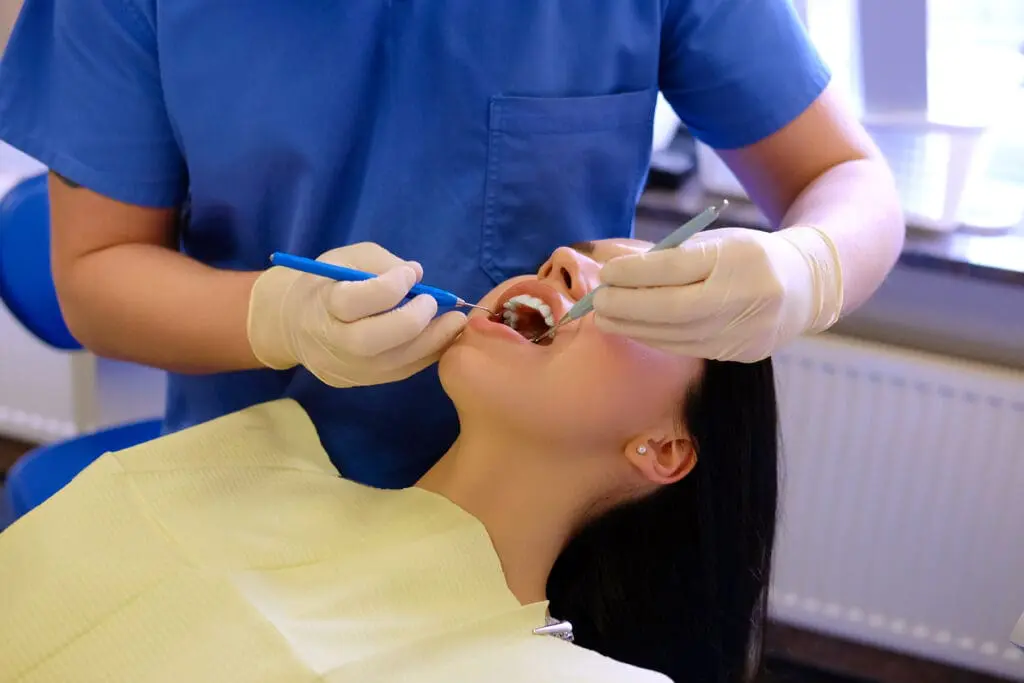
A tongue thrust treatment combines orthodontics with addressing the habit itself. The teeth are aligned and an open bite closed with braces or aligners, while orofacial myofunctional therapy retrains the tongue posture and swallow pattern, and a habit appliance such as a tongue crib can interrupt the thrust during treatment.
Orthodontics alone often fails to hold the correction if the swallow pattern that helped cause the problem is not changed, so the durable result is a coordinated effort and patient compliance with the therapy is the variable.
A tongue thrust case is a diagnosis problem before it is a treatment problem. In Dr. Rodrigo Viecilli’s clinical framework at Limestone Hills, the decisive question is not which appliance closes the open bite. It is whether the tongue habit, rather than the teeth, is the real driver of the bite.
Across 5,000+ treated cases in Austin, Dr. Viecilli, an ABO Diplomate with a PhD in orthodontic biomechanics and a co-inventor of the SmartArch wire system with 27+ publications, evaluates whether a forward tongue posture and swallow pattern are loading the front teeth in a way that will undo a finished result.
That diagnostic depth is the reason the cause is identified and addressed up front. Closing an open bite without changing the habit that helped open it invites relapse, and recognizing that distinction is what protects the result.
What a Tongue Thrust Is
A tongue thrust is a habit in which the tongue pushes forward against or between the front teeth, often during swallowing or while the mouth is at rest. In a typical mature swallow the tongue tip rests on the roof of the mouth behind the front teeth. In a tongue thrust the tip presses against the teeth instead.
This pattern is common and not automatically a problem. Infants and young children normally swallow with a more forward tongue position, and most outgrow it as the swallow pattern matures with growth. A tongue thrust is treated as a concern only when it persists and is clearly affecting how the teeth come together.
Several factors can keep the habit going. Mouth breathing, enlarged tonsils or adenoids, prolonged thumb or pacifier habits, and certain anatomical patterns can all encourage a forward tongue posture. Because the contributors differ from patient to patient, the cause is assessed individually rather than assumed from the bite alone.
The reason orthodontists pay attention to it is mechanical. The tongue is a strong muscle that acts on the teeth many times a day during every swallow. Light forces applied repeatedly over time can move teeth, which is the same principle orthodontic treatment relies on, working here in an unhelpful direction.
Why It Matters: The Open Bite and Relapse Cycle
The clinical concern with a persistent tongue thrust is its effect on the bite. Repeated forward tongue pressure against the front teeth can contribute to an anterior open bite, which is a gap between the upper and lower front teeth when the back teeth are closed together.
It is important to be precise about this. A tongue thrust is one possible contributor to an open bite, not the only one. Jaw growth patterns, the vertical proportions of the face, and other habits can also produce or worsen an open bite. Sorting out how much the tongue is contributing is part of the diagnosis, which is why the assessment is individual.
The harder issue is relapse. Relapse means a corrected result drifting back toward its original position after active treatment ends. If orthodontics closes an open bite but the same forward tongue posture and swallow pattern continue, the front teeth keep receiving the pressure that helped open the bite originally.
That is the cycle worth understanding. The habit can help create the open bite. Orthodontics can close it. If the habit then continues unchanged, it can work against the finished result over time. Breaking the cycle means addressing the habit, not only correcting the teeth, which is the central reason these cases are treated as a combined problem.
How a Tongue Thrust Is Diagnosed
Diagnosis starts with watching how the patient swallows and where the tongue rests. An orthodontist looks at the position of the tongue at rest, what it does during a swallow, and whether the front teeth meet or sit apart when the back teeth are closed.
The records add the rest of the picture. A clinical examination, photographs, and imaging show the bite, the jaw relationship, and the facial proportions. At Limestone Hills a 3D CBCT scan, which is a cone-beam computed tomography scan that shows the bone and structures in detail a flat X-ray cannot, supports the assessment of the underlying skeletal pattern.
The aim of this workup is to separate cause from effect. An open bite that is mainly driven by a forward tongue habit calls for a different plan than an open bite driven mainly by a vertical jaw growth pattern, even when the two bites look similar in the mirror.
This is where diagnostic depth changes the outcome. Predicting which open bites will hold and which will tend to relapse is a force and growth question, and weighing the tongue’s contribution against the skeletal pattern is exactly the kind of analysis Dr.
Viecilli’s biomechanics training and CBCT-based planning are built for. Contributing factors such as mouth breathing or enlarged tonsils are also flagged for referral when relevant.
The Combined Approach: Orthodontics, Myofunctional Therapy, and a Habit Appliance
When a tongue habit is driving the bite, durable treatment uses more than one tool. The orthodontic part aligns the teeth and closes the open bite with braces or clear aligners, and in some cases with additional mechanics suited to the specific bite. That part is well established.
The habit part is what protects that work. Orofacial myofunctional therapy is a program of guided exercises that retrains tongue resting posture, swallowing, and related muscle function. It is delivered by a trained myofunctional therapist or a speech-language pathologist and is coordinated with the orthodontic plan rather than done in isolation.
It is framed carefully on purpose. Myofunctional therapy is an evidence-informed supportive adjunct, not a stand-alone cure with a guaranteed result. Its value lies in changing the pattern that works against the bite, and its effectiveness depends heavily on the patient practicing the exercises consistently over time.
A habit appliance can be part of the plan as well. A tongue crib is a small fixed appliance positioned behind the upper front teeth that interrupts the forward tongue thrust and acts as a reminder so the tongue is discouraged from pushing against the teeth.
It is a habit-interruption device, not a punishment device, and it is typically used as a support alongside therapy rather than as a substitute for it.
These pieces are coordinated rather than stacked. The orthodontist sequences the orthodontic mechanics, the habit appliance, and the timing of myofunctional therapy so they reinforce each other, and refers to the appropriate therapist for the therapy itself. Limestone Hills treats this as a multidisciplinary plan, with the orthodontic and habit-retraining work pointed at the same goal.
| Dimension | Orthodontics alone | Orthodontics plus myofunctional therapy and habit appliance |
|---|---|---|
| What it corrects | Aligns the teeth and closes the open bite | Closes the open bite and retrains the tongue posture and swallow pattern that helped cause it |
| Addresses the cause | No; the underlying habit can continue unchanged | Yes; the habit is the explicit target of the therapy and appliance |
| Relapse risk when a thrust persists | Higher, because the pressure that opened the bite continues after treatment | Lower, when the patient follows the therapy consistently |
| Main variable | The skeletal pattern and retention | Patient compliance with the myofunctional exercises |
The table summarizes the approach, not a guarantee. The right plan depends on the individual bite and on how much the tongue habit is contributing, which is decided case by case during evaluation.
Children Versus Adults
Timing and emphasis differ by stage, framed here at a high level rather than by a fixed age, because children mature at different rates and the decision is individual.
In young children a tongue thrust is common and frequently resolves on its own as the swallow pattern matures with normal growth. For that reason an orthodontist often monitors a young child rather than intervening immediately.
Active treatment is considered when the habit clearly persists and is affecting the developing bite, and early intervention, when chosen, can take advantage of ongoing growth.
In teens and adults whose facial growth is largely complete, a persistent tongue thrust is addressed more directly. The habit will not be outgrown at this stage, so when it is contributing to an open bite it is treated alongside orthodontics, and the myofunctional retraining is correspondingly important to holding the result.
The shared principle across both groups is the same. Whether the patient is a child being monitored or an adult in active treatment, the question is whether the tongue habit is driving the bite, and that judgment is made on the records during evaluation, not by the patient’s age alone.
Why Treating the Cause Protects the Result
The logic that ties this together is straightforward. If a habit helped create a malocclusion, correcting only the teeth leaves the cause in place, and a cause left in place tends to reassert itself.
Orthodontics is very good at moving teeth into a planned position. It does not, by itself, change how the tongue rests or how the patient swallows. When a forward tongue habit continues after the bite is closed, the front teeth keep receiving the same pressure that contributed to the open bite, working against the finished result over time.
Addressing the cause changes that trajectory. When the swallow pattern and tongue posture are retrained, the corrected bite is no longer being pushed against in the same way, which is what gives the result a better chance of staying stable after active treatment ends.
This is also why retention matters in these cases and why the habit work is not optional. A finished result is held by a combination of retainers and, where a habit was involved, a changed muscle pattern. Dr. Viecilli’s position at Limestone Hills is that treating the cause is not an extra, it is the part that makes the orthodontic correction worth doing in the first place.
The Candid Part: Braces Alone Often Will Not Hold This
Here is the honest framing Dr. Viecilli gives patients and parents asking about a tongue-thrust open bite. Orthodontics can reliably close the bite and align the teeth. That part is not the hard part.
The hard part is keeping it closed. When a tongue thrust helped open the bite, braces or aligners alone often fail to hold the correction, because the forward tongue posture and swallow pattern that caused the problem are still present after the appliances come off. The teeth were moved; the force acting on them was not changed.
That is why durable success here is a combined effort rather than an orthodontic one. Closing the bite is the orthodontist’s job. Retraining the swallow is the myofunctional therapist’s job, supported by a habit appliance when appropriate, and the two are coordinated deliberately.
The candid variable is compliance. Myofunctional therapy works by changing a pattern through consistent practice, and a patient who does not do the exercises does not get the benefit. Limestone Hills states this plainly up front rather than implying that braces alone will solve a habit-driven open bite, because setting that expectation honestly is what protects the patient from a relapse later.
The encouraging side of the same truth is that the combined approach gives these cases a real path to a stable result. The result depends on addressing the cause and on the patient committing to the therapy, and Dr. Viecilli would rather set that expectation honestly than oversell a tooth-only fix that the habit can undo.
Austin and the Hill Country
Limestone Hills treats tongue-thrust and open-bite patients from across Austin and the surrounding Hill Country, including Lakeway, Cedar Park, Round Rock, Bee Cave, and Westlake. The treatment tools do not change by neighborhood, but the right plan changes by case, because a young child being monitored and an adult with a persistent thrust and an open bite are different clinical problems.
For Austin-area patients the practical advantage of an orthodontist-led, CBCT-planned practice is that the cause-versus-effect question is answered deliberately before treatment starts, and the orthodontic plan is coordinated with myofunctional therapy and the appropriate referrals rather than treating the teeth in isolation.
A free consultation turns this overview into a specific plan for the patient in front of the doctor, and the related bite concern is described on the open bite treatment page.
Common Questions About Tongue Thrust
What is a tongue thrust?
A tongue thrust is a habit in which the tongue pushes forward against or between the front teeth, often during swallowing or while resting. Instead of the tongue tip resting on the roof of the mouth, it presses against the teeth. It is common in young children and frequently resolves on its own as the child grows and the swallow pattern matures, but in some patients it persists into the teen and adult years.
Does a tongue thrust cause an open bite?
A persistent tongue thrust can contribute to an anterior open bite, which is a gap between the upper and lower front teeth when the back teeth are closed. Repeated forward tongue pressure over time can keep the front teeth from meeting. It is one possible contributor among several, including jaw growth patterns and other habits, so the cause is assessed individually rather than assumed.
Can braces fix a tongue thrust on their own?
Orthodontics can close an open bite and align the teeth, but braces or aligners do not retrain the tongue posture or the swallow pattern. If the habit that helped create the problem continues, the corrected bite is at higher risk of relapsing afterward. This is why durable treatment in these cases pairs orthodontics with addressing the underlying habit rather than relying on tooth movement alone.
What is orofacial myofunctional therapy?
Orofacial myofunctional therapy is a program of guided exercises that retrains tongue resting posture, swallowing, and related muscle function. It is delivered by a trained myofunctional therapist or a speech-language pathologist and is coordinated with orthodontic care. It is an evidence-informed supportive adjunct, not a stand-alone cure with a guaranteed outcome, and its effectiveness depends heavily on the patient practicing the exercises consistently.
When is a tongue thrust treated in a child versus an adult?
In young children a tongue thrust is common and often resolves with normal growth, so an orthodontist frequently monitors it rather than intervening immediately. Treatment is considered when the habit persists and is clearly affecting the bite. In teens and adults whose growth is largely complete, a persistent thrust is addressed more directly alongside orthodontics. The timing is judged case by case during evaluation rather than by a fixed age.
Sources. Standard orthodontic literature on tongue thrust and orofacial myofunctional habits, on the relationship between a persistent tongue thrust and anterior open bite, on orofacial myofunctional therapy as a supportive adjunct to orthodontic treatment delivered by a trained myofunctional therapist or speech-language pathologist, and on habit-interruption appliances such as the tongue crib.
Prevalence, success likelihood, relapse rates, therapy duration, and age applicability are stated qualitatively rather than as exact figures, because they vary with age, the underlying skeletal pattern, the contribution of the habit, and patient compliance, and are determined on the individual patient’s records.
Orofacial myofunctional therapy is described as an evidence-informed adjunct coordinated with orthodontics, not as a stand-alone cure with a guaranteed outcome. Clinical observations from Limestone Hills Orthodontics, Austin, TX.