
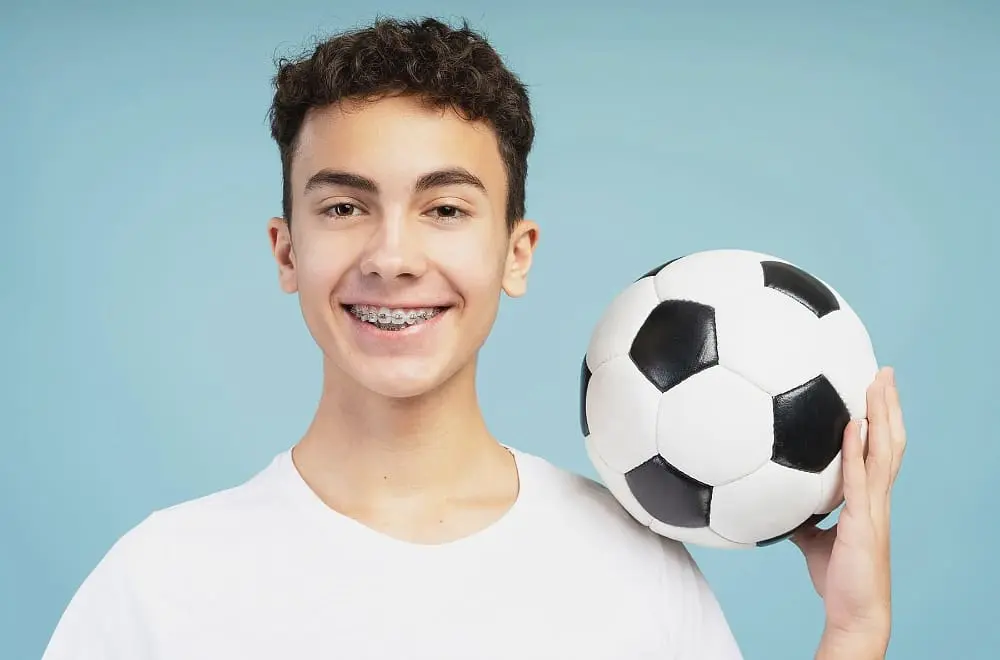
A standard drugstore mouthguard, the stock kind or the boil-and-bite kind, does not fit over braces. It is shaped to smooth teeth, not to brackets and wires, and a boil-and-bite guard molded onto braces can lock onto the brackets and become a hazard.
The right product is an orthodontic-specific mouthguard, a different design with a deep channel and a thick outer wall that seats over the brackets and is re-fit or replaced as the teeth move. Any child in Austin who plays a contact or collision sport in braces needs one.
For a parent, the takeaway is short. The mouthguard from the team bag or the sporting-goods aisle is the wrong tool the moment braces go on. The right tool is sized for braces, and the orthodontist sets it up alongside the braces, not as an afterthought.
“The single mistake to prevent is a parent boiling a regular guard and pressing it onto a fresh set of braces,” says Dr. Rodrigo Viecilli, ABO Diplomate and PhD in orthodontic biomechanics. “That guard hardens around the brackets. Taking it out can pop a bracket off, and worse, it can fight the tooth movement the braces are producing.
An orthodontic mouthguard is built differently. It has a deep, wide channel and a heavier outer flange so it covers the brackets without gripping them. At Limestone Hills, every patient who plays a contact sport gets fitted for one, and the knocked-out-bracket plan is reviewed at the same banding visit.”
That pairing matters. A young athlete in braces faces two questions at once, how to protect the mouth and what to do if a bracket breaks at a game, and both are answered before the first practice rather than during a panicked sideline phone call.
Why a Regular Mouthguard Does Not Work Over Braces
A stock guard is molded to an average set of teeth and worn straight from the package. A boil-and-bite guard is softened in hot water and then bitten into, so it takes the shape of whatever it is pressed against. Both assume a smooth tooth surface. Braces are the opposite of smooth.
Press a softened boil-and-bite guard onto a bracketed arch and the warm material flows into every gap around the brackets and wires. When it cools it has effectively cast itself around the hardware. Removing it then drags on the brackets, and a bracket that takes that pull can debond from the tooth.
There is a second, quieter problem. A guard locked tightly around the brackets can resist the small, continuous movements the braces are designed to make. The appliance and the guard end up working against each other, which is not what anyone wants from a piece of safety gear.
The American Association of Orthodontists is direct on this point. For a patient in active orthodontic treatment it recommends an orthodontic-specific sports mouthguard for braces rather than a boil-and-bite or a custom guard, because the latter two can interfere with treatment.
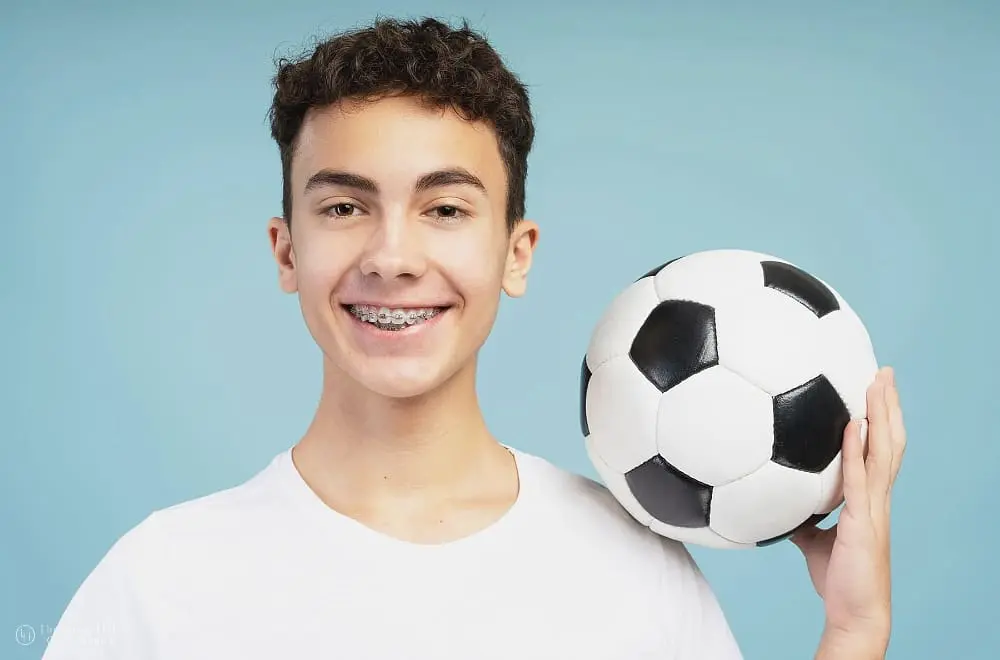
What Makes an Orthodontic Mouthguard Different
An orthodontic mouthguard is engineered around the fact that the teeth underneath it are moving. The design changes follow from that.
The channel that sits over the teeth is deeper and wider than on a standard guard. It is built to clear the brackets and the archwire with room to spare, so the guard rests on the gum line and the tooth surface rather than wedging onto the hardware.
The outer wall, the part that faces the lips and cheeks, is thicker and more flexible. That heavier flange is what cushions a direct blow and keeps the lips from being driven into the brackets.
Because the channel does not grip the brackets, the guard can be seated and removed without dragging on them. Some orthodontic guards are no-mold designs that snap over fixed braces with no boiling step at all. Others are remoldable a limited number of times so the fit can be refreshed as the teeth shift.
The material is typically a high-density medical-grade polymer chosen for impact absorption and durability. The point is not a tighter fit, which would defeat the purpose with braces, but a protective fit that tolerates a changing bite.
Regular Mouthguard Compared With an Orthodontic Mouthguard
Side by side, the difference is not a small upgrade. It is two different tools for two different mouths.
| Feature | Stock or Boil-and-Bite Guard | Orthodontic-Specific Guard |
|---|---|---|
| Designed for | Smooth, unbraced teeth | Teeth with brackets and wires |
| Fit method | One size, or molded tight by biting | Deep channel, snap-fit or remoldable |
| Interaction with brackets | Can lock onto and pull off brackets | Clears brackets, does not grip them |
| As teeth move | Can resist tooth movement | Re-fit or replaced to keep pace |
| Outer cushioning wall | Thinner, sized for plain teeth | Thicker flange over the brackets |
| Recommended in treatment | Not recommended by the AAO | The AAO-recommended choice |
A boil-and-bite guard is a reasonable, low-cost product for a child without braces. The trouble starts only when braces enter the picture. That is the line a parent needs to hold, the guard that worked last season is not the guard for this season.
Which Sports Require a Mouthguard With Braces
The American Dental Association recommends a properly fitted mouthguard for activities with a significant risk of dental trauma. With braces, that recommendation reads more broadly, because the brackets raise the cost of any blow to the mouth.
Contact and collision sports are the clear cases. Football, ice hockey, lacrosse, rugby, boxing, wrestling, and martial arts all carry a direct risk of a hit to the face and a strong reason for a guard. Basketball and soccer belong here too. Elbows under the basket and head-to-head challenges for a ball send a steady stream of mouth injuries through orthodontic offices.
Limited-contact sports still warrant one. Skateboarding, BMX, mountain biking, and gymnastics involve falls where the mouth can strike a hard surface, and a fall does not care whether the sport is officially contact or not. The American Academy of Pediatric Dentistry frames the question around the risk of orofacial injury rather than the label on the sport.
Some governing bodies require a mouthguard outright for their sport. Where a league or sport mandates one, that requirement stands on its own, and a braces patient simply needs the orthodontic version of the required guard rather than a generic one.
Non-contact activities such as swimming, distance running, or tennis do not call for a guard under normal play. The judgment for anything in between belongs with the orthodontist, who knows where a given patient’s brackets sit and how exposed the lips are.
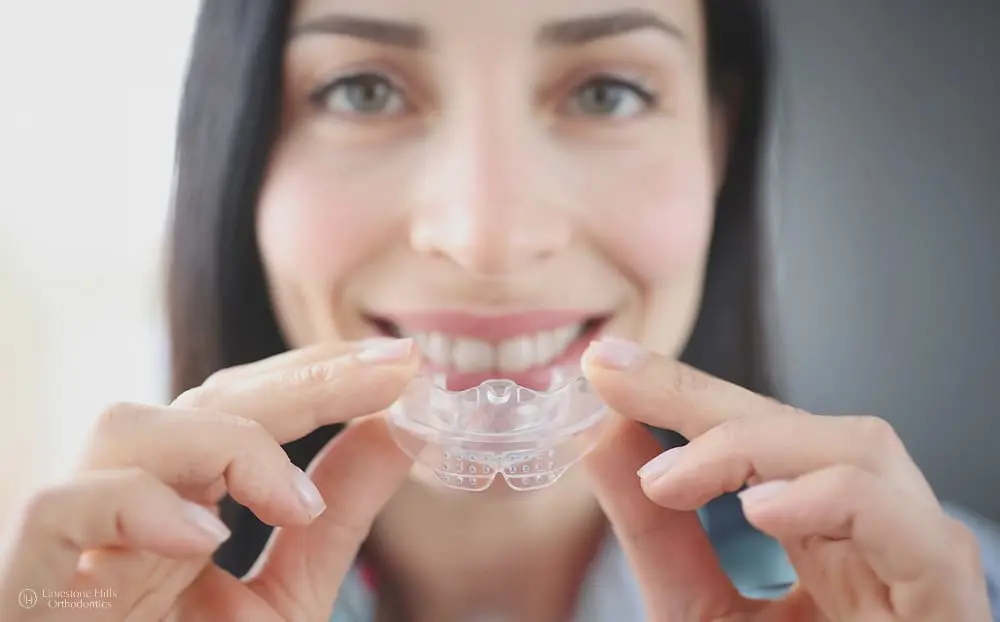
Clear, Stock-Style, and Custom Options
Within orthodontic guards there is still a range, and the right pick depends on the sport, the budget, and how fast the teeth are moving.
Prefabricated orthodontic guards are the common starting point. They are sized for braces, widely available, and inexpensive enough to replace without much thought, which suits a treatment phase where the bite changes month to month. Snap-fit styles need no boiling, so there is no risk of accidentally casting the guard onto the brackets.
Custom orthodontic guards are made from an impression or scan taken at the dental office. The American Dental Association notes a custom guard offers the best fit and the lowest interference with speech, at the highest cost.
For a patient in braces a custom guard has to be planned with tooth movement in mind, since a guard made to today’s tooth positions will need remaking as those positions change.
Clear versus colored is cosmetic, not protective. A clear orthodontic guard looks less obvious; a colored one is easier to find when it ends up at the bottom of a gym bag. Neither choice changes the protection as long as the guard is an orthodontic design with the deep channel and the thick outer wall.
For most young athletes in Austin starting treatment, a prefabricated or remoldable orthodontic guard is the practical choice for the bracketed phase, with a custom guard reconsidered once the braces come off and the bite is stable.
Fitting and Caring for a Braces Mouthguard
A guard only protects when it is in the mouth and in good shape, so a short routine keeps it working.
- Have the orthodontist confirm the guard type and check the fit over the brackets before the season, not after the first injury.
- Rinse the guard in cool water after every use and brush it gently; hot water can warp the material and ruin the fit.
- Store it in a ventilated case, never loose in a bag or a hot car, where it can crush or deform.
- Inspect it regularly for thinning, tears, or a channel that no longer seats cleanly over the brackets, and replace it when any of those show.
The American Association of Orthodontists also advises replacing a guard after a growth spurt or visible wear. With braces, fit is the variable to watch most closely, because the teeth are deliberately being moved and the guard has to keep clearing the hardware as they do. At Limestone Hills the fit is rechecked at routine adjustment appointments so a drifting fit is caught early.
A guard that has hardened, cracked, or stopped seating is not a budget item to stretch. Its only job is to be reliable on the one play that matters, and a compromised guard cannot do that job.
If a Bracket Is Damaged During Sport
Even with the right guard, a hard enough hit can still loosen a bracket, so a parent should know the short version of what to do. This is a brief overview; the practice covers the full protocol, and a dedicated emergency page goes deeper.
Stay calm and check the mouth. If a bracket is loose but still on the wire, leave it in place and cover any sharp edge with orthodontic wax. If a wire is poking the cheek, the wax goes there too. Save any piece that has come fully off so the orthodontist can see what happened.
A loose bracket is usually not a same-night emergency. It becomes urgent only when a wire is cutting tissue, bleeding will not stop, or there is a possible tooth injury, in which case the office should be contacted promptly and a dentist or emergency care sought if a tooth is knocked loose or out. For the routine loose-bracket case, a short repair visit handles it and keeps treatment on schedule.
Limestone Hills walks every athlete and parent through this at the banding visit. The goal is that the sideline decision is already made before it has to be made, which is far calmer than working it out in the moment.
The Honest Limit of Any Mouthguard
A mouthguard is the best protection available for a young athlete in braces, and it is not a force field. Even a well-fitted orthodontic guard reduces the severity of an impact rather than removing it. A hard enough collision can still loosen a bracket or bruise tissue through a guard.
The practice says this plainly because the alternative, implying braces become impact-proof with the right guard, sets a parent up for an unpleasant surprise. Realistic protection plus a fast, predictable repair plan is the honest combination. The guard lowers the odds and the damage; the same-day repair plan handles what gets through.
That is the value of pairing the mouthguard discussion with the knocked-out-bracket protocol at the banding visit. One reduces the risk; the other removes the panic when the risk lands anyway.
Sports Mouthguards With Braces in Austin and the Hill Country
Limestone Hills Orthodontics treats young athletes across Austin and the surrounding Hill Country, including Lakeway, Cedar Park, Round Rock, Bee Cave, Westlake, and Steiner Ranch. Youth football, soccer, basketball, lacrosse, and club hockey run year round across these communities, and a steady share of those players are in braces.
Because the season often starts close to a banding appointment, Dr. Viecilli folds the sports-protection conversation into that visit rather than leaving it for a family to sort out on their own.
A patient driving in from Round Rock or living a few minutes from the central Austin office gets the same plan, the right orthodontic guard for the sport and a clear bracket-repair protocol, before the first whistle.
Common Questions About Mouthguards With Braces
Can a regular mouthguard be worn over braces?
Not safely. A stock or boil-and-bite guard is shaped to a smooth row of teeth, not to a row of brackets and wires. A boil-and-bite guard molded directly onto braces can lock onto the brackets, pull a bracket loose when it is removed, and limit the tooth movement the braces are working to produce. An orthodontic-specific mouthguard is a separate design with a deep, wide channel and a thick outer wall that seats over the brackets without gripping them. The American Association of Orthodontists recommends an orthodontic guard rather than a boil-and-bite or custom guard for patients in active treatment.
Which sports need a mouthguard with braces?
Any contact or collision sport, and most limited-contact sports. The American Dental Association recommends a properly fitted mouthguard for activities with a significant risk of dental trauma, which covers football, hockey, basketball, soccer, lacrosse, wrestling, martial arts, rugby, and similar sports. Skateboarding and BMX count because of fall risk. For a child in braces the threshold is lower than for a child without braces, because a blow that would bruise a lip without braces can drive that lip into the brackets and cause a deeper cut.
How often does a braces mouthguard need to be replaced?
More often than a guard for someone without braces, because the teeth are moving. As brackets shift the teeth into new positions, a guard that fit at the start of the season may no longer seat correctly by the end of it. Many orthodontic guards are designed to be remolded a number of times to keep pace with tooth movement; others are simply replaced. The American Association of Orthodontists also advises replacing a guard after a growth spurt or when it shows wear. At Limestone Hills the fit is checked at routine adjustment visits.
What should be done if a bracket breaks during a game?
Keep the broken piece if it can be found, check for a poking wire, and cover anything sharp with orthodontic wax until the office can be reached. A loose bracket is rarely a same-night emergency unless a wire is cutting tissue or there is bleeding that will not stop. The Limestone Hills office reviews this exact protocol at the banding visit so a parent is not guessing on the sideline. A short repair appointment usually puts treatment back on track.
Should a retainer be worn during sports instead of a mouthguard?
No. The American Dental Association advises that removable appliances, including retainers, should not be worn during contact sports. A retainer is rigid acrylic and wire and can fracture or cause injury on impact, and it does not absorb force the way a mouthguard does. A patient in the retainer phase who plays a contact sport should take the retainer out, store it in its case, and wear a sports mouthguard instead, then return to the normal retainer schedule afterward.
Sources. American Dental Association, “Athletic Mouth Protectors (Mouthguards),” ADA Library oral health topic (recommendation for activities with significant risk of dental trauma; stock, boil-and-bite, and custom guard types; professional assistance molding boil-and-bite guards for orthodontic-appliance patients; ADA Seal of Acceptance category for mouth-formed guards; removable appliances not worn during contact sports); American Association of Orthodontists, “Mouthguards: Essential Protection for Active Smiles,” patient resources (mouthguard with braces strongly recommended; protection of appliances and soft tissue; orthodontic-specific guard preferred over boil-and-bite or custom during active treatment; replacement after a growth spurt or wear); American Academy of Pediatric Dentistry, “Policy on Prevention of Sports-Related Orofacial Injuries” (collision and contact sport risk framing).
Clinical observations from Limestone Hills Orthodontics, Austin, TX.