
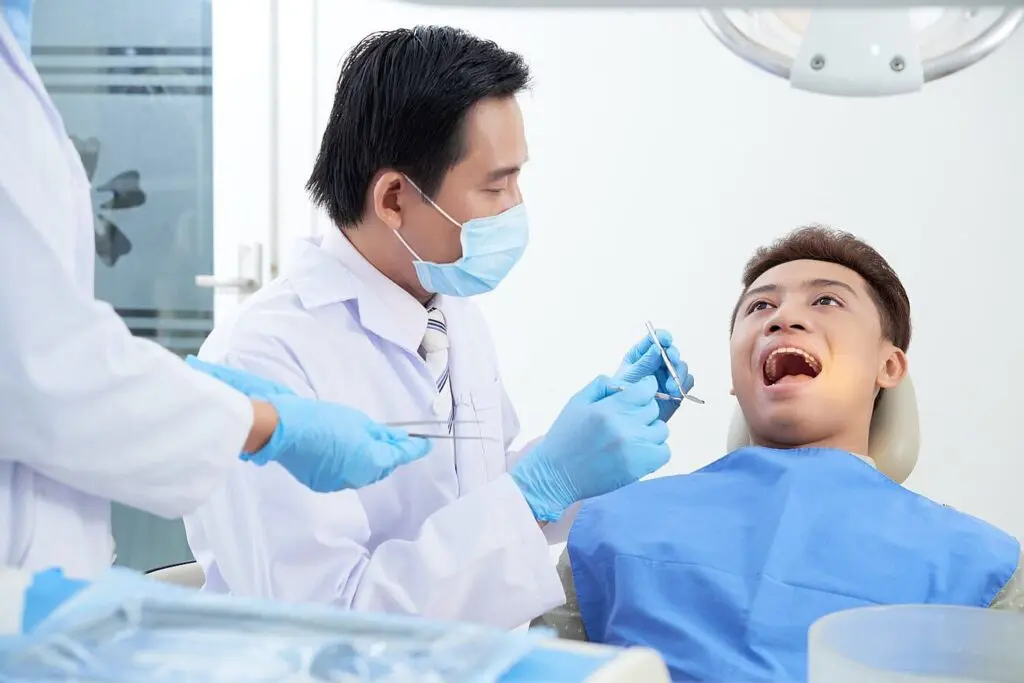
What Is Tongue Thrust?
Every swallow is a quick, precise muscular sequence. In a mature swallow, the tip of the tongue lifts to the roof of the mouth, the sides seal along the palate, and a wave pushes food or saliva backward into the throat. In a tongue thrust, the tongue pushes forward against or between the front teeth instead.
That forward push happens 1,200 to 2,000 times per day, with roughly 4 pounds of force each time, a continuous stream of low-grade orthodontic pressure that no appliance was designed to resist.
Infants are born tongue-thrusters. The forward suckling reflex is how a baby breast-feeds or bottle-feeds, and it is entirely normal up through about age 2. Between ages 4 and 6, most children naturally transition to the adult swallow pattern as they move to solid food, speech matures, and the airway grows.
When the infantile pattern never transitions, or transitions and then reverts under airway stress, it becomes a tongue thrust in the clinical sense and starts pushing teeth out of position.
How Common Is It?
Studies report that 67% to 95% of children ages 5 to 8 exhibit some degree of tongue thrust. Most outgrow it naturally. For those who do not, the habit is strongly associated with anterior open bite, protruding upper front teeth, spacing, anterior crowding from forward-positioned incisors, and speech difficulties with “s”, “z”, “t”, “d”, “n”, and “l” sounds.
Why This Page Exists
Tongue thrust is the single most common reason an open bite closed with braces or aligners opens back up months or years after treatment finishes. It is also routinely missed at a standard orthodontic consultation, because the swallow pattern itself has to be observed directly.
It does not appear on a panoramic X-ray. Limestone Hills builds the tongue habit check into every new-patient evaluation so the cause is known before a treatment plan is written.
Types of Tongue Thrust
Tongue thrust is not a single pattern. The clinical evaluation classifies the habit by which teeth the tongue presses against during the swallow, because each type drives a different bite problem and changes which appliance or therapy approach fits best.
Anterior Tongue Thrust
The most common form. During the swallow, the tongue tip pushes forward against or between the upper and lower front teeth. The continuous outward pressure over 1,200 to 2,000 swallows per day flares the upper incisors forward, opens a vertical gap between the front teeth (anterior open bite), and produces a “tongue-tied to the front teeth” speech sound on s, z, t, d. Anterior thrust is the classic pattern that drives orthodontic relapse when the underlying habit is not addressed.
Lateral Tongue Thrust
The tongue pushes outward against the back teeth on one or both sides during the swallow. The cheeks and lips compensate by collapsing inward, which over time narrows the upper arch and creates posterior open bite or posterior crossbite. Lateral thrust is harder to detect than anterior thrust because the tongue stays inside the mouth; the clinical signs are mostly in the molar relationship and arch width. Often coexists with a low tongue posture.
Lower (Reverse) Tongue Thrust
The tongue presses downward and forward against the lower front teeth during the swallow rather than upward against the palate. Lower tongue thrust is associated with a low resting tongue posture (the tongue sits on the floor of the mouth rather than against the palate), narrow upper jaw development from lack of tongue-to-palate contact during growth, and a tendency toward a Class III bite pattern with a more prominent lower jaw. Lower thrust is less common than anterior but harder to retrain.
Tongue Posture at Rest Matters Too
The swallow itself accounts for about 2 minutes of tongue position across an entire day. The remaining 23+ hours, the tongue is at rest. Resting tongue posture is the bigger driver of long-term bite development, especially during the growth years from age 4 through adolescence.
Correct resting posture places the tongue tip just behind the upper front teeth, the body of the tongue lifted against the hard palate, and the lips gently sealed. This “tongue-to-palate” position uses light continuous pressure to support upper-arch width and the height of the palate as the child grows.
Low resting posture places the tongue on the floor of the mouth, often with the mouth open. The upper jaw loses the lateral support the tongue would normally provide during growth, leading to a narrow upper arch, a high vaulted palate, and increased risk of crossbite and airway compromise. Low tongue posture often coexists with mouth breathing and adenotonsillar enlargement.
Limestone Hills evaluates both the swallow pattern AND the resting posture at every consultation that flags a tongue habit. Correcting the swallow without correcting the resting posture leaves the bigger driver in place.
Signs of Tongue Thrust
Some signs are obvious. Others, like a swallowing pattern, require professional evaluation to detect. If you notice two or more of these, an orthodontic evaluation is warranted.
Tongue Visible When Swallowing
Open Bite
Lisp or Speech Issues
Mouth Breathing
Messy Eating
Lip Incompetence
Does Tongue Thrust Cause the Open Bite, or Adapt to It?
This is one of the most debated questions in orthodontics. The honest answer: both are true, and it matters which one is driving each case.
A persistent infantile swallowing pattern, especially when combined with a low tongue resting posture, can contribute to the development of an open bite. The tongue’s forward pressure prevents the front teeth from erupting into contact.
But an existing open bite also makes it physically impossible to achieve a lip seal during swallowing. The tongue thrusts forward to fill the gap and create the seal needed to swallow. In this case, the thrust is an adaptation to the open bite, not the cause of it, and closing the bite orthodontically can sometimes resolve the thrust on its own.
Current research suggests that the resting posture of the tongue, where it sits between swallows, has a greater influence on tooth position than the swallowing pattern itself. A tongue that rests low and forward exerts continuous light pressure on the teeth for hours each day.
That sustained force is what moves teeth. Dr. Viecilli uses CBCT imaging to measure the skeletal contribution to the open bite and decide, for each patient, whether the thrust is a cause to retrain or a consequence to correct.
How Limestone Hills Diagnoses the Tongue Habit
Tongue thrust cannot be diagnosed from a single photograph or a panoramic X-ray. The swallow has to be watched in real time, the resting posture has to be observed, and the underlying airway and tongue-tie anatomy have to be ruled in or out. At Limestone Hills Orthodontics, every tongue-thrust evaluation includes:
What Causes Tongue Thrust?
Prolonged Thumb Sucking or Pacifier Use
The most common identifiable cause. Thumb sucking reshapes the palate and alters tongue posture. Even after the habit stops, the tongue’s position and swallowing pattern may not self-correct.
Chronic Mouth Breathing
When a child breathes through the mouth, the tongue rests on the floor of the mouth instead of the palate. This low posture becomes habitual and persists during swallowing. Mouth breathing and tongue thrust are frequently co-occurring. See the mouth breathing page for the full diagnostic and treatment path.
Enlarged Adenoids or Tonsils
Large adenoids or tonsils can block the airway, forcing mouth breathing and forward tongue posture. Treating the obstruction (often with adenoidectomy or tonsillectomy) is a necessary first step before addressing the tongue habit.
Tongue-Tie (Short Lingual Frenum)
A restricted lingual frenum limits the tongue’s upward range of motion. The tongue cannot reach the palate during swallowing, so it pushes forward instead. A frenectomy may be needed to allow proper tongue mechanics before myofunctional therapy can be effective.
Neurological or Muscular Conditions
Less commonly, tongue thrust can be associated with hypotonia (low muscle tone), cerebral palsy, or other neurological conditions that affect oral motor control.
The Limestone Hills Tongue Habit Protocol
Limestone Hills uses Essix retainers as the primary retention appliance for nightly wear and reserves bonded fixed retainers for specific clinical indications (typically upper diastema with a thick gingivally positioned frenum that would re-open the gap without permanent retention). For tongue-driven cases the retention protocol pairs the nightly Essix with a daily biting and tongue-posture exercise routine: close on the back teeth and hold for five seconds while pressing the tongue tip to the spot just behind the upper incisors, release, repeat for two minutes morning and evening. The exercise reinforces the corrected swallow pattern while the Essix protects the bite. Patients learn the tightness test (the retainer should snap into place with a fingernail click) so compliance becomes something the patient self-monitors rather than something Dr. Viecilli has to catch at six-month follow-ups.
What Happens If Tongue Thrust Is Not Treated
Orthodontic Relapse
This is the most clinically significant consequence. Many orthodontists have closed an open bite with braces only to see it reopen after treatment because the tongue thrust was never addressed. If the tongue continues to push against the teeth after braces are removed, the teeth will move back. Addressing the habit during treatment, not after, is critical for long-term stability.
Progressive Open Bite
The open bite tends to worsen over time as the tongue’s forward pressure continues. Front teeth move further apart, and the bite becomes increasingly difficult to correct without comprehensive orthodontic treatment.
Speech Problems
Tongue thrust affects articulation of sounds that require the tongue to contact the palate: “s”, “z”, “t”, “d”, “n”, and “l”. A lisp is the most recognizable symptom. Speech therapy is often needed alongside orthodontic treatment.
Protruding Front Teeth
The constant forward pressure can push upper incisors into a flared, protruding position (overjet). This increases the risk of trauma to the front teeth during sports or accidents.
How Limestone Hills Treats Tongue Thrust
Treatment addresses both the habit and its dental consequences. The sequence matters: underlying causes first, then habit correction, then orthodontic correction. Limestone Hills Orthodontics treats tongue thrust as a neuromuscular pattern first and a dental problem second, exercise-first, appliance when indicated, orthodontics only after the swallow and resting posture are retrained.
Identify and Treat Underlying Causes
If mouth breathing, enlarged adenoids or tonsils, or a restrictive tongue-tie are present, the structural cause is addressed first. Palatal expansion may be needed to widen a narrow upper arch and open the nasal airway.
ENT referral for adenoidectomy or tonsillectomy is coordinated with one of the pediatric ENT partners Limestone Hills works with. A frenectomy to release a restrictive lingual frenum is sequenced before myofunctional therapy when the tongue cannot physically reach the palate.
Myofunctional Therapy as First-Line Retraining
For most Limestone Hills tongue-thrust cases, the primary intervention is a myofunctional therapy program.
A supervised protocol that retrains the resting posture of the tongue, the lip seal, nasal breathing, and the correct swallow sequence. Limestone Hills Orthodontics refers to Southern Speech and Myo as its primary myofunctional therapy partner in Austin.
The therapist and the orthodontist communicate directly about progress so the habit work and the dental timing stay in sync.
Targeted Tongue and Hyoid Exercises (Home Program)
Alongside formal myofunctional therapy, or as a first step while a therapy schedule is being arranged, Dr. Viecilli prescribes a short home exercise protocol that trains the genioglossus, palatoglossus, and hyoid musculature responsible for holding the tongue against the palate. Compliance is checked at routine visits.
Most patients show measurable improvement in tongue posture within 4 to 8 weeks of consistent practice.
Habit-Breaker Appliance When Needed
For patients whose habit does not respond to exercises alone, for very young patients who cannot reliably perform the exercises, or for orthodontic cases where a fixed reminder is needed while the braces or aligners are doing bite work, Limestone Hills selects an appliance case-by-case.
Options include lingual turbos (a subtle, bonded reminder during active orthodontic treatment), a conventional Angel tongue crib (a wire gate behind the upper front teeth), and European Lab bonded appliances when custom crib geometry is needed.
The Bluegrass appliance (a spinning roller bead that trains upward tongue movement) is also used when muscle-retraining in a playful form is preferable for younger children. Appliances are a tool, not the plan, they are used for the shortest interval that accomplishes the habit reset.
Orthodontic Bite Correction After the Habit Is Controlled
Once the swallow pattern has been retrained and the tongue rests against the palate at least most of the time, braces or clear aligners close the open bite, retract flared incisors, and align the teeth. For open-bite cases, Limestone Hills frequently uses Invisalign with posterior intrusion mechanics.
The orthodontic result is stable because the tongue is no longer pushing the teeth apart during the 1,200+ swallows per day that come after the braces come off.
The Exercise Protocol (Home Program)
Alongside formal myofunctional therapy at Southern Speech and Myo, or as the first step while a therapy schedule is being arranged, Limestone Hills Orthodontics prescribes a short daily home exercise program.
Performed consistently with compliance monitored at regular check-ups, the protocol retrains the swallowing and resting pattern in most cases without a tongue crib. Most patients show measurable improvement in tongue posture within 4 to 8 weeks.
The exercises are listed in order of clinical priority; each builds on the neuromuscular foundation established by the one before.
Exercise 1: Tongue-to-Palate Hold (Most Important)
Place the tip of the tongue on the incisive papilla (the small bump directly behind the upper front teeth) and press the entire dorsum of the tongue flat against the roof of the mouth. Hold for 5 to 10 seconds. Relax. Repeat 20 times, 3 times per day.
Why it works: Strengthens the genioglossus and palatoglossus muscles that maintain the tongue against the palate at rest.
Exercise 2: Tongue Suction and Click
Press the entire tongue against the palate, create strong suction (the tongue should “stick” to the roof of the mouth), then release with a loud click. Repeat 20 times, 2 to 3 times per day.
Why it works: The suction phase engages the intrinsic tongue muscles; the click trains rapid genioglossus contraction.
Exercise 3: Correct Swallow Practice
With the tongue tip on the incisive papilla and the dorsum sealed against the palate, swallow with the lips closed and teeth lightly together. No visible facial muscle strain. Practice with water first, then with saliva alone. 10 conscious swallows per session, 3 times per day.
Why it works: Retrains the entire swallowing chain from oral phase through pharyngeal phase, replacing forward-thrust with a posterior-squeeze pattern.
Exercise 4: Lip Seal and Nasal Breathing
Keep lips gently together and breathe exclusively through the nose during rest, homework, reading, and screen time. Start with 10-minute focused sessions and increase duration daily.
Why it works: Lip seal is a prerequisite for correct tongue posture. When lips close, the tongue naturally elevates toward the palate.
Typical Treatment Timeline
| Stage | Duration | What Happens |
|---|---|---|
| Evaluation & cause screening | 1–2 visits | Swallow assessment, CBCT for airway, tongue-tie check |
| Underlying cause treatment | Varies | ENT, frenectomy, or expansion as needed |
| Exercise protocol | 4–12 weeks initial | Home practice with monthly check-ins |
| Appliance (if exercises insufficient) | 6–12 months | Tongue crib or Bluegrass |
| Orthodontic bite correction | 12–24 months | Braces or aligners after habit controlled |
| Retention | Indefinite | Habit must persist; retainer + tongue posture |
What to Expect at the Consultation
How Much Does Tongue Thrust Treatment Cost?
Myofunctional therapy referral fees are billed directly by the therapist (Southern Speech and Myo for most Limestone Hills patients) and are often partially covered by medical insurance.
Insurance & Financing
Orthodontic treatment for open bite correction is typically covered by dental insurance when diagnosed as malocclusion. OrthoSync: 0% interest, no credit check, $600 down. Cherry: $189.99 down. Pay in Full: 3% discount.
Myofunctional therapy fees are paid directly to Southern Speech and Myo and are typically covered by medical insurance rather than dental.
Common Appliances Used at Limestone Hills
Because tongue thrust is a muscle habit rather than a structural problem, Dr. Viecilli’s first intervention is a targeted exercise protocol rather than an appliance. When orthodontic treatment is needed to correct teeth displaced by the habit, Essix retainers paired with biting exercises are used at the retention stage to reinforce the corrected tongue posture.
Frequently Asked Questions
What is tongue thrust?
When the infantile pattern persists, 1,200 to 2,000 daily swallows at roughly 4 pounds of force each gradually push the front teeth out of alignment.
Will a child outgrow tongue thrust?
Can tongue thrust reverse orthodontic treatment?
What is a tongue crib?
Often in combination with myofunctional therapy and active orthodontics. Rather than a default first step.
How is tongue thrust treated at Limestone Hills?
Is myofunctional therapy required, or is the home exercise program enough?
For a supervised retraining program. The therapist and the orthodontist coordinate progress directly.
Can adults have tongue thrust?
Orthodontic correction for adults. Often clear aligners with posterior intrusion. Is sequenced the same way: habit first, bite second.